One-room Schoolhouses in Alberta: where early public education began

The image of the one-room schoolhouse is recognizable to many communities across Alberta. Fortunately, there are a few of these structures still existing that help to illustrate the origins of public education in Alberta. In this article, we will look at the development and decline of the one-room schoolhouse and the building features that make this structure such a unique example of built heritage. The schoolhouses that will be discussed here are the Shilo School, Verdun School and Chailey School. These particular buildings have been restored, indicating the public interest and historical significance of these structures to their community.

A typical one-room schoolhouse was where one teacher would instruct boys and girls of all ages and grades. Attendance to the school could range from just a few to almost one hundred. This type of early public education was common across Canada from the late nineteenth century into the early twentieth century. In Alberta, the first one-room schoolhouse was built in Edmonton in 1881. Many more schoolhouses were erected throughout the province in the years that followed, the majority of which consisted of one room. By 1910, Alberta had 1,501 school districts operating 1,195 schools, the majority of which were located in rural areas.
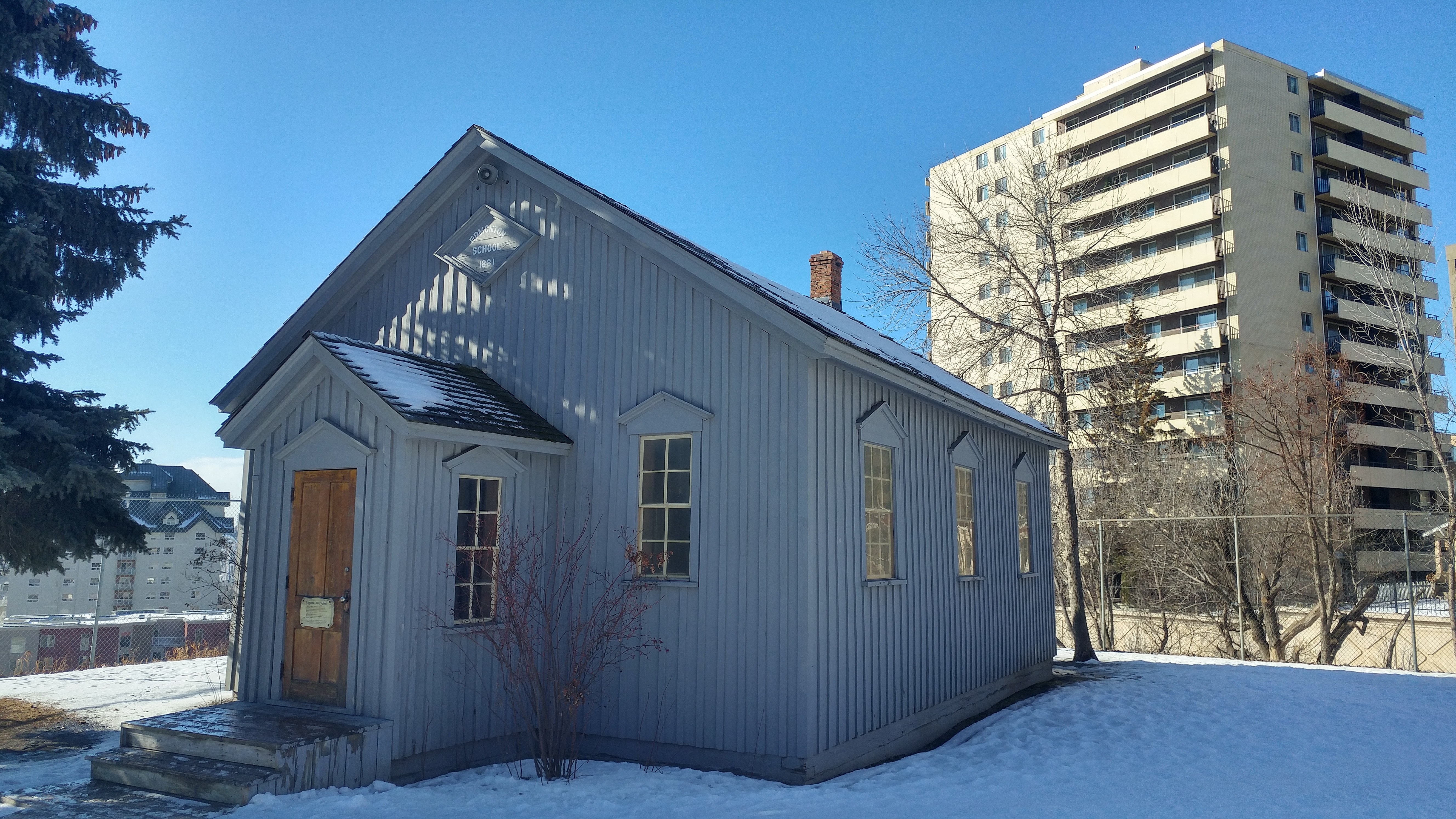
Edmonton 1881 School (Erin Hoar).

Read more

Clovis Points and the Ice Free Corridor

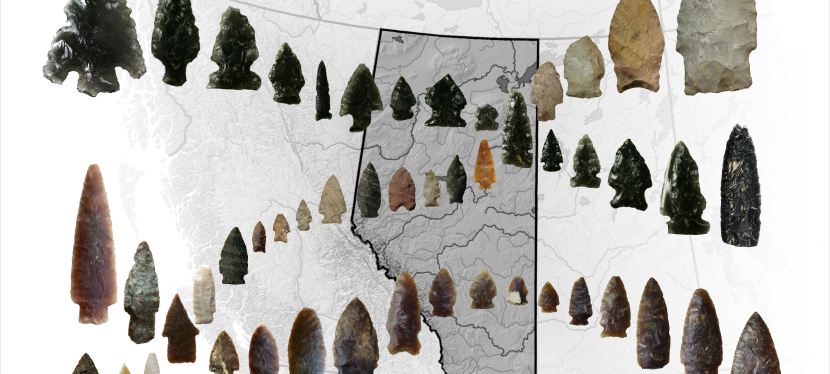
Did you know that some of the earliest inhabitants of what is now Alberta were here over 12,000 years ago? Evidence of these people is found in the form of fluted projectile points, like the one shown in the image above. Fluted projectile points are lanceolate (no stem or notching) and have large flakes struck from the center of the base to form a flute or channel.

One style of fluted projectile point is attributed to a culture known as the Clovis people. Clovis spear points were first discovered in Clovis, New Mexico, but are found all across North America. These points were long thought to represent the earliest people in the Americas; however, more recent research has refuted this. Read more

THE LEAVINGS AT WILLOW CREEK (OXLEY RANCH SITE)

Note : This post was originally published on RETROactive July 12, 2011.

Log house at the Oxley Ranch Site.

When the Montana cattle industry began to thrive in the aftermath of the American civil war, and the extension of railways to the western states, many cattle barons began to extend their activity north of the 49th Parallel. Sensitive to the encroachment of American influence in western Canada, the Dominion government took several measures to ensure the “Canadianization” of this region. A Department of the Interior was formed to oversee developments on the central prairies, a North-west Mounted Police force was formed to establish law and order, and a Dominion Lands Act was passed to see to the orderly disposition of Crown lands to British subjects, or those who would agree to become British subjects. Plans were also put in place to extend a transcontinental railway through the region. Read more

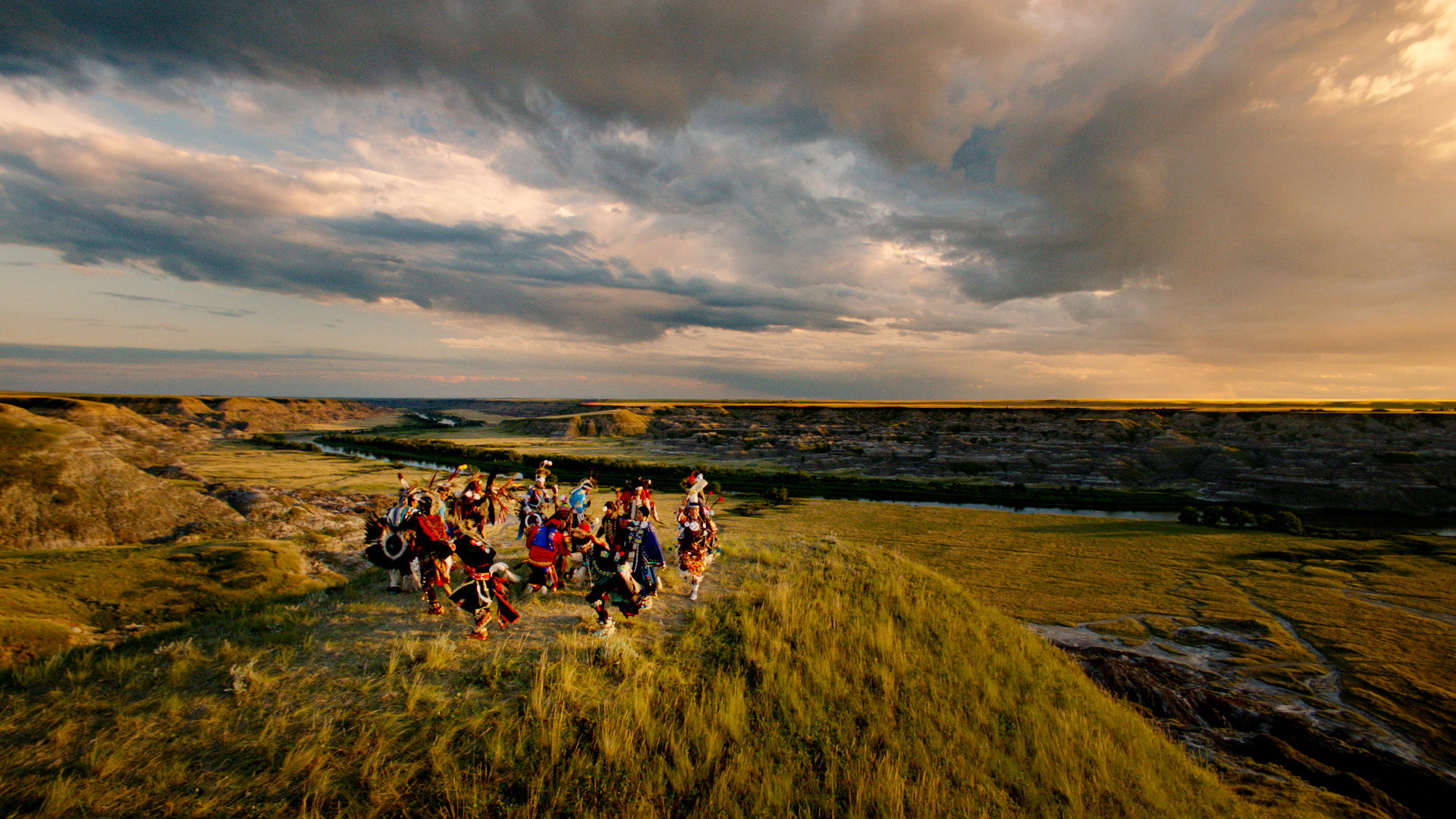
National Aboriginal Day 2017

Photo Credit: Travel Alberta/Sean Thonson

Happy National Aboriginal Day!

National Aboriginal Day was announced in 1996 by, then Governor General of Canada, Roméo LeBlanc on June 21st—the summer solstice. This week, and throughout the month of June, we recognize and celebrate the achievements and contributions of Indigenous Peoples in what is today known as Alberta and Canada. During this year of celebrating the 150th anniversary of Canadian confederation, it is particularly important to remember the First Peoples who came before, and the thriving, contemporary First Nation, Métis and Inuit communities that continue to shape our country today.

Edmontonians are invited for stew and bannock at the Bissell Centre from 10:00AM – 2:00PM, or enjoy the day-long Aboriginal Day Live festivities at Victoria Park.

Live in Calgary? The University of Calgary is hosting a campfire chat on St. Patrick’s Island, discussing Indigenous perspectives of the cosmos through traditional storytelling, or spend your Saturday at the Family Day Festival and Powwow at the Stampede grounds.

Events are taking place throughout the week and across the province. Join us in taking the time to connect with our community, learn from one another and reflect on what it means to be a Canadian and Treaty person during this summer of celebration.

Event Listings:

Indigenous Relations’ 2017 National Aboriginal Day Events in Alberta: http://indigenous.alberta.ca/documents/NAD-Events-Alberta-June-2017.pdf?0.1319647190237596

City of Edmonton’s National Aboriginal Day Community Events: https://www.edmonton.ca/attractions_events/schedule_festivals_events/national-aboriginal-day.aspx

Aboriginal Awareness Week Calgary: http://www.aawc.ca

Written By: Laura Golebiowski (Aboriginal Consultation Adviser)

Connecting the Continent: Stone Tools in Alberta

After a few thousand years, most of the archaeological record in Alberta has been winnowed down to pieces of rock used to make tools. Organic artifacts, structures, and other less durable things generally don’t survive thanks to erosion and decomposition. To maximize the information we can pull from those pieces of stone, the Alberta Lithic Reference Project (ALRP) was formed by a consortium of archaeological consultants, heritage managers, geologists, students, and university researchers. The goals are to accurately and consistently identify the types of raw materials that pre-contact people used to make stone tools. Why is this important? Specific types of rock were traded and moved widely across the continent and serve as valuable indicators of cultural relationships and/or human mobility patterns. Read more

Sugar Beets and Buddha in Raymond, Alberta: Celebrating Asian Heritage Month

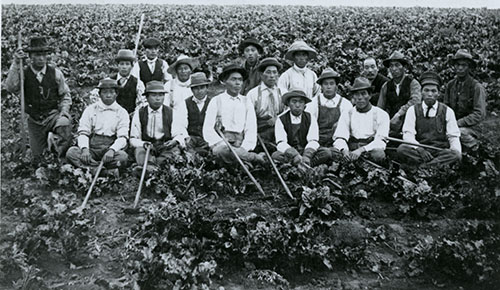
Asian Pacific American Heritage Month has been celebrated since 1978 in the United States, coinciding with the first arrival of Japanese immigrants in 1843 and the completion of the transcontinental railroad in 1869, in part through the contribution of Chinese labourers. In Canada, Asian Heritage Month has been celebrated since the 1990s and in 2002 the Government of Canada signed an official declaration designating May as Asian Heritage Month, a time to reflect on the legacy of Canadians of Asian heritage and to celebrate their contributions to the fabric of Canadian society.

In keeping with the spirit of Asian Heritage Month, RETROactive would like to share with its readers, the history of the Raymond Buddhist Church, designated a Provincial Historic Resource by the Province of Alberta in 1984. The information is taken from the Alberta Register of Historic Places and can be accessed in its entirety at:

https://hermis.alberta.ca/ARHP/Details.aspx?DeptID=1&ObjectID=4665-0482

The Raymond Buddhist Church is a two-storey building with a rectangular plan and a steeply-pitched gable roof completed Read more

Law & Order in Coleman: The Alberta Provincial Police Building

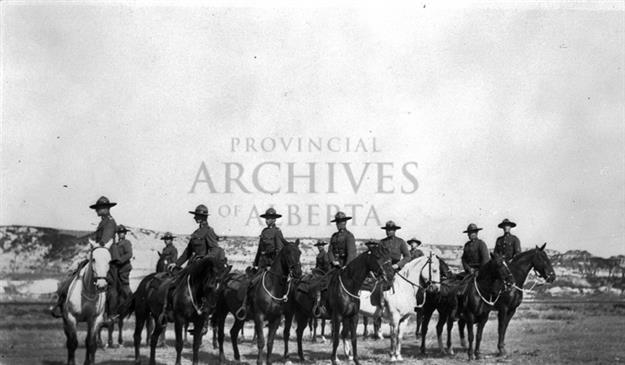
Even before Alberta became a province, communities were in need of a local police force. The Crowsnest Pass in particular saw an increase in crime as the area began to develop as a coal mining community in the early 1900s. With the introduction of new settlers to the area, it wasn’t long before Coleman requested a police presence from the Canadian Government. A North West Mounted Police office building was constructed in 1904 and shortly after, an officer arrived to the area to establish law and order. This blog post will look at the introduction of a formal police presence into the Coleman area and highlight the importance of the still existing Alberta Provincial Police Building that was built for their use. Read more

A New Roof for St. Ambrose Church

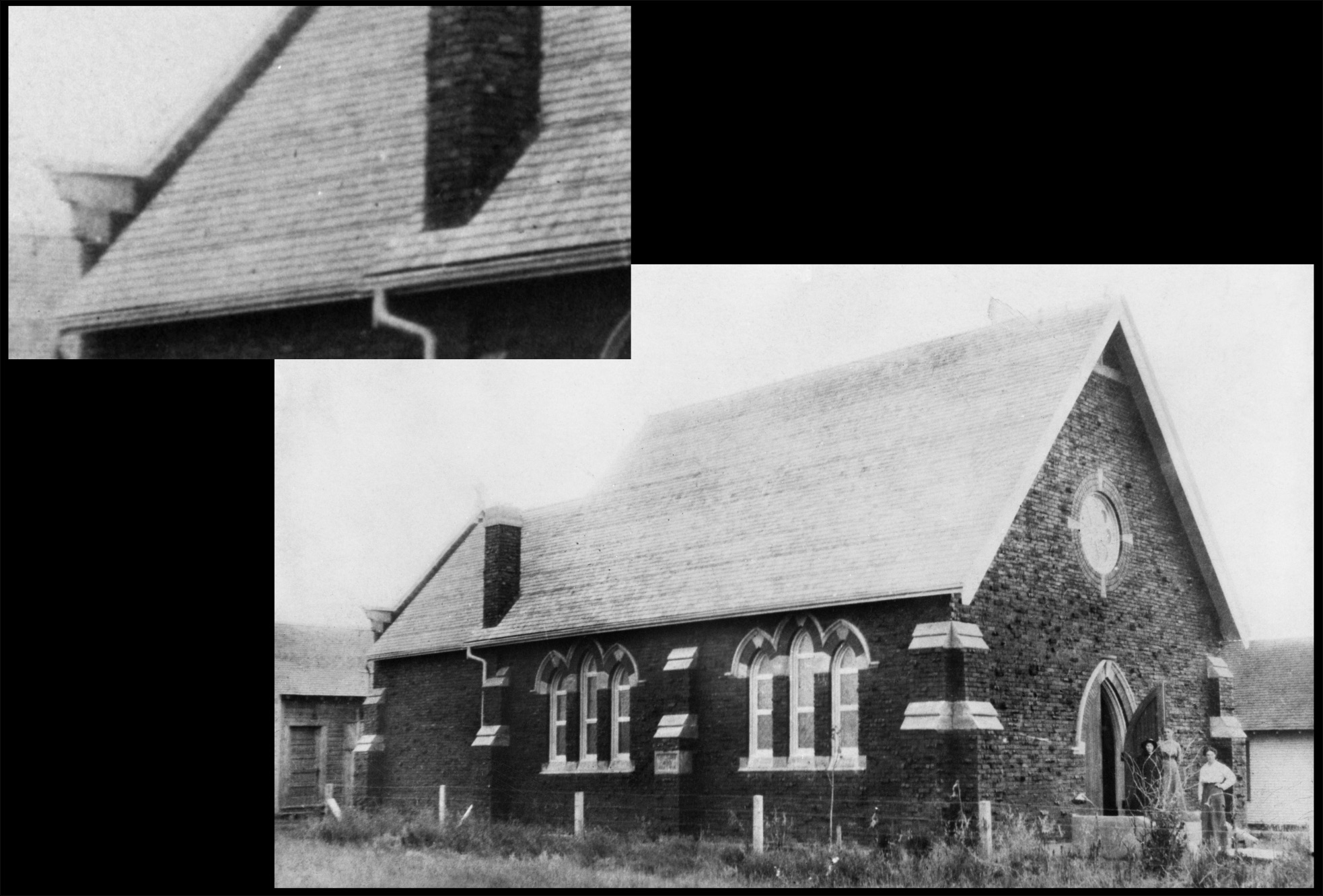
Located on a quiet residential street in Redcliff, Alberta, St. Ambrose Anglican Church is distinguished by its buttressed brick masonry exterior, steeply-pitched gable roof and pointed arch windows. These characteristics strongly identify the 1914 church with the Gothic Revival style popular in the Victorian era for ecclesiastical architecture in England, a style also eagerly adopted by Anglican, Presbyterian, Methodist and Congregational churches across Canada. Unlike many churches, though, St. Ambrose was modelled on small Anglican parish churches in England and is a variant of the Gothic Revival style seldom found in Alberta.

St. Ambrose’s architecture hearkens back to England but the building’s local roots are evident in the “clinker brick” masonry exterior, an overfired brick with distinctive irregular or lumpy shapes and striking colour variations. Clinker brick resulted from high firing temperatures in the kiln which caused the clay to partly vitrify or melt, sometimes to the point where clumps of bricks would fuse together and had to be broken apart. This lack of uniformity was appreciated for its decorative qualities and the clinker brick at St. Ambrose was produced at the Redcliff Brick and Coal Company just blocks away. The combination of far-reaching colonial stylistic influences and distinctive local materials contributed to the church’s designation as a Provincial Historic Resource in 2008.

St. Ambrose Church from the northwest in 1914, with inset showing the original narrow exposure, traditional step flashings, and rows of slightly offset shingles (inset) to create shadow lines and decorative horizontal bands across the roof. Glenbow Archives photograph NA -2701-5.

Read more

The Tale of a Rusty Revolver

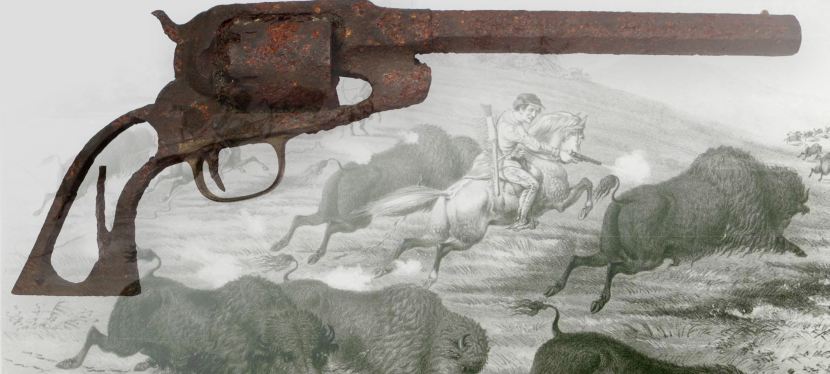
The story of a rusty gun found in central Alberta begins across the continent in 1863 when 100,000 New Model Army revolvers were being made at the Remington & Sons factory near the banks of the Mohawk River in New York State. The New Model Army was a popular sidearm because it was affordable and tough: most were destined for use in close combat by U.S. Army soldiers in the American Civil War. Between New York and Alberta, much of the revolver’s story is a mystery. Read more