Women in the Great War

In August of 1914, Canada entered the First World War, an arduous experience for Albertans who served on the battlefront and for those who remained in Canada. Thousands of men enlisted and quickly left Alberta for the front, leaving a gap in both the workforce and civil society. During the war, women took on many of these roles, opening a realm of new possibilities. Women helped raise funds for the Canadian Red Cross Society and entered the workforce, while others enlisted in the medical core as nurses. This post will give an overview of Canadian women in the First World War by looking at the shift in traditional labour roles, Canadian nurses and the voluntary initiatives that women organized. It is important to recognize the sacrifices that were made by these women and to show how they contributed to the war effort, on the home front as well as overseas.
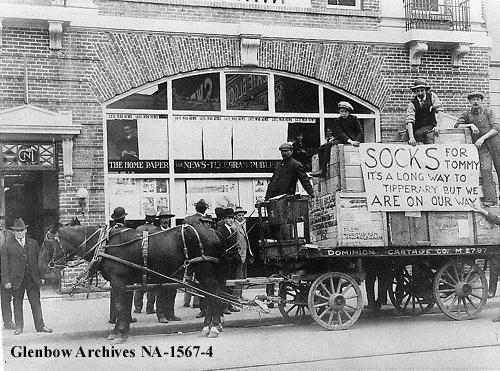
Wagon loaded with socks for soldiers in Calgary, Alberta, ca.1916. (Glenbow Archives, NA-1567-4)

For most Canadian women, participation in the First World War was limited to serving on the home front. With almost 50,000 of Alberta’s men deployed overseas, this created openings in the service and farming industries back home. The demand for more workers increased and jobs that were traditionally reserved for men were opened to women for the first time. The need for additional labour differed by region across the country. Central Canada, for instance, experienced a greater need for employees to work in munitions factories, while in Alberta, labourers were needed to assist with farm work. Other positions that women filled were administrative clerks, factory workers and as delivery vehicle drivers. Female participation in the clerical and banking fields increased significantly and there were women who remained in this line of work even after the war ended. Women were exposed to more job opportunities than ever before, whereas prior to the First World War, they were largely limited to domestic duties.

Between 1914 and 1918, there was an overwhelming need for labour and this compelled employers to hire women. Many employers, and even some women, viewed the female worker as a temporary substitute needed to meet a wartime emergency. Not surprisingly, women faced opposition at times for their participation in the workforce, particularly during the initial outbreak of the war in the street railway service and banking fields. In several cities across Canada, male workers with the railway system were outraged that women were allowed to be hired as conductors on their cars. While some areas disapproved of women taking on non-traditional labour roles, other employers recognized that women were a much needed source of labour. The Canadian government hired 1,325 women in civilian jobs, such as clerks and typists, with the military. Another 1,200 women were employed by the Royal Air Force in Canada to work in mainly technical positions, and by 1918, they had hired 750 female mechanics. This indicates that the prejudice against working women had to be overruled in order to alleviate the shortage of manpower. The war produced a necessity for human labour and this opened up a wider array of opportunities for women. The roles that women stepped into during the war years had a significant impact on the province by challenging traditional gender roles and began legitimizing the idea of women in the labour force.
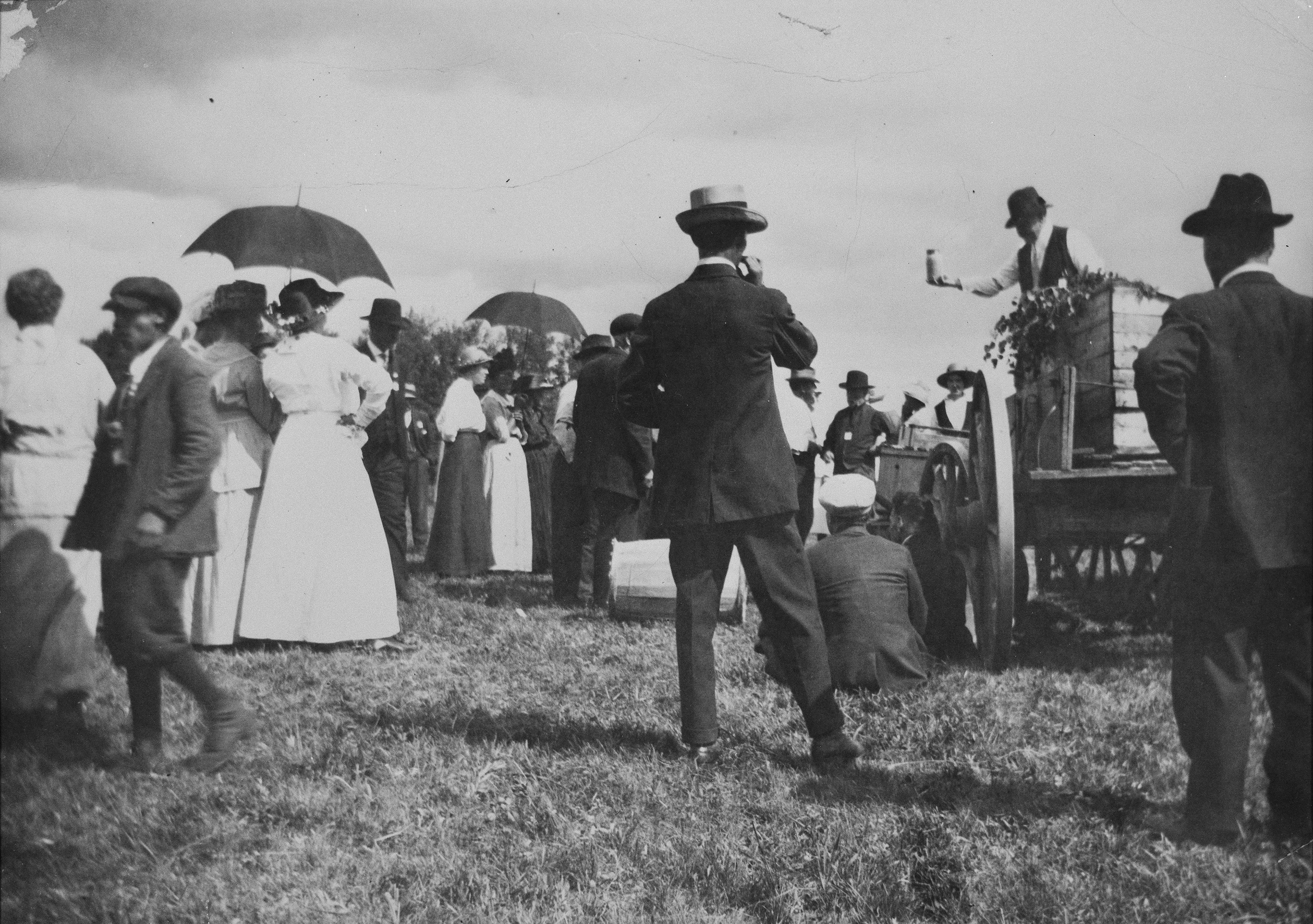
Crowd gathered for Patriotic Day and Red Cross sale at Two Hills, auction at Fred Schoff Store to raise funds for WW I, 1917. (Provincial Archives of Alberta, A10676)

Many women initially entered the labour market to demonstrate their patriotism, but this move had a number of positive effects. There was an increase in financial opportunities for women and wage disparity between men and women began to lessen. In addition, the war opened up a whole host of social opportunities. Women were participating more in the public sphere, both in the workforce and social circles, and this provided the foundation for a fervent energy that helped to ignite the women’s movement across Canada. Women desired greater participation in politics and the idea that women should vote and run for office quickly became mainstream. On April 19, 1916, this right was granted to Alberta women. Obtaining the vote was an achievement which contributed to an increased political consciousness amongst women in Alberta. This momentum continued and by the following year, Louise McKinney and Roberta MacAdams, had become the first women to be elected to the Alberta legislature. The dramatic increase of women in the labour field and social community was a significant force that paved the way for women’s rights in Canada.
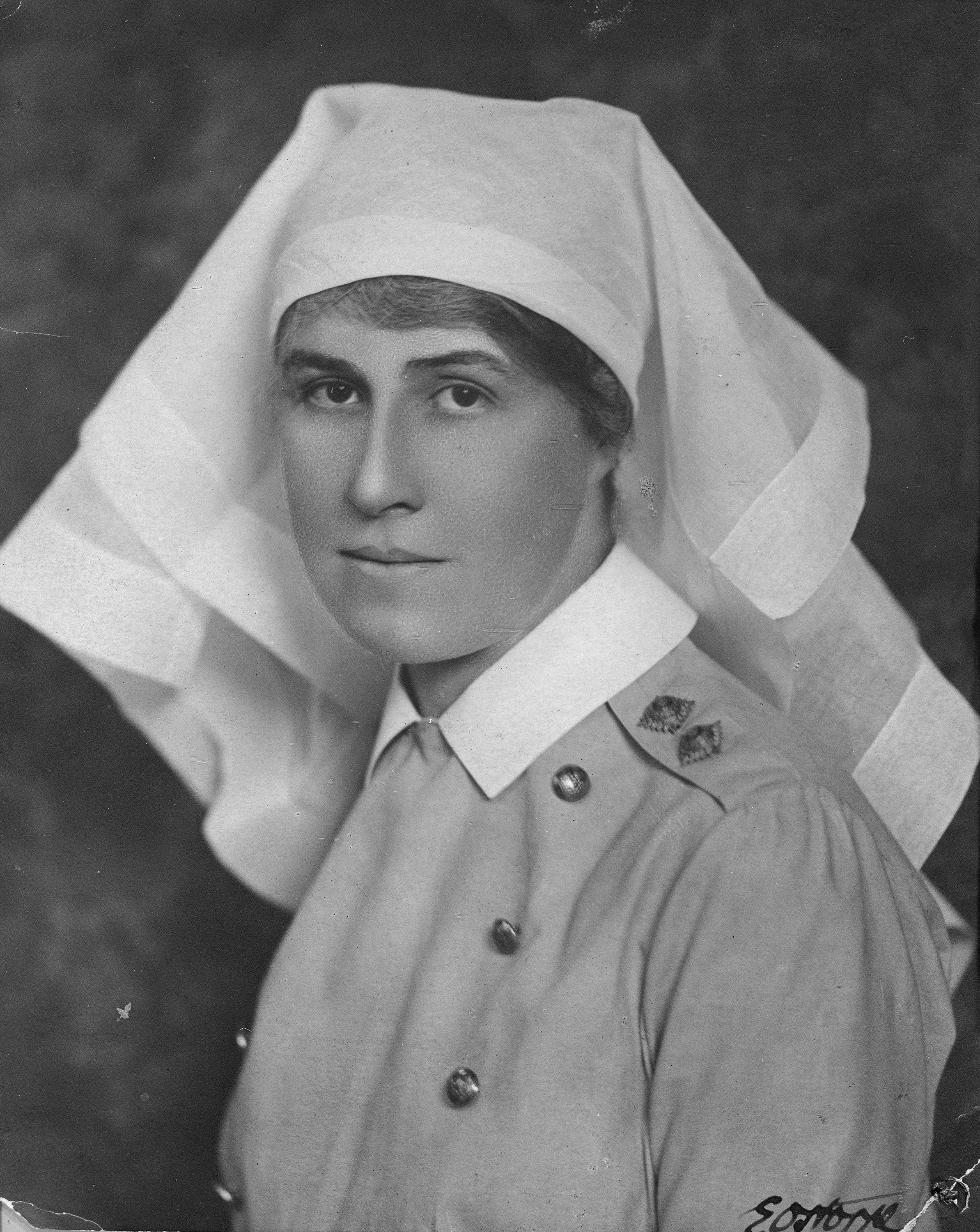
Future member of the Alberta Legislature, Lieutenant Roberta MacAdams, was a dietician stationed in England during the First World War, 1917. (Provincial Archives of Alberta, A13185)

There were a number of Canadian women who contributed their services abroad, primarily in the medical service field. The Canadian Army Medical Corps required a number of trained nurses to help provide medical care to Canadian soldiers. Trained nurses joined the Nursing Sisters of Canada and there was no shortage of volunteers. 3,141 nurses served in the medical core, with 2,504 of those serving overseas. There were women from Alberta who enlisted as military nurses and at the initial outbreak of the war in 1914, 10 nurses from Edmonton went abroad and assisted the troops serving on the front. Canadian nurses worked tirelessly to provide medical services to those who were wounded in battle and cared for recovering soldiers. They were commonly known as “bluebirds” due to their uniform colours. Later on, the nurses were referred to as the “Sisters” or “Angels of Mercy” by the soldiers. These monikers are indicative of the caring service that the nurses provided and were often praised for. Throughout the First World War, Canadian nurses were commended for their heroism and became well known for their compassion when treating the afflicted.

Women without nursing experience could enlist through the Voluntary Aid Detachment which was operated by the Canadian branch of the St. John Ambulance. V.A.D. nurses received basic first aid training and worked in hospitals as medical assistants and carried out general duties such as cooking and cleaning. The role of the V.A.D. allowed women who were not trained as nurses to be directly involved in the war efforts and approximately 2,000 Canadian women served as unpaid nurses during the First World War. Around 500 were sent to Europe and the majority remained at convalescent hospitals in Canada. Nine Edmonton women were trained as V.A.D.s and deployed overseas.
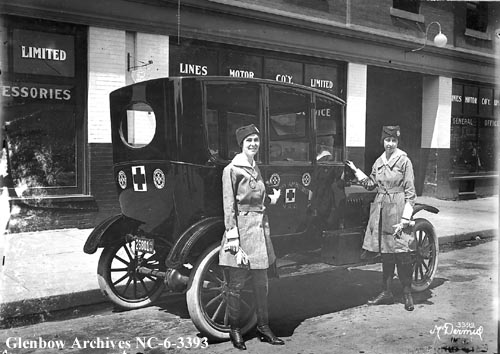
St. John Ambulance Voluntary Aid Detachment vehicle, Edmonton, Alberta, 1918. (Glenbow Archives, NC-6-3393)

The First World War brought changes to the military medical services. Medical units were originally established in hospitals and then Casualty Clearing Stations were created near the frontlines to give faster treatment to the soldiers injured in battle. While this provided better service for the wounded, it put Canada’s nurses closer to combat. They faced the danger of enemy artillery attacks, air raids and also endured vermin, fleas and disease, just as the men in the trenches. Canadian nurse, Katherine Wilson-Simmie, details her account in The Memoirs of Nursing Sister Kate Wilson, Canadian Army Medical Corps, 1915-1917. While stationed near the front lines, Wilson-Simmie witnessed an unforgettable day when the first gassed soldiers were admitted for medical assistance. She describes the event as “an entirely new kind of warfare – horrible, and contemptible. It was a terrible experience for the men and for those trying to help them.” Women not only observed the abysmal conditions of war, they were eyewitness to the immediate impact that battle had on human life.

As the nurses returned from overseas, they could take pride in the contribution that they had made for their country, but they had also witnessed firsthand the devastating toll of war. Approximately 50 Canadian nurses lost their lives in the First World War. The Canadian Nursing Sisters are commemorated at The Nurses’ Memorial on Parliament Hill, Ottawa.

Women supported numerous initiatives across Canada and overseas during the First World War, but the Canadian Red Cross Society (CRCS) was the primary humanitarian organization in the country. Women were eager to serve the Red Cross which gave them the opportunity to participate in the war from the home front. The society provided aid and comfort to soldiers and their families who were affected by the war and women supported these relief efforts in a number of ways. They fundraised, distributed gifts, prepared care packages and medical supply kits as well as knitted extra clothing to send to soldiers.

When the war was declared, women endorsed the work of the Red Cross Society without hesitation and a number of auxiliaries emerged across the country during this time. This support allowed the Canadian Red Cross to provide relief assistance and volunteers visited recovering soldiers in British hospitals, attempted to trace missing people and helped Canadians correspond with their families and friends abroad. The society also worked with Red Cross affiliates overseas to fulfill requests for medical assistance when possible. A volunteer, and later Alberta resident, Madeleine Jaffray, was one of ten Canadian nurses who were recruited through the Red Cross to serve in the French Flag Nursing Corp. In Belgium, just miles from the frontlines, Jaffrey’s unit was frequently targeted by bombs. During one attack, her foot became severely wounded and was later amputated. She was awarded a French military medal, the Croix de Guerre, for her service and was the first Canadian woman to receive this honour.
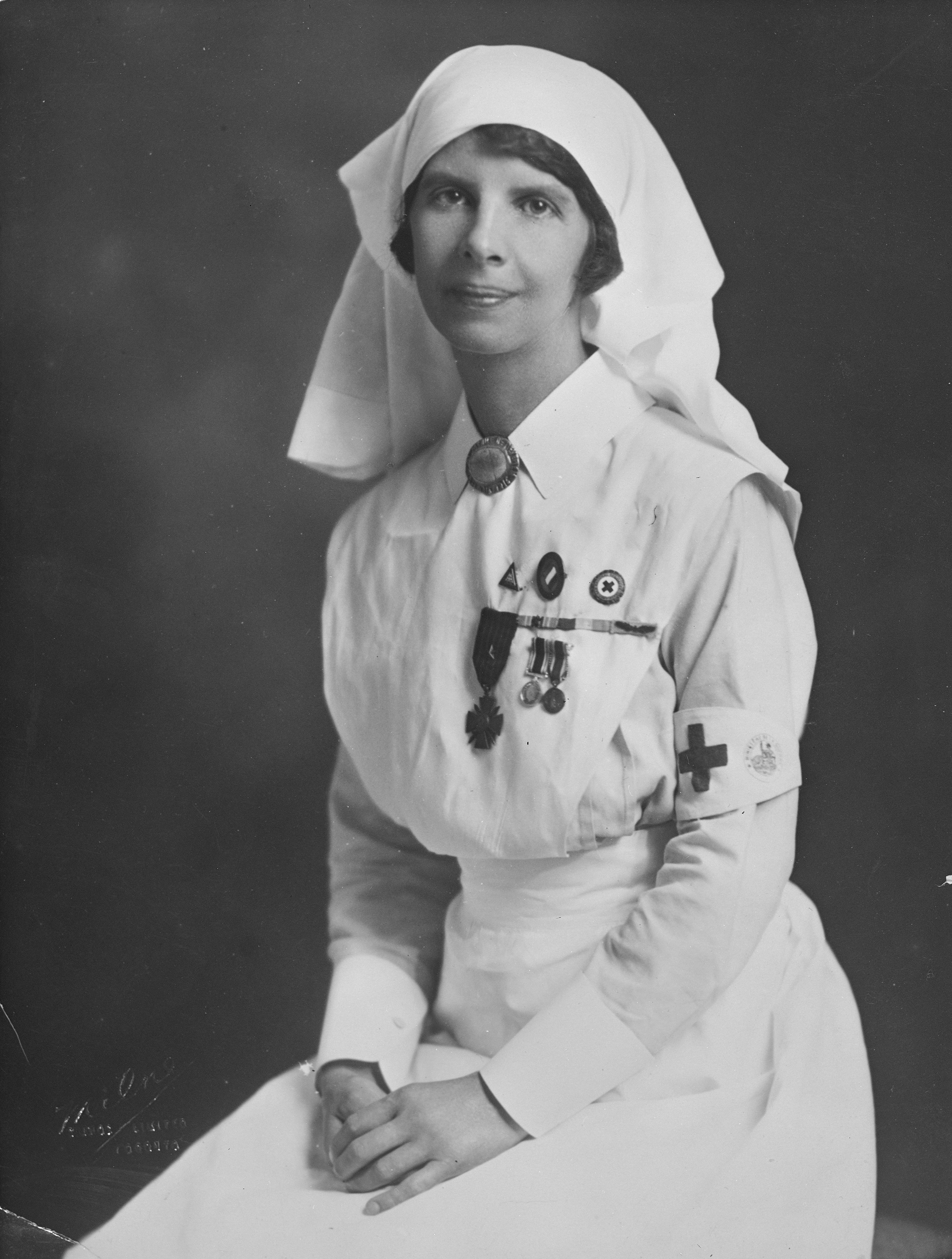
Formal portrait of Madeleine Jaffray in nurses’ uniform, ca. 1919. (Provincial Archives of Alberta, A14050)

With the help of donors and dedicated volunteers, the Canadian Red Cross Society established a headquarters in London, so they could better coordinate with the people on the front line in France. The organization also helped to create and maintain hospitals for soldiers who were wounded in battle. The Red Cross played a significant role by providing comfort and support services to Canadians. This was made possible through the voluntary services that were initiated by women on the home front. The Red Cross was a valuable organization in a time of need and gave women a variety of ways to help their loved ones who had gone overseas to war.

Alberta women contributed to the Canadian efforts to win the First World War in many ways. Initial participation in the war efforts was largely out of patriotic respect, but a number of outcomes emerged as a result. Notably, there was an increased female presence in civil society and the Alberta suffragist movement emerged. The efforts displayed by women during the Great War are remembered for the impact that they have had on women’s history in Canada.

This was the second part of a series commemorating the First World War. This series will look at a range of topics that will show Alberta’s involvement in this historic event.

To learn more about women in Alberta’s history, refer to the Alberta Women’s Memory Project, an initiative that was created to preserve and promote the history of women in Alberta.

Written by: Erin Hoar, Historic Resources Management Branch Officer

Sources

Byfield, Ted, ed. Alberta in the 20th Century: The Great War and its Consequences 1914-1920. Vol. 4. Edmonton, Canada: CanMedia Inc., 1995.

Canadian Red Cross. “The First World War: 1914-1918.” (Accessed August 5, 2014).

Canadian Great War Project. (Accessed August 19, 2014).

Canadian War Museum. (Accessed August 5, 2014).

Dundas, Barbara. A History of Women in the Canadian Military. Montreal: Art Global and Department of National Defense, 2000.

Glassford, Sarah, and Amy Shaw, eds. A Sisterhood of Suffering and Service: Women and Girls of Canada and Newfoundland During the First World War. Vancouver: UBC Press, 2012.

Love, David W. A Nation in Making: The Organization and Administration of the Canadian Military During the First World War. Vol. 2. Ottawa: Service Publications, 2012.

Nicholson, G.W.L. Canada’s Nursing Sisters. Toronto: Samuel Stevens Hakkert & Company, 1975.

Payne, Michael, Donald Wetherell, and Catherine Cavanaugh, eds. Alberta Formed Alberta Transformed. Vol. 2. Edmonton, Canada: University of Alberta Press, 2006.

Veterans Affairs Canada. “The Nursing Sisters of Canada.” (Accessed August 6, 2014).

2014 Municipal Heritage Forum Program Finalized

MHF v1

There are just over two weeks left until the Municipal Heritage Forum gets underway in Lacombe. After upping our numbers (twice!) we have approximately 20 spots left for those of you who haven’t yet registered. Online registration closes Tuesday October 7th at 11PM.

This year we have another great mix of speakers to get you thinking about heritage conservation in Alberta. In addition to our keynote speakers Kayla Jonas Galvin and Larry Laliberte who will be showcasing our theme of “Conservation Through Technology and Innovation”, we will have nine Municipal Show & Tell presentations and ten break-out sessions. Speakers will be talking about all things heritage including: mapping projects, alteration approvals, heritage awards programs, social media and sustainability (among others), as well as case studies from several Alberta communities who are being creative in their approach to heritage awareness and conservation initiatives.  In addition to the presentations, the Lacombe and District Historical Society will be hosting us on a walking tour of historic downtown Lacombe. This year we have the additional fortunate to have the Forum coincide with the biennial AHRF Awards ceremony.

Click here to access a copy of the Forum program, including descriptions of the presentations.

There are always new people to meet and great conversations to be had. We look forward to seeing you there!

Attention MHPP Applicants!

MHPP_logo_black

Though I can’t imagine what could be more riveting than reading about administrative procedure, I’ve been told that some people might not feel the same way. So since not all our blog posts can be nail biters I will have to ask folks to bear with me on this one. This post might be a bit dry but it does include important information about the Municipal Heritage Partnership Program (MHPP) for interested applicants.

Those of you who have applied for Municipal Heritage Partnership Program (MHPP) funding for a survey, inventory or management plan in the past will likely have visited the MHPP website to obtain information about the grant categories, funding parameters and suggested application information. I am pleased to report that we now have all the information necessary to put together your MHPP grant application available as a Guideline document. This handy reference outlines the three grant categories and details the policy and procedures around the funding process, including eligibility requirements, application deadlines, in-kind contributions and timelines as well as an application checklist. You can access a copy by clicking here.

I encourage those of you looking to apply under one of the MHPP grant categories to use the Guidelines as a point of reference. Here is a summary of the highlights:

  • Applicants must be municipal governments
  • There are no application deadlines – applications will be presented at the next applicable quarterly meeting of the Alberta Historical Resources Foundation for consideration
  • The decision on the grant application will be made by the Alberta Historical Resource Foundation
  • Funds are allocated through a grant agreement between the municipality and the Alberta Historical Resources Foundation
  • Payment is issued over the course of the project as outlined in the grant agreement and is payable upon receipt of an invoice from the municipality
  • The municipality must contribute a minimum of 50 percent of the project costs, of which half may be in-kind contributions
  • In-kind contributions include volunteer time, staff time, donated professional services and materials, office space, use of telephone/fax/computer/internet services, donated materials and supplies
  • Final reporting requirements will be outlined in the grant agreement

Please contact Matthew, Michael or myself with any questions you may have about the MHPP grant application process. For those of you who actually read this far, well done! If it weren’t for Internet copyright issues I would reward you with a picture of an adorable puppy.

Written by: Rebecca Goodenough, Municipal Heritage Services Officer

Early Cabins in the West

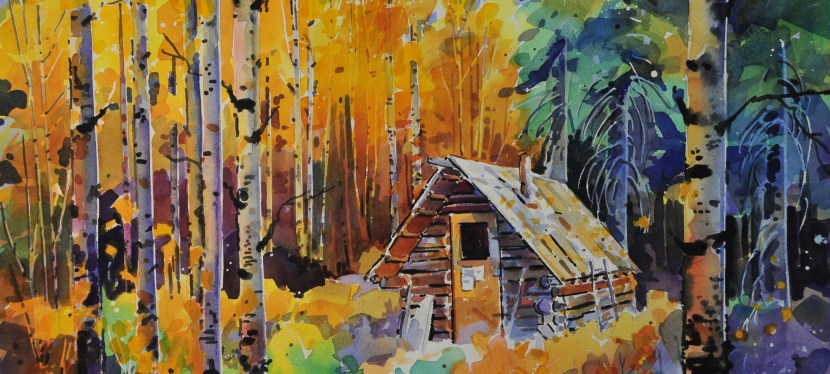
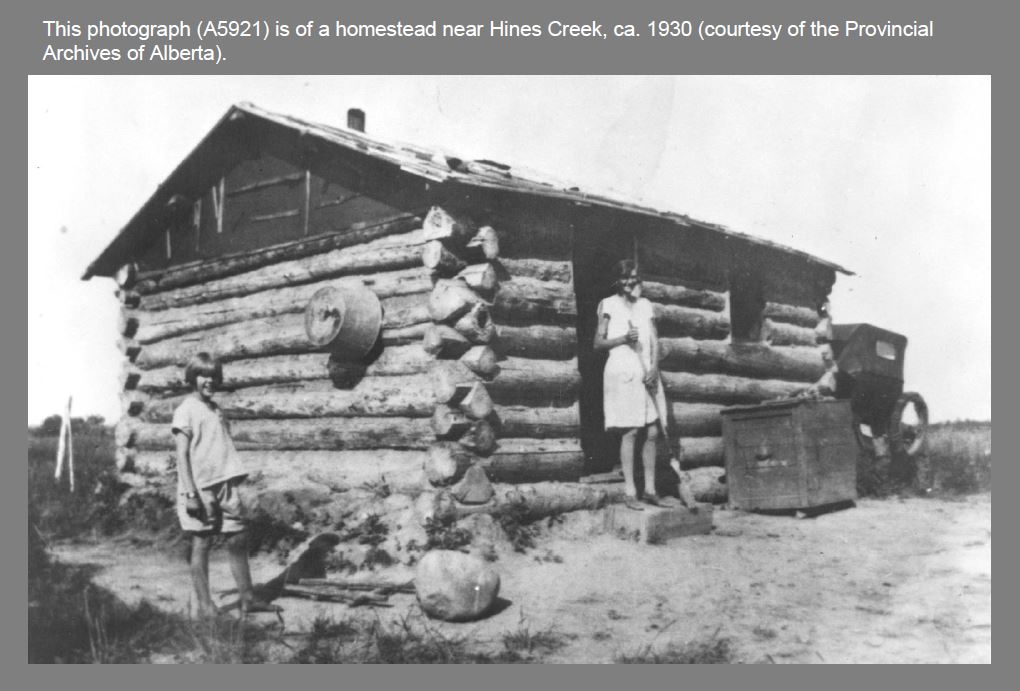
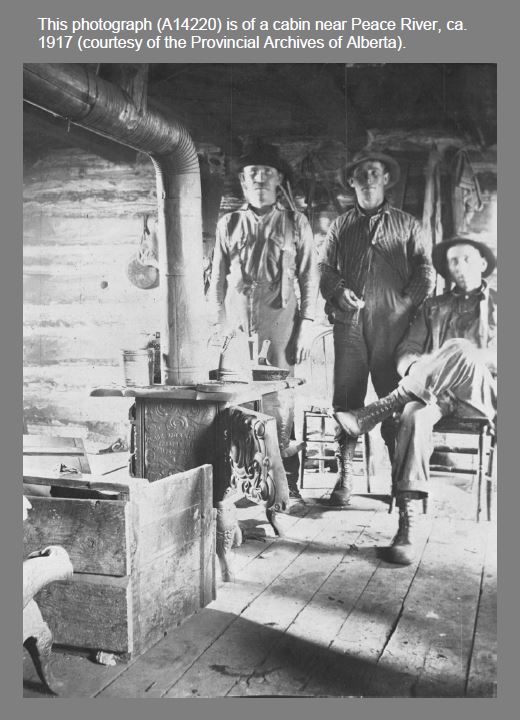
Cabins performed a variety of functions in Alberta’s past from homesteading to hunting and post offices to ranger cabins. Many events and daily challenges that defined our province unfolded on the wooden floors of early cabins. Just like the characters they housed, each cabin’s architecture and associated artifacts are unique.

Cabin and tobacco tin

To encourage an appreciation of cabins and the surviving record of them, as well as other historic resources in the province, a collaborative team from the Historic Resources Management Branch, the University of Alberta, and the Royal Alberta Museum initiated the Heritage Art Series. The goal is to create artworks that depict scenes from Alberta’s past that captivate public audiences. We hope that these artworks, like the cabin painting above, stimulate an interest in learning about our province’s heritage, which will in turn instill a greater respect for the past.

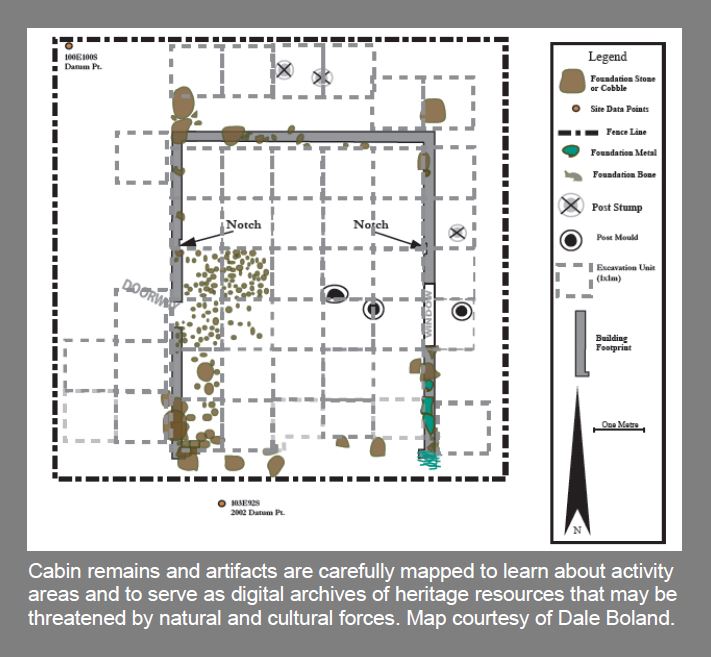
Cabins were typically made of raw timbers with a variety of corner joints, roofs, sawn floorboards, and chimneys. Associated features include outhouses, garbage pits, ice houses (for storing food), cellars, and drying racks. What can the archaeological record tell us about cabins and their occupants? Maps of cabins and associated structures reveal how people utilized landscapes and interacted with each other within cabins. Our modern homes are often relatively large with multiple rooms and levels, which is drastically different from the single-room cabins that many Albertans spent their lives in. An historical perspective informs us that changes in domestic architecture have had a real impact on the way Alberta’s families interact with each other and with their neighbours.

Cabin map

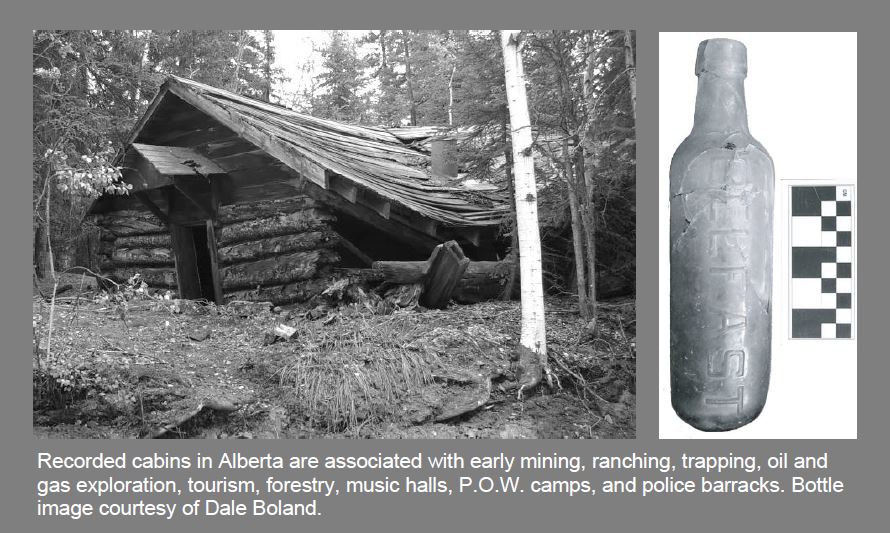
Cabins are often associated with historic trails that influenced how regions were settled and how goods were transported across the country. Cabin modifications over time tell stories of trial-and-error adaptations to new landscapes while artifacts can indicate the types of activities conducted around cabins, cultural affinities, number of occupants, and the season of occupation. Outhouses and garbage pits can reveal past diets, wealth, access to luxury goods, hygiene, medical conditions, and entertainment.

Cabin and bottle

Aside from cabins’ phsycial make-up and artifact assemblages, they are significant heritage resources because they were often the first permanent structures to appear on many of Alberta’s landscapes. They represent a new adaptation and a new way of life for the people who first built them. There are over 550 recorded archaeological sites in Alberta with cabin components. Over 115 of these sites also have a pre-contact First Nations component, which suggests that many of the good spots for cabins have always been good places to make a living on the land.

Homestead photograph

The painting at the top of this article by Gregg Johnson is of a trapper’s cabin in the autumn foothills. It captures the solitude of the trapper’s life. Autumn was a busy time as trapper’s geared up for winter. Supplies were brought in, trap lines were re-established, and wood was cut for the long winter ahead. Like many of Alberta’s industries, modern trapping has an interesting past and an informative historic record. Archaeology offers a unique opportunity to learn about the past lives of people who may not be represented in historical accounts. In this sense, the study of historic resources gives a voice to people who have not been given the chance to speak for hundreds of years.

Miners cabin

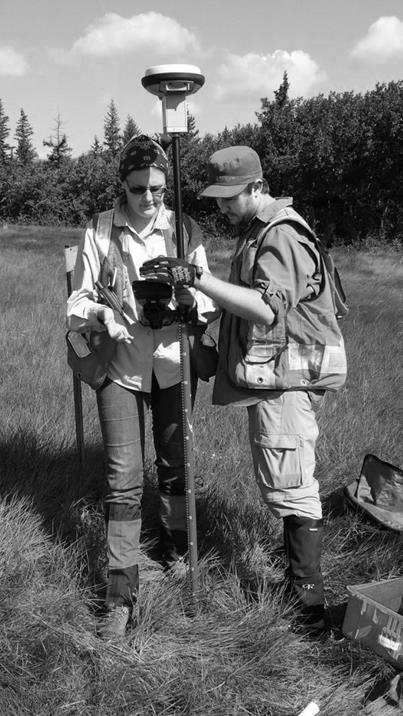
An example of a current research project about cabins that will illuminate the past record of a poorly understood group of people is that by Dr. Kisha Supernant at Buffalo Lake. Dr. Supernant and her research team from the University of Alberta are studying the adaptations of Metis and First Nations people who occupied Buffalo Lake in the 1800s in order to acquire meat that supplied neighbouring trade posts like Fort Edmonton. Her excavations and mapping program will uncover an important way of life that helped shape our province.

Mapping crew
Dr. Supernant and a graduate student use GPS equipment to map archaeological features.

The next blog of the Heritage Art Series will be about the changing landscape and rock art of Writing-on-Stone Provincial Park.

Written by: Todd Kristensen, Northern Archaeologist, and Dr. Kisha Supernant, University of Alberta

In Service of Historic Alberta: A Decade on the Alberta Historical Resources Foundation’s Board of Directors

Languishing historic downtowns were revived, once again attracting businesses and customers. Modest but beloved churches were repaired to continue to serve their congregations and communities. An exquisite sandstone prairie mansion where history was made, the Lougheed House, was painstakingly restored to become a vital museum and events venue. These were some of the highlights of Tom Clark’s ten-year stint on the Board of Directors of the Alberta Historical Resources Foundation.

Tom applied to join the Foundation’s board while serving on the Clearwater County Council for two terms and while chairing the Nordegg Historical Society (which he still does). His experience working with community groups and addressing heritage conservation concerns prepared him well to fill a spot on the board.

Tom Clark, former Director of the Alberta Historical Resources Foundation.

While the Foundation supports a number of programs, “the big thing was the adjudication of funds that people have applied for over the years for their different projects,” Tom explains. “There is an awful lot in the province…that needs restoration,” he notes. To maintain their integrity, historic places need the injection of funding and technical expertise that the AHRF can bring them.

The Foundation—which gets its money from the Alberta Lottery Fund—provides funding to projects that preserve historical resources or raise awareness of heritage in Alberta. Grants are awarded through three programs: the Heritage Preservation Partnership Program, the Alberta Main Street Program, and the Municipal Heritage Partnership Program. The last two programs are specifically for municipalities, but grants from the Heritage Preservation Partnership Program are available to anyone working to conserve or increase public awareness of a historic resource. They are awarded in five categories: Historic Resources Conservation, Transportation/Industrial Artifact Conservation, Heritage Awareness, Publications, and Research. There are also two scholarships: the Roger Soderstrom Scholarship and the Bob Etherington Heritage Trades Scholarship.

Tom saw a wide range of grant recipients during his time on the board: from “a local ladies’ group that want[ed] to restore the roof of a church” to National Historic Sites such as the Medalta Potteries of Medicine Hat, and the main streets of towns such as Camrose, Lethbridge, and Olds. “We’d get the people involved who owned these buildings,” Tom remembers. “We’d give it a facelift, and people would start coming [to the historic downtowns] again. It revitalized whole communities.”

In addition, the Alberta Historical Resources Foundation oversees the Provincial Heritage Markers Program (“if you’re familiar with those big blue historic markers throughout the province,” Tom says, “we were responsible for [selecting the topics for] those”). Tom explains that the Foundation is “also responsible for [approving recommendations for] the naming of places—if you wanted to name a mountain after your grandmother [while Tom was on the board], we reviewed it” (and probably rejected it).

Grant awards and other decisions that come before the board for approval are first reviewed by subject specialists on the staff of the Historic Resources Management Branch, who make recommendations. The Branch’s staff “put together a presentation and take it to the board, and we discuss it” at one of the quarterly meetings, Tom explains. “We do a bit of background [research] on it…and we ‘yea’ or we ‘nay’ it.”

One of the most memorable aspects of the Foundation’s meetings, from Tom’s perspective, was they are held in different spots around Alberta. As a result, Tom says, “In the ten years I’ve seen an awful lot of this province, and [have seen first hand] the projects that people were doing.” Last February, the board met in the town of Olds, where board members saw several properties that have benefitted from conservation grants from the Foundation, including the Dr. Hartman Residence, the Brown Residence, the Kemp Block, and Maybank Drug Store. The Town of Olds has received much help from the Municipal Heritage Partnership Program over the years, including funding and advising to produce a heritage survey, inventory, and management plan.

Tom adds that the board is ever-mindful that its “main objective is to try and preserve as much history in the province as we possibly can—with the cooperation of others. They’re not our projects—the project belongs to the group that’s applying. It’s their project; we just help them along.”

Tom, for many years, has driven forward just such a community project. As chair of the Nordegg Historical Society, Tom has helped marshal a “good strong volunteer program” that is restoring the Nordegg/Brazeau Colliers Minesite. As Tom explains, “Nordegg was a coal-mining town, and by 1955 the need for coal had diminished. In 1955 the town shut down. There was no pride of ownership there, because it was a company town.” The site stayed closed until the late 1960s and early 1970s, when it was used as minimum security camp for adolescents. After that, “It was basically a ghost town.”

Tom continues: “In the late 1980s, the Nordegg Historical Society formed and proceeded to work diligently to try to preserve some of that [history]. Over the years, we got it to the point where we can take tours of it.” It is now both a National Historic Site and a Provincial Historic Resource.

Tom’s involvement in the restoration of Nordegg/Brazeau Colliers Minesite—when a deserted coal-mining town’s heritage was resurrected, explored, and celebrated—gave him a unique perspective on how heritage can be preserved and promoted through community initiative. Tom enjoyed all aspects of serving on the Foundation: “Everything. The whole gamut. The publications, [researching] the history on different things. The naming of places—we sat and discussed the naming of spots in the mountains.” Unsurprisingly, though, given his own participation in the Nordegg restoration, Tom found the work of the AHRF in aiding individuals, community groups, and municipalities in undertaking their own heritage restoration projects the most compelling of all the Foundation’s endeavours. “It’s one of the boards [I served on] that I will truly miss,” Tom concludes. “It was certainly educational.”

Written by: Gretchen A. Albers

Alberta Coal!

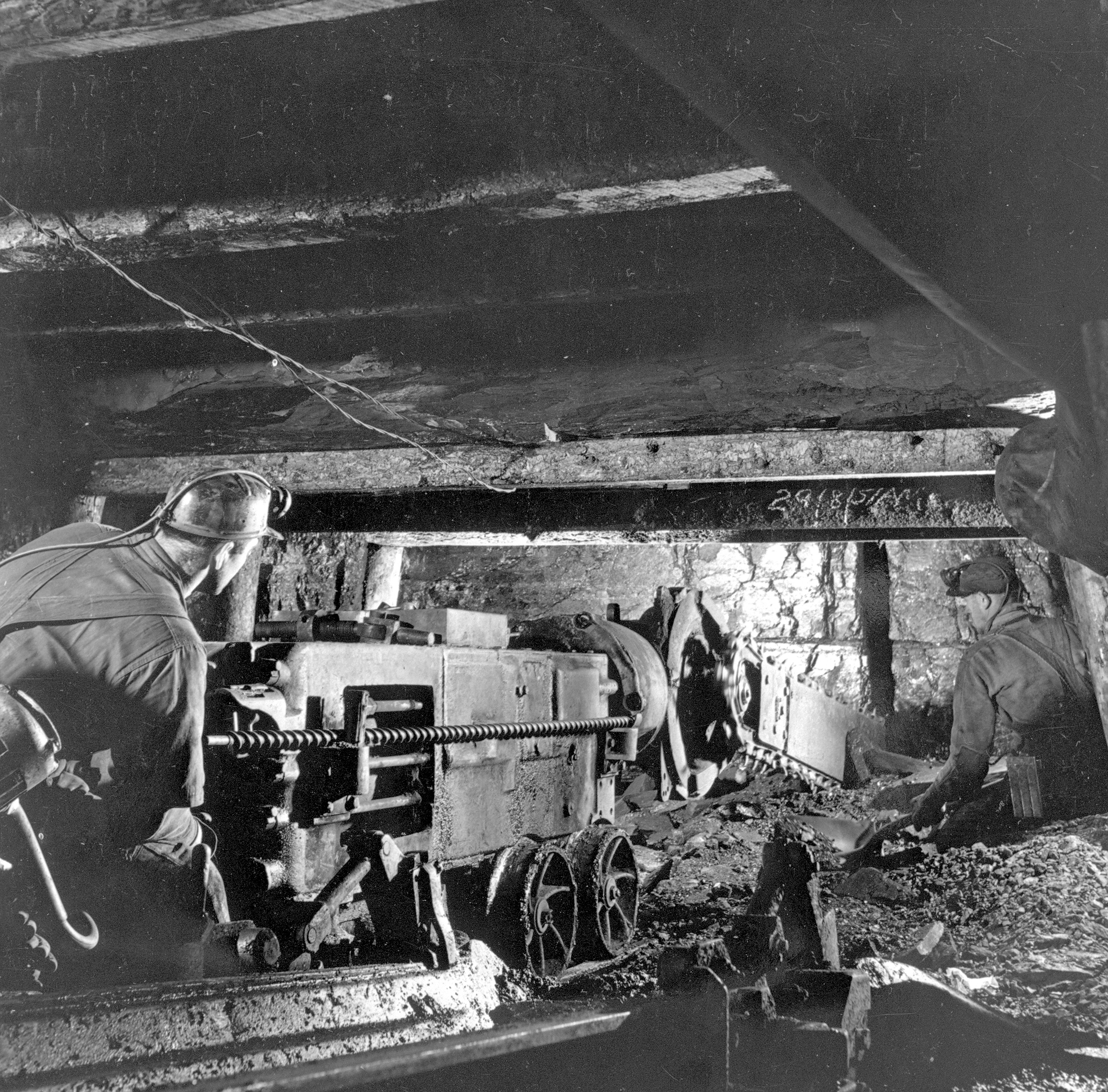
Miners using a universal coal cutter at Lethbridge Collieries, ca. 1950 Source: Provincial Archives of Alberta, A9908
Miners using a universal coal cutter at Lethbridge Collieries, ca. 1950
Source: Provincial Archives of Alberta, A9908

Alberta Culture has developed a comprehensive website that explores and promotes a deeper appreciation for the rich history of energy resources in our province and their role in shaping Alberta’s past, present, and future. The Energy Resources Heritage website explores the Alberta history of coal, conventional oil, oil sands, natural gas, electricity and alternative energy. It also profiles Bitumount, the pioneering industrial facility north of Fort McMurray that laid the foundations for Alberta’s modern oil sands industry.

The coal section of the Energy Resource Heritage Website examines the history of coal from the earliest times through the Industrial Revolution and the development of the coal industry in Alberta. It explores how the science and technology associated with coal mining has evolved, and how the industry responded to the sharp decline in demand for coal with the rise of oil and natural gas use after World War Two. It also explores topics relevant to the social history of the coal industry in Alberta, such as the evolution of coal towns; the roles played by women and children in coal communities; and the emergence of organized labour, which fought for better wages and safer working conditions in one of the world’s most dangerous industries.

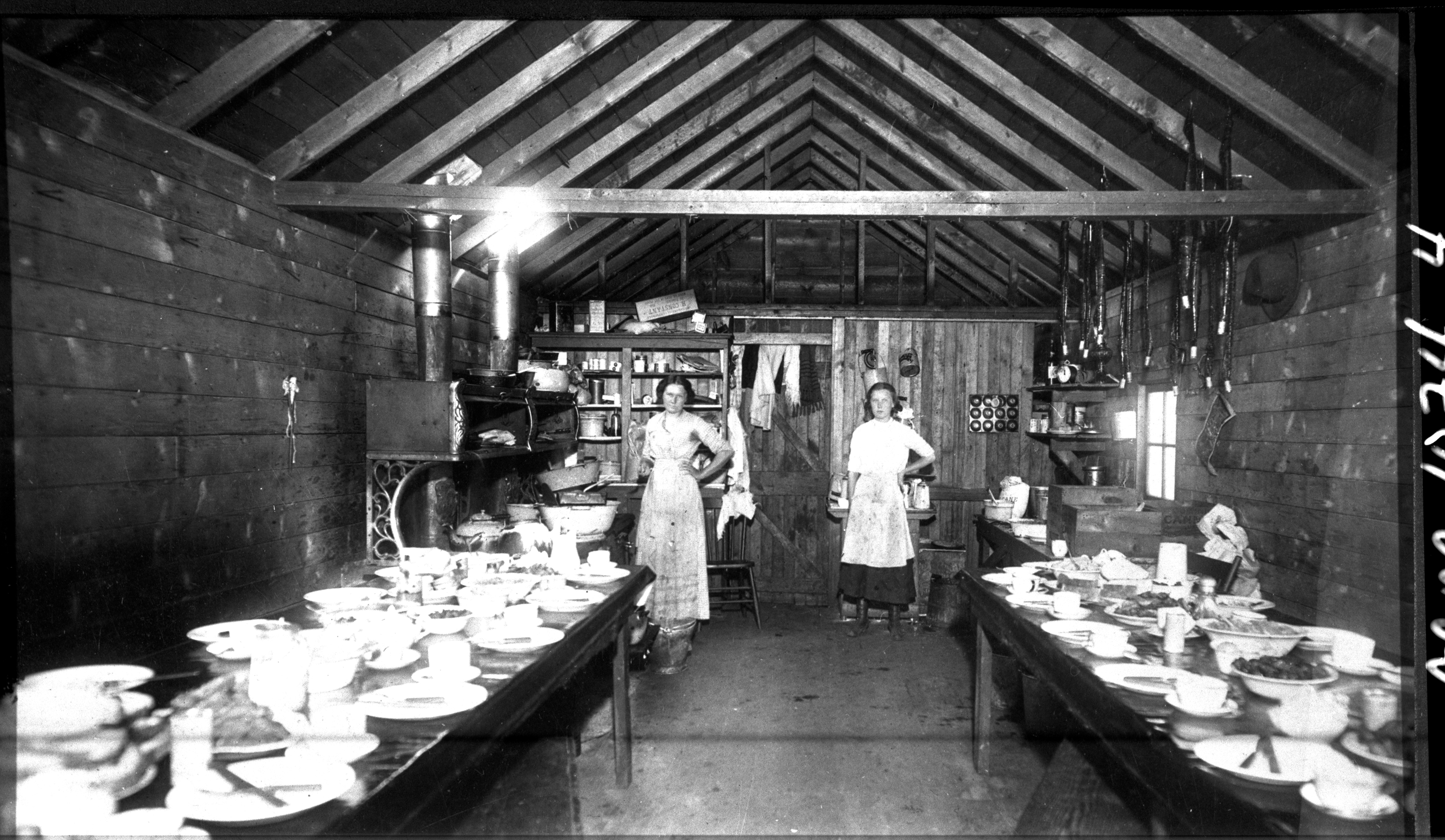
Two women stand in a cookhouse at Newcastle Mine in Drumheller Valley, ca. 1912; Newcastle was one of the first mine operations in Drumheller Valley to establish a cookhouse, which fed up to 100 miners three times a day. Source: Courtesy of Atlas Coal Mine National Historic Site
Two women stand in a cookhouse at Newcastle Mine in Drumheller Valley, ca. 1912; Newcastle was one of the first mine operations in Drumheller Valley to establish a cookhouse, which fed up to 100 miners three times a day.
Source: Courtesy of Atlas Coal Mine National Historic Site

The history of coal use by humans stretches back thousands of years, as coal’s ready availability and different properties have long made it a valuable resource in many parts of the world. In addition to burning it for heat, ancient peoples used coal for cultural and artistic expression. Bronze Age people in Wales, for example, incorporated coal into their burial customs, while ancient artisans in China carved coal into jewelry and other ornamental items. Similarly, First Nations people in Alberta used coal for decoration and carving, such as the extraordinary bison sculptures unearthed in a farmer’s field near Barrhead in 1949 (now housed at the Royal Alberta Museum).

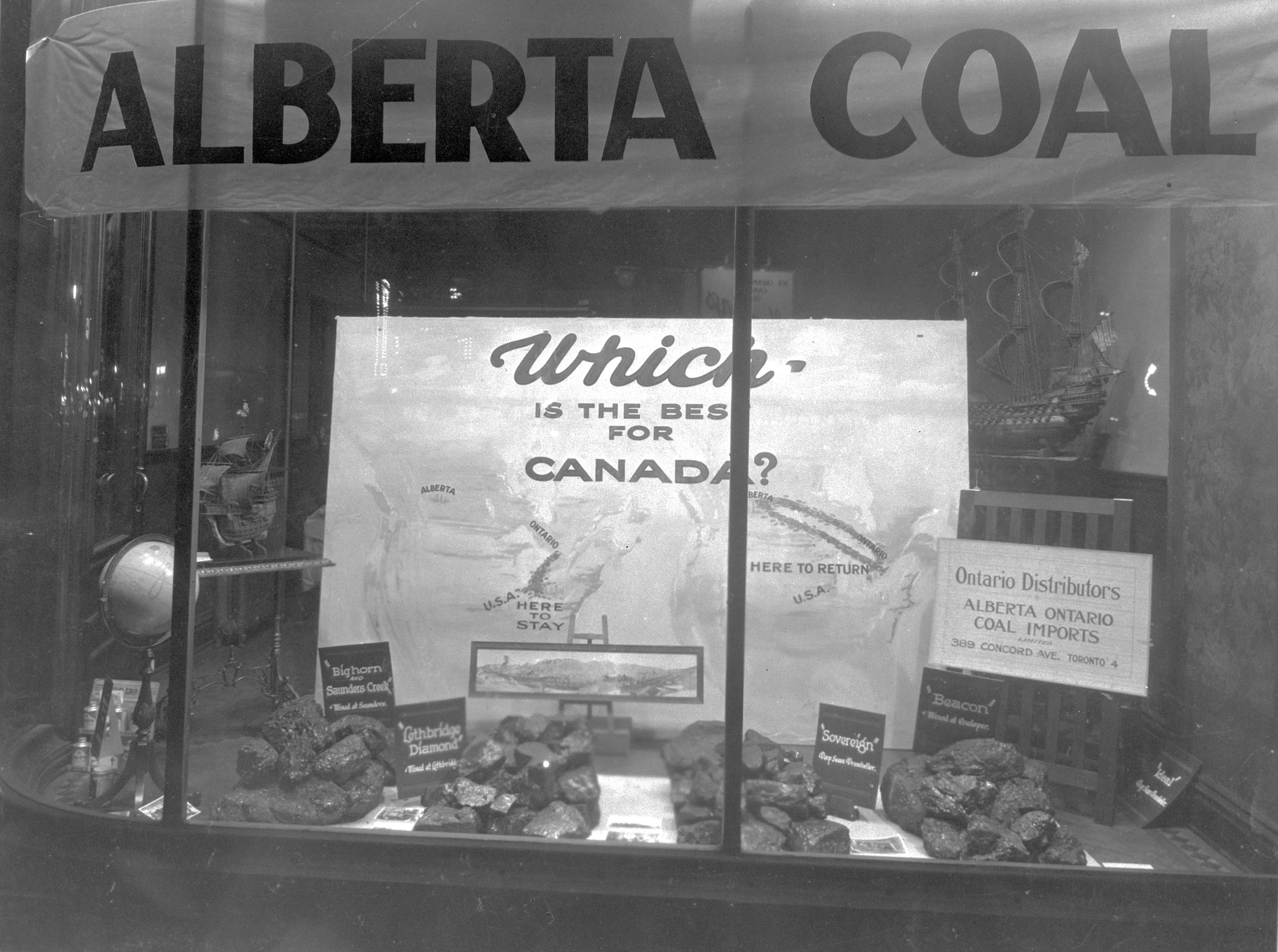
An Alberta coal company advertises in Ontario, n.d. Source: Provincial Archives of Alberta, A3975
An Alberta coal company advertises in Ontario, n.d.
Source: Provincial Archives of Alberta, A3975

The key turning point in the history of coal was the Industrial Revolution. As the primary fuel that drove steam engines in factories and railroads, coal became extremely valuable and was mined on an enormous scale. Railways quickly took over from watercraft as the most important means of commercial transportation, which in turn had a decisive impact on the history of Alberta. In 1881, the Canadian Pacific Railway was contracted to build a railway line across Canada and the company turned to the rich coal seams of Alberta as a crucial source of fuel. The province’s early coal industry was centred in southern Alberta (primarily near Lethbridge and in the Crowsnest Pass) but as rail lines spread throughout the province other centres of coal production emerged, including Drumheller and the communities of the Coal Branch. The rise of major cities like Calgary and Edmonton further drove the demand for coal, both for heating and for the generation of electricity at the province’s earliest coal-fired power plants.  Coal thus played a crucial role in the growth of Alberta in the late nineteenth and early twentieth centuries – it attracted investment and immigration and led to the development of some of Alberta’s earliest communities.

From the earliest use of coal to the challenges faced by the industry today, the coal section of the website offers visitors an introduction to the fascinating history of one of Alberta’s most important natural resources.

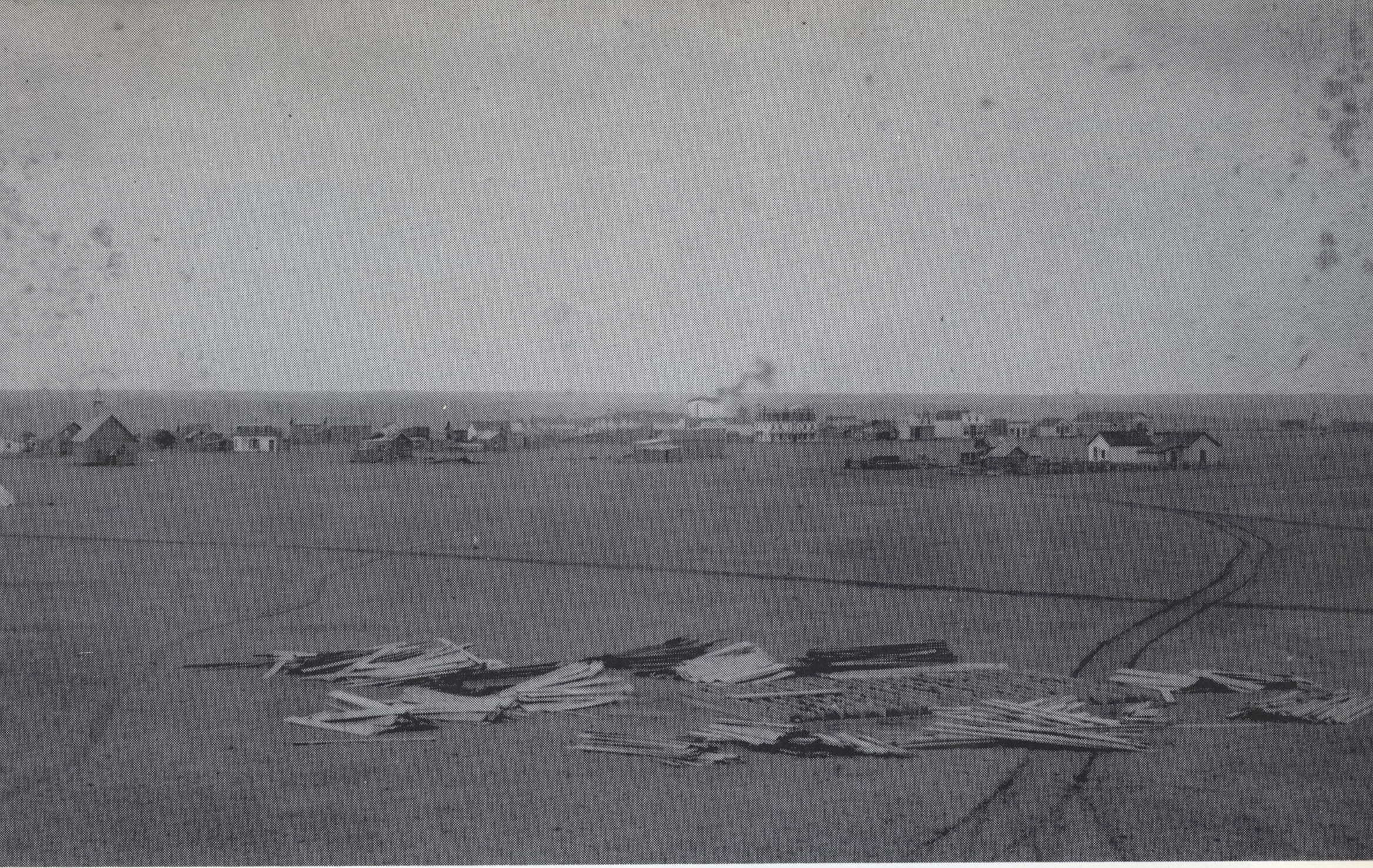
Lethbridge, an early coal producing centre, as it looked by November of 1886 Source: Galt Museum & Archives, P19770171000GP
Lethbridge, an early coal producing centre, as it looked by November of 1886
Source: Galt Museum & Archives, P19770171000GP

Written by: Allan Rowe, Historic Places Research Officer

Long-Time Adviser Is Dedicated to Helping People “Preserve Their Own History”

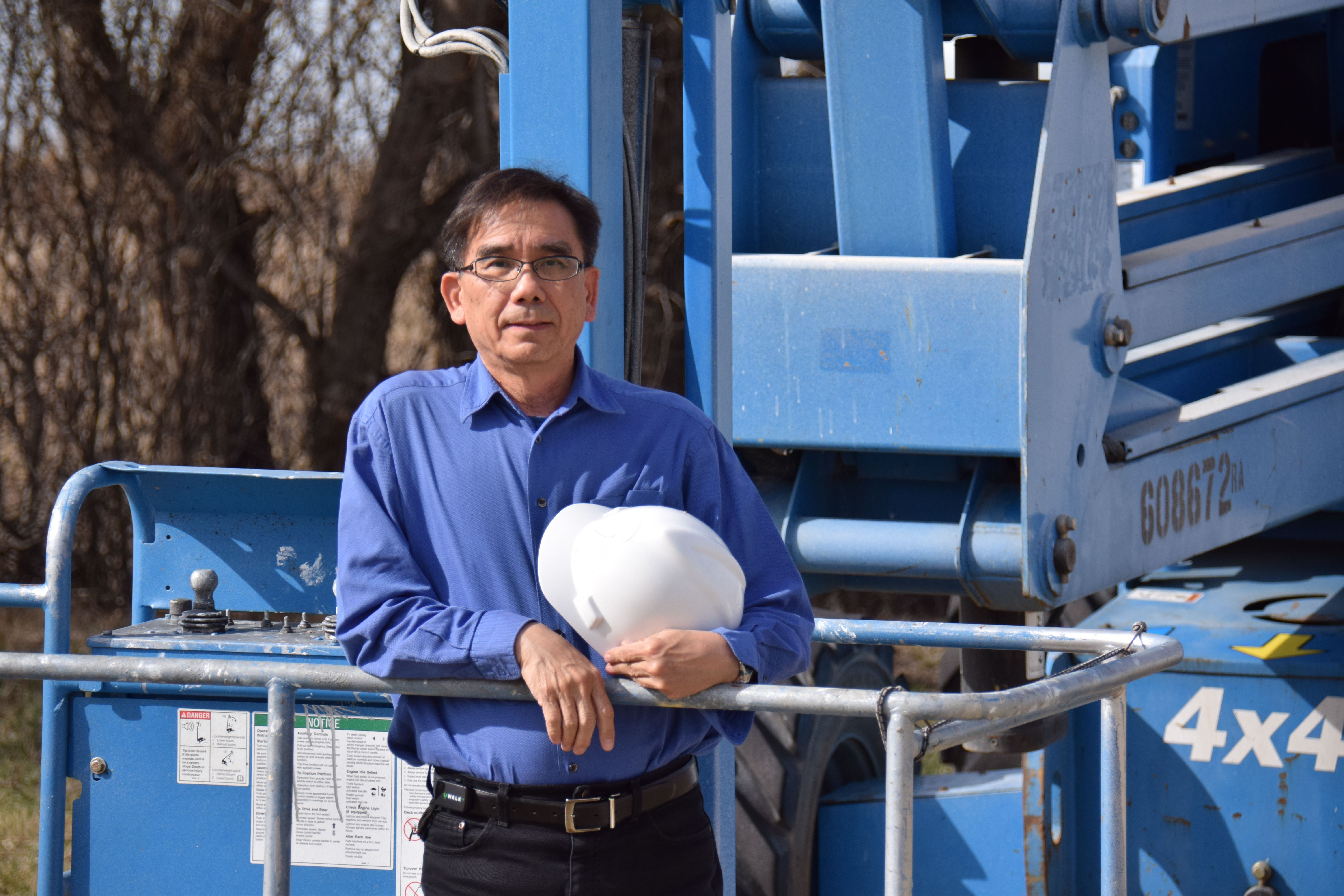
Gary Chen, Heritage Conservation Adviser for Northern Alberta

Gary Chen’s first job, after earning a diploma in Architectural Technology from the Northern Alberta Institute of Technology, was for the Government of Alberta providing technical advice on the conservation of heritage buildings. That was back in 1976; he’s never left. “If you don’t love the job, you probably won’t be there that long,” he says.

Originally, he worked on both privately owned and crown-owned properties. When the Historic Places Stewardship Section was established in 1999, Gary became one of the advisers working in its Conservation Advisory Services, which provides help to private owners of older buildings, especially those that are designated as Provincial Historic Resources or that have the potential to be designated.

Originally just two advisers covered the entire province. “So we’d be traveling all over, but mind you, in those days, we didn’t have that many sites designated,” Gary recalls. “One day I could be way up north in Fort Vermilion and then the next day I might be down in Medicine Hat.” Fortunately, Gary has always enjoyed the travel that is a big part of his job. He says, “I’ve been to almost all four corners of the province…I learned a lot about Alberta history and the local history while doing the work.” Today there are five advisers, and Gary covers the northern part of the province.

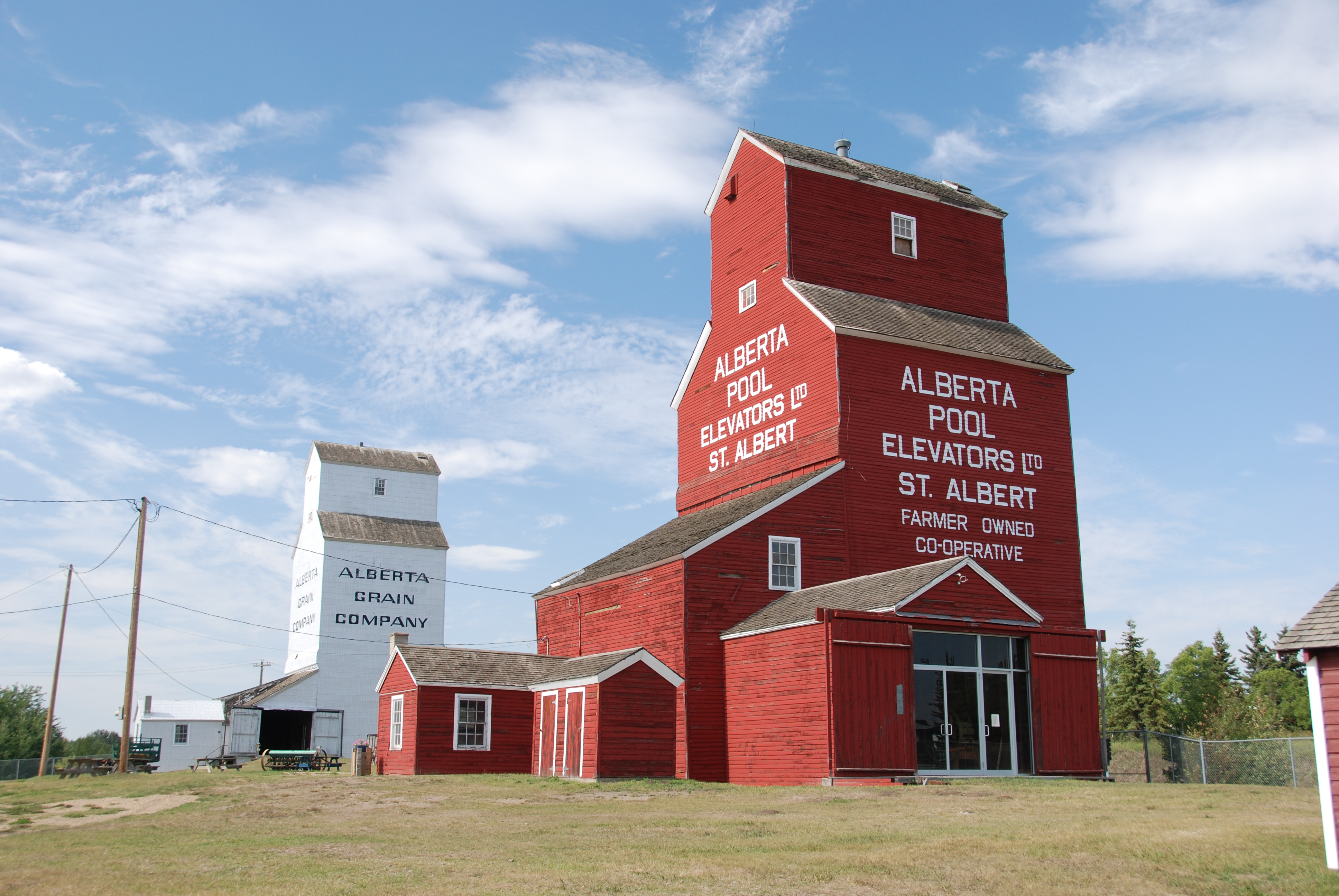
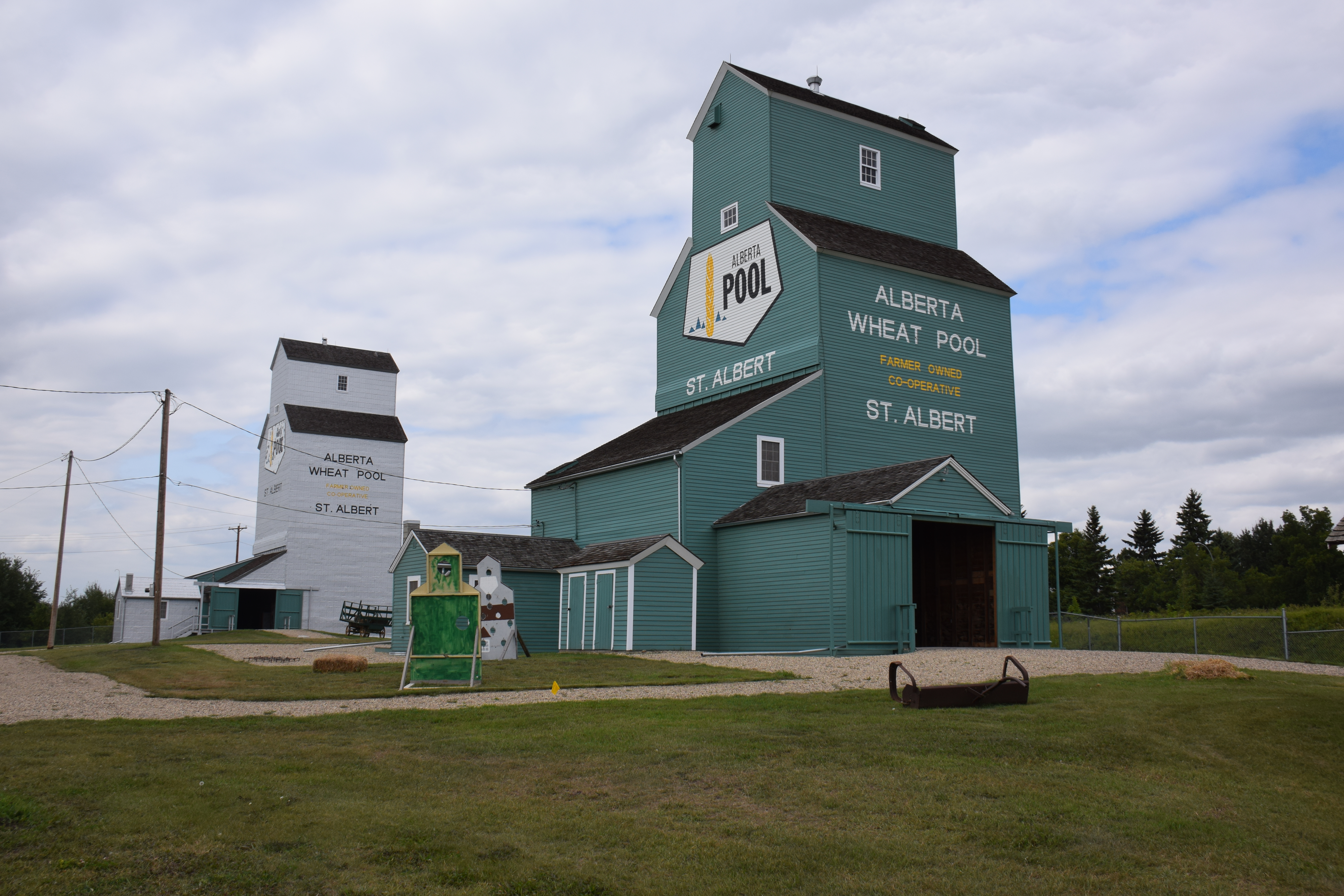
The kinds of projects he advises on vary widely. His latest involvement with a major restoration project required attending biweekly meetings with the conservation architect and others responsible for a multiyear restoration of the Alberta Grain Company and Alberta Wheat Pool grain elevators in St. Albert: “We would discuss and explore anything, and sometimes even climb up the scaffolding and help look at it, and if they had some specific technical question we would try to find a way to get the work done.” He is now making frequent trips to Athabasca to discuss the conservation and continued use of a vacant school building and an old train station that are landmarks in the community.

DSC_4416

St. Albert Grain Elevators, before and after restoration

Much of what he does is respond to requests for help from owners or stewards of individual properties—mainly homes but also churches, community buildings, and commercial structures.

“My job is partly just to help people to conserve their old buildings,” whether or not they are able to meet the criteria of being designated as historic, Gary says. Sometimes he discovers that a building has hidden potential. For example, it might have been covered by modern siding, but if that can be peeled back to expose the original facing, “the building will go back to its old charm,” he explains.

Even if an older building has been too greatly altered over time to meet the “integrity” criteria for heritage designation, Gary is still happy to visit and advise the owners: “The building may be carried down from their ancestors. I always regard those as their own history. I can still help them, give them advice so that they can be able to preserve their own history.”

The Heritage Conservation Advisers will get involved in a project at several stages. Sometimes owners of older buildings just want advice on how to solve a specific problem, such as a leaky roof. Often owners want to find out if their property might qualify for historic resource designation, which would allow them to apply for conservation grants from the Alberta Historical Resources Foundation. If the buildings are already designated, any changes to them must adhere to the Historical Resources Act and the Standards and Guidelines for the Conservation of Historic Places in Canada, so the advisers will provide pre-project guidance, monitor the work, and verify that it has been carried out appropriately. (The introduction of the Standards and Guidelines in 2003 greatly helped in explaining conservation principles and practices to the public, Gary notes.)

Requests for advice on repairs will almost always require a site visit for a “hands-on” look at the problem—climbing up ladders, crawling under floor joists, whatever it takes. Gary continues: “A lot of times we just use our trained eyes to catch the problem… Just based on my education, what I’ve learned, I could tell the owner ‘This beam is overloaded.’” He might send the owner a useful technical report. Sometimes the advisers will recommend that the owners hire a restoration architect, structural engineer, or other specialist. In that case, “our major job is to monitor… to make sure the work will be done properly even if they hire a professional.”

Back in the 1970s, when Gary started out in this field, there was little professional training available in the technical aspects of heritage conservation, so he learned on the job and through review of professional publications. “And in fact even today, I’m still learning because all these building technologies and materials change,” he says.

There have been many new tools for documenting and analyzing the buildings, notably digital photography. There are new materials available to replace or repair original historic fabric, and changing understanding about what methods and materials work best. For example, it was once considered a good idea to cover sandstone with sealant to stop it from weathering. But over time it was seen that this trapped moisture in the stone, leading to spalling (chipping or flaking) and other kinds of deterioration.

“Sometimes the challenge is to find new technology to help the old buildings continue to survive,” Gary says.

An even bigger challenge—and a fairly common one—is persuading owners to make the effort to undertake appropriate conservation of their historic buildings. Owners will wonder, for example, why they should try to retain their original wood windows, instead of just buying vinyl replacements from a hardware store. Or they’ll want to tear down walls to make rooms bigger. Or they’ll assume that it will be easier and cheaper to just demolish an existing building and design something new.

“If you’re willing to spend the time, you should be able to preserve what is there,” Gary says. And it’s important to try, he points out, “because, after all, it was a pioneer who came up with the idea, the design…and we have to respect their design…Sometimes you have to look at it almost like an antique…The rooms are maybe smaller and you prefer bigger, but you still respect how it was built.”

“You try to convince them, a lot of times, by slowly using different examples,” he says. “Sometimes I have to be flexible too. Basically, you allow them to make certain changes but maybe, with my advice, the change that they make is still sympathetic to the historic building.”

One of Gary’s favourite, but most challenging, projects was the restoration of the Grande Prairie High School—one that called for much consultation and compromise.

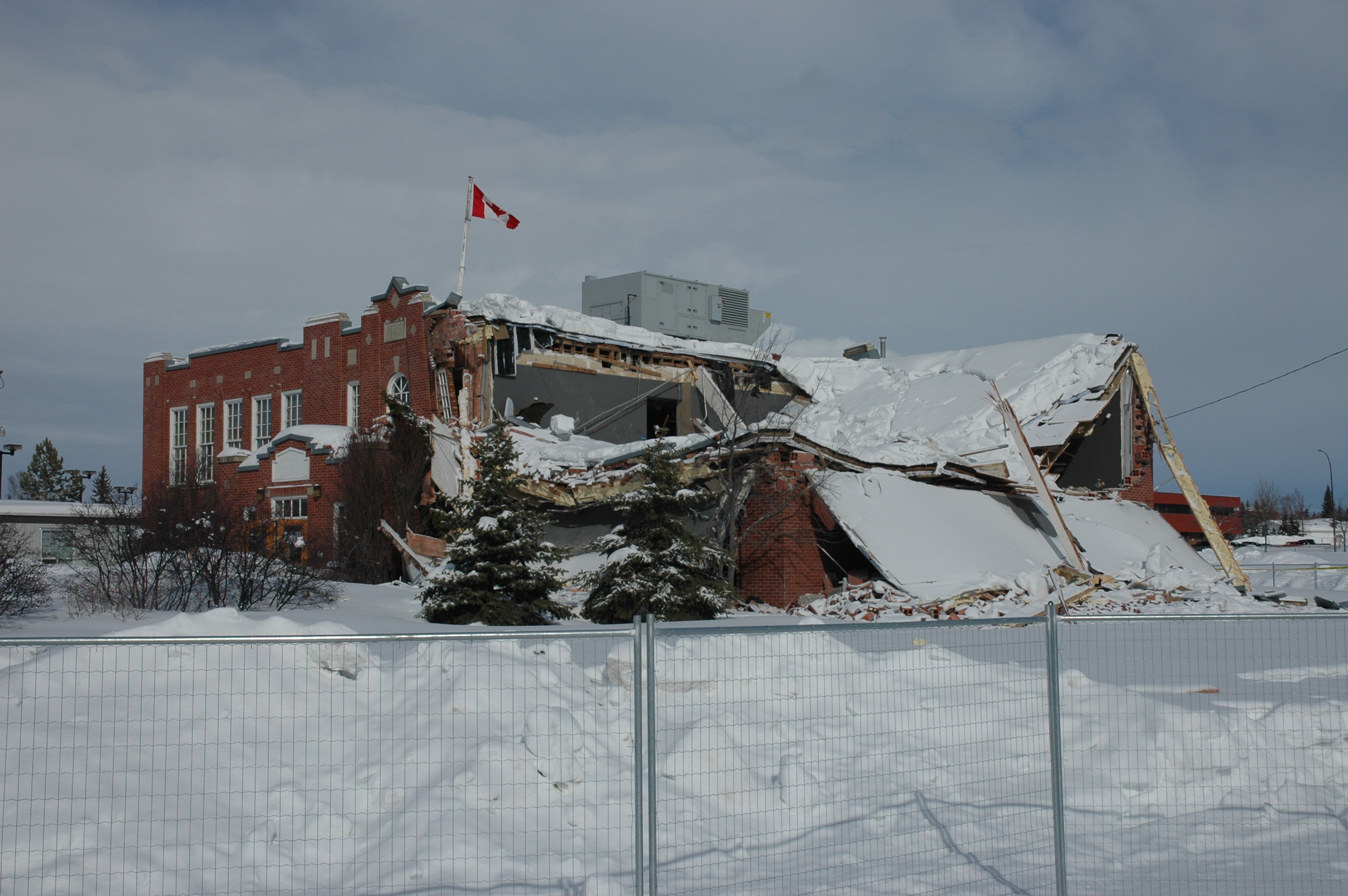
The two-storey brick Collegiate Gothic school was built in 1929 and converted to an art gallery in 1975. In 2007 a heavy snow storm caused the roof and a portion of the building to collapse. At that point, the City (the building’s owner) considered tearing it down and replacing it with a purpose-built gallery, with appropriate climate controls and other modern features.

Grande Prairie High School, with collapsed roof

But “because a portion of the roof has collapsed it doesn’t mean the building is totalled,” Gary says. “So we hired an architect” to show that the building could be repaired and retained. “Because of the [building’s provincial heritage] designation, we had to stand firm and say, ‘Preserve whatever is possible. It’s your history. If it’s gone, it’s gone. People can only remember by pictures.’” Many local citizens agreed. “After all, they don’t really have that many historic buildings in the city of Grande Prairie.”

The architect hired by the City proposed building a new structure that would enclose the old school building. “I look at it and I say, well, why don’t we do it the reverse way?”

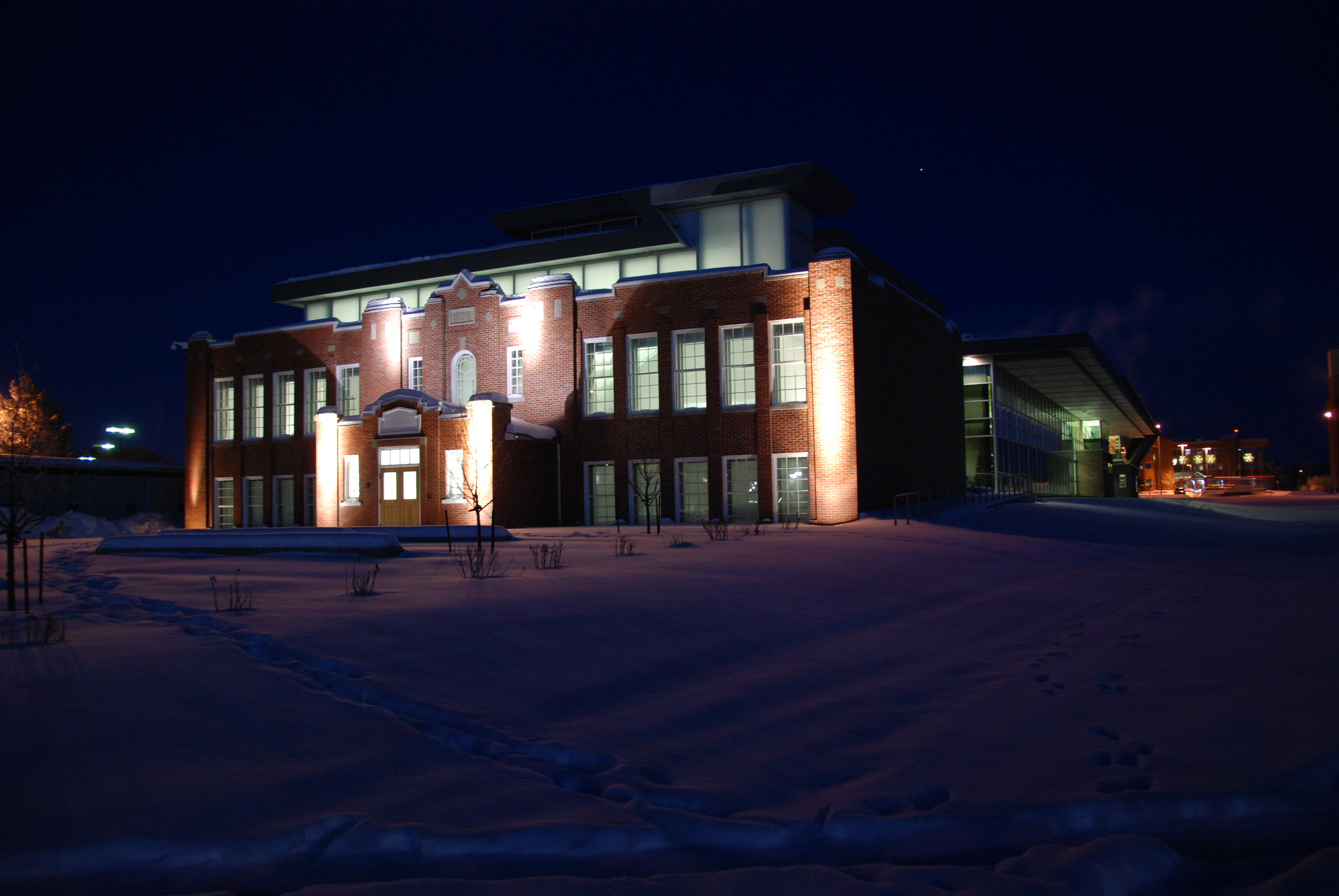
And that’s what happened. “At the end, this building was preserved, but only the building shell….They designed a steel-frame building inside the brick building. Now they do have a [modern] art gallery, and I think they’re proud that the people can still be able to see what the old high school looked like.”

“It might not be the kind [of project] that we really like,” Gary concedes, since historic interior features were not retained, but it did succeed in saving and giving continued life to a significant community building.

Grande Prairie High School
Grande Prairie High School, with building shell preserved

This is what has kept Gary engaged in this work for nearly four decades. “We’re not only preserving a building, we’re preserving the history,” he says. And one learns about history “not just by reading a book, [or] looking at pictures. Sometimes we have the physical evidence right there, that really helps for future generations.”

Written by: Kerri Rubman

Labour Day in Alberta, 1894-1914

As a social historian, I am fascinated by the history of holidays and public celebrations. Holidays are one way that political authority and popular culture influence each other: governments decide which holidays to recognise, but the people decide how to celebrate them. Records of these celebrations offer a unique window into the past, yielding insight into how our culture and society has (or has not) changed. In honour of this year’s September long weekend, I took the opportunity to look back at how Albertans celebrated Labor Day in the late nineteenth and early twentieth centuries.

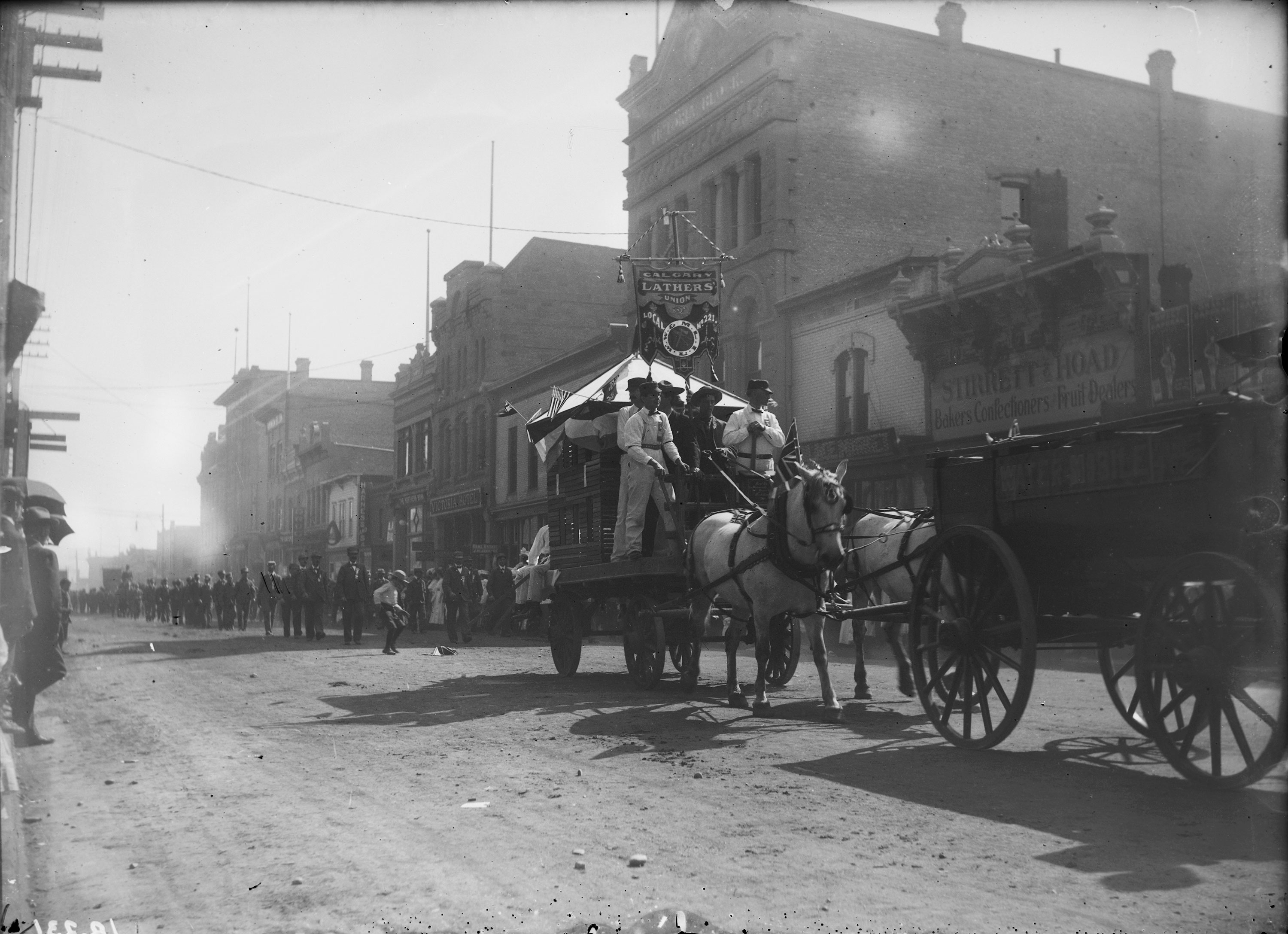
The Calgary Lathers’ Union, Local 221, participating in an early twentieth-century Labour Day parade (ca. 1908). Courtesy of the Provincial Archives of Alberta, IR231

The Parliament of Canada passed legislation in 1894 setting aside the first Monday in September as a statutory holiday. The proclamation of this new holiday was one of the many recommendations in the final report of the Royal Commission on the Relations of Labour and Capital (1889), which had investigated conditions in factories and industrial worksites across Canada. Given the range of problems exposed by the Commission – including low wages, unsafe working conditions, and the widespread use of child labour – a new holiday was perhaps less urgently needed than other reforms. Nonetheless, the idea of a new holiday received widespread support, and Canada celebrated its first Labour Day on September 3, 1894.

In the heavily-industrialised cities of eastern Canada, this legislation merely caught up with what was already happening in many urban communities, where organised labour had started to take root in the late nineteenth century. Skilled workers such as carpenters, printers, stonemasons and pipefitters organised into craft unions to protect their particular interests. Leaders of these craft unions began to push hard for a holiday that recognised the importance of their labour, and many cities responded by declaring Labour Day a civic holiday in the 1880s. By the time Labour Day was declared a national holiday in 1894, workers in cities like Toronto, Hamilton and Montreal had already been celebrating it for many years.

By contrast, in the relatively new and lightly-industrialised cities of Alberta, the first Labour Day passed with little fanfare. “To-day is Labor day, or rather, no labor day,” the Edmonton Bulletin dryly commented in September 1894, “and as a consequence, the stores in town are closed.” Within a few years, however, each Labour Day was met with greater enthusiasm, and Albertans enjoyed the holiday in ways that would be familiar to us over a century later.

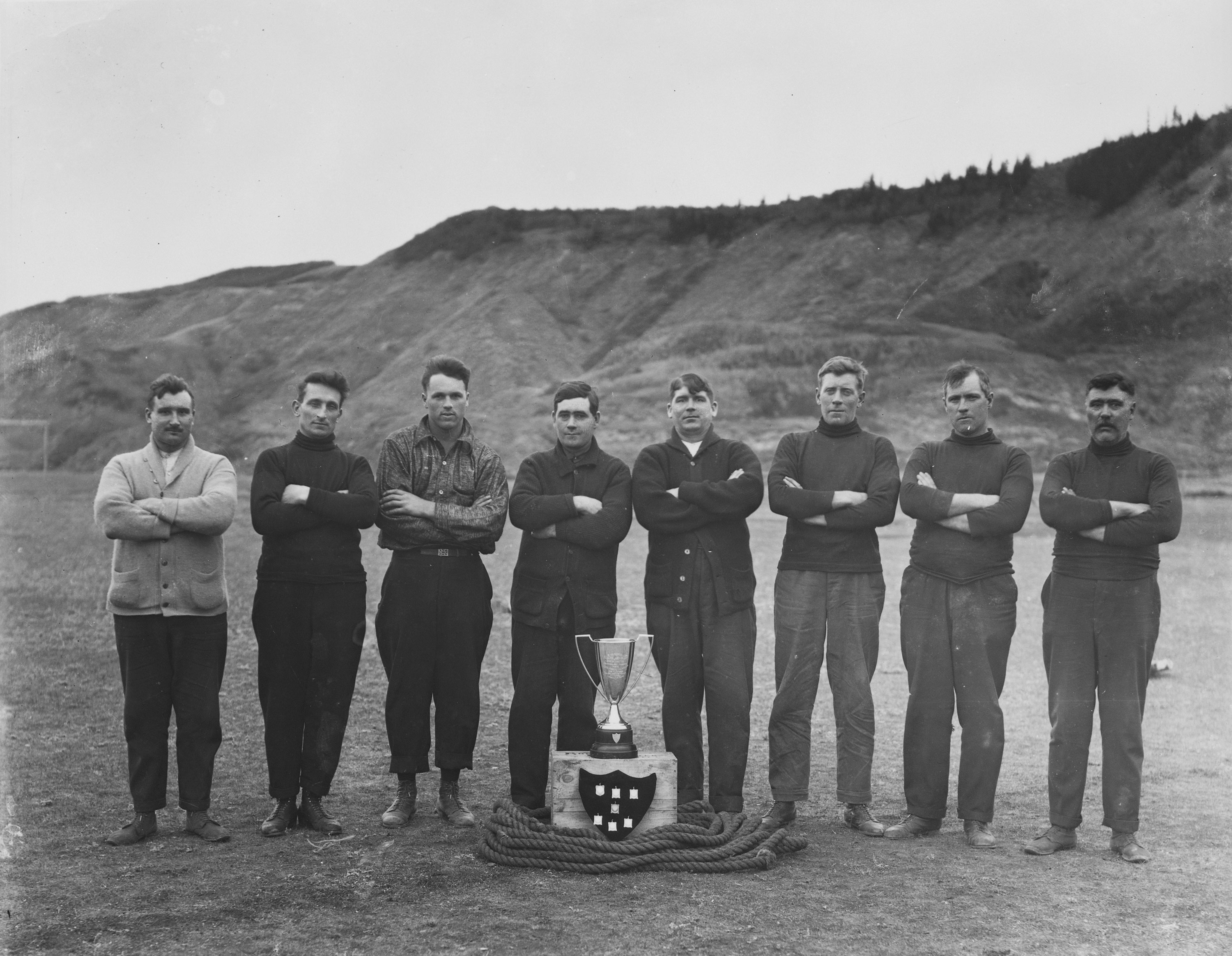
From the outset, sports were an important part of Labour Day celebrations. These miners pose with their trophy after winning the Labour Day Tug-of-War in Drumheller (ca. 1920). Courtesy of the Provincial Archives of Alberta, A15048.

Outdoor recreation soon became an important feature of the day, as sportsmen took advantage of the newly-created long weekend for hunting and fishing excursions. Organised sports were soon an important part of Labour Day as well, with bicycle races, track and field competitions, and team sports organised in different parts of the province by the late 1890s. In 1899, the Edmonton Cricket Club invited their rivals from Calgary for a tournament on the Labour Day weekend – an early example of the Calgary-Edmonton sports rivalry that remains such a feature of Labour Day in present-day Alberta.

Early Labour Day celebrations in Alberta were marked by sports, leisure and recreation, but had little to do with recognising the working class.

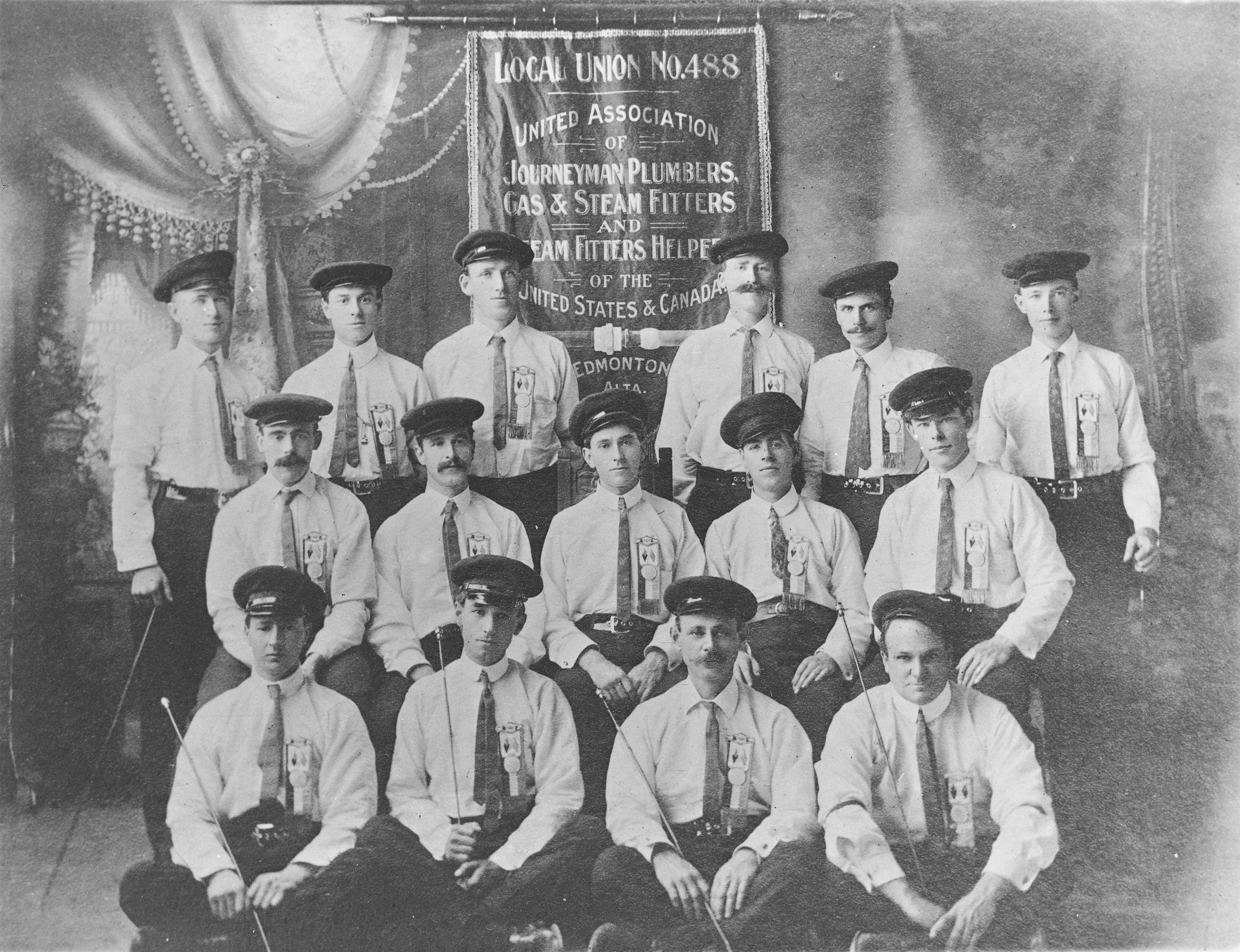
This changed after 1900 with the rise of organised labour in Alberta, particularly in its largest cities. Between 1900 and 1910, roughly one-third of the skilled tradesmen in Calgary and Edmonton organised into craft unions.  As a result, Labour Day celebrations in Calgary and Edmonton began to resemble the much larger events held in eastern Canada, with parades, speeches, and labour-organised leisure events. In 1904, for example, the Edmonton Trades and Labour Council organised a “monster parade” of the city’s craft unions down Jasper Avenue. The men (and they were all men – early twentieth-century craft unions were exclusively male organisations) marched in orderly procession behind banners, flags and brass bands, wearing find clothes to emphasise their respectability to the general public. The parade included a number of floats where tradesmen demonstrated their craft to the audience. The day ended with organised sports, pitting one union against another in good-natured competition, and speeches where union leaders spoke about the contributions of labour to social and economic prosperity. In Calgary in 1907, an estimated two thousand people marched down Stephen Avenue, followed by an afternoon of sports and family entertainment in Victoria Park. Similar scenes played out on a smaller scale in Alberta’s coal mining centres such as Drumheller and the Crowsnest Pass.

Local 488 of the United Association of Plumbers and Pipefitters, Edmonton (1904). This portrait illustrates the images that craft unions wanted to project to the public during Labour Day parades – well dressed, respectable and dignified. Courtesy of the Provincial Archives of Alberta, A19670.

These events, of course, did not represent Alberta’s entire working class. Early Labour Day celebrations were driven by craft unions – unskilled workers had little official presence at the events. The labour contributions of women were not generally recognised at these events, though women certainly took part in the leisure and recreation activities after the parade. Further, the exclusive focus on organised labour was soon diluted by the participation of other community groups and organizations in the annual parade. Nonetheless, these parades represent a colourful and important part of Alberta’s labour history, when craft unions sought to use a holiday to claim public space and promote an image of respectability and dignity. Such events were very uncommon after World War Two, as Labour Day celebrations returned to the pattern established in the 1890s – informal recreation, family leisure, and of course, sports rivalries.

Written by: Allan Rowe, Historic Places Research Officer.

Sources

Bright, David. Limits of Labour: Class Formation and the Labour Movement in Calgary, 1883-1929. Vancouver: UBC Press, 1998.

Finkel, Alvin. Working People in Alberta: A History. Edmonton: Athabasca University Press, 2012.

Herron, Craig and Steve Penhold. The Workers’ Festival: A History of Labour Day in Canada. Toronto: University of Toronto Press, 2005.

Growing Main Street Network meets in Lethbridge for Training

Leaders in the Alberta Main Street Program met in Lethbridge this week for their quarterly network meeting and some strategic training. The Main Street Program is a dynamic network of communities engaged in community regeneration through heritage conservation.

Alberta Main Street Program Leaders during their Lethbridge meeting, August 276, 2104

As frequent  RETROactive readers will remember, the network met earlier this year in Olds, and then also in May at the U.S. National Trust Main Street Conference in Detroit, Michigan. This meeting was the first for Old Strathcona since joining the program in May, and also the first for Camrose’s new Main Street Coordinator, Janet Hatch.

Each community presented a brief update on the work of their program, including organizational work in Camrose and Old Strathcona, and streetscape initiatives and adaptive re-use projects in Olds and Wainwright.

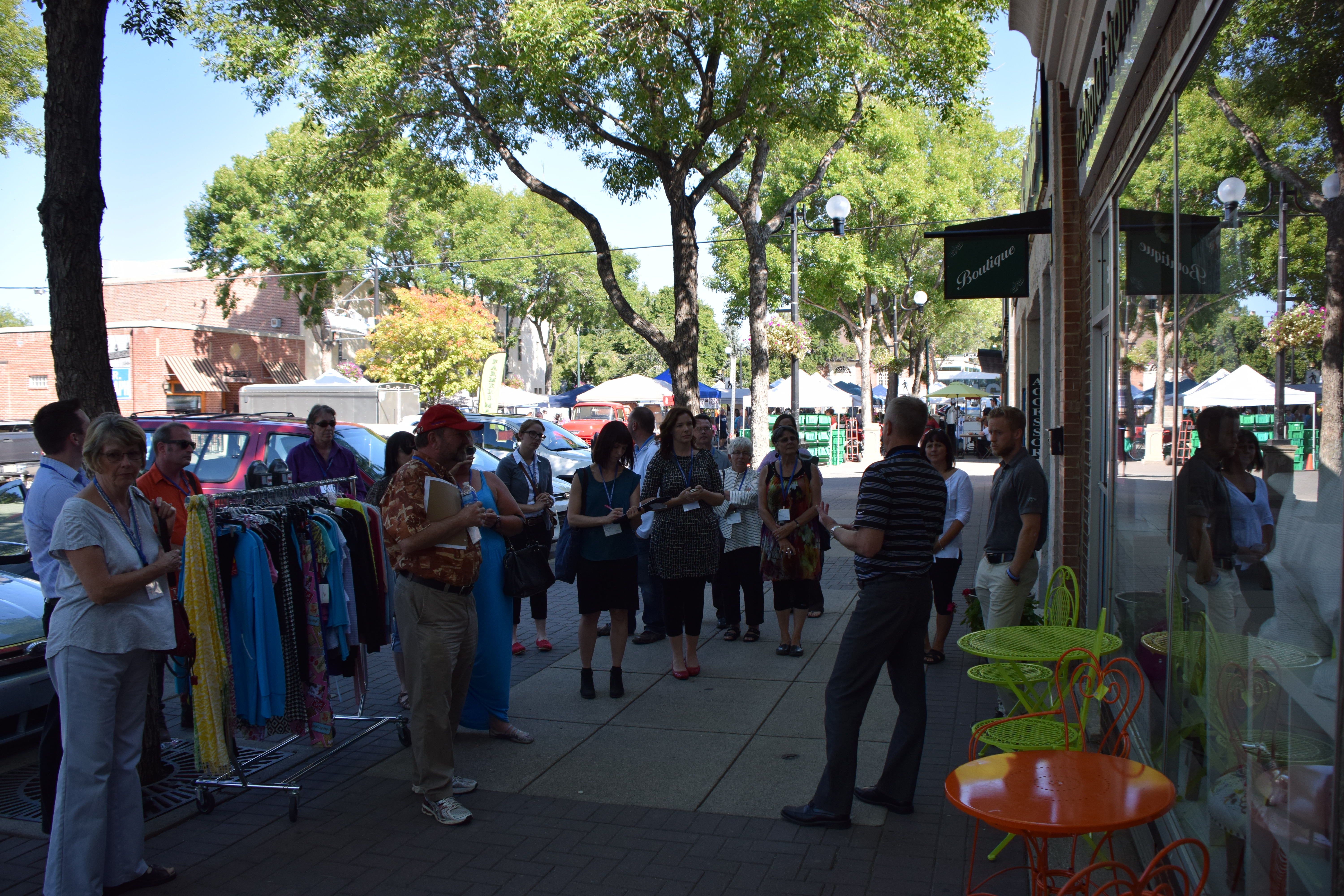
A walking tour was co-led by Ted Stilson, Executive Director of the Downtown Lethbridge BRZ and Main Street Coordinator, and Belinda Crowson, President of the Historical Society of Alberta. As we strolled through the historic downtown area, on a warm Farmer’s Market morning, Main Street leaders were able to see first-hand some of the significant heritage conservation work that has taken place in Lethbridge under the auspices of the Main Street Program.

Main Street leaders take notes on how Lethbridge's historic downtown has thrived.
Main Street leaders take notes on how Lethbridge’s historic downtown has thrived.

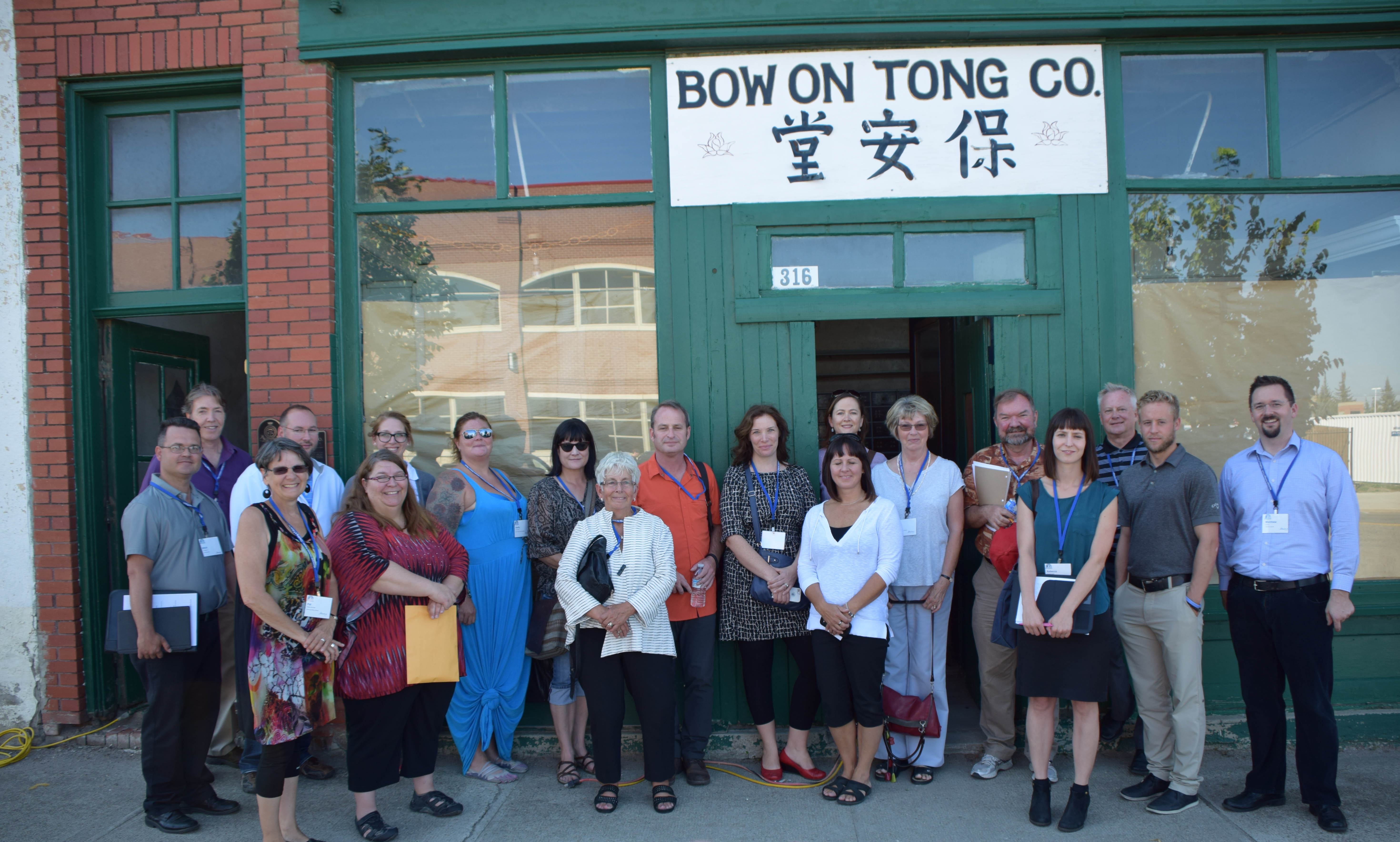
The group especially appreciated getting a tour of the work in progress on the Bow On Tong Building, which has also been featured on RETROactive.

After the walking tour and lunch at Mocha Cabana, one of the City of Lethbridge’s Municipal Historic Resources, historically known as Bell’s Welding, the group participated in a lively training workshop led by Jim Mountain, Director of Regeneration Projects for Heritage Canada the National Trust.

Jim Mountain, Director of Regeneration Projects for the Heritage Canada Foundation.

Jim facilitated a very informative, interactive session on “The Role of the Main Street Coordinator.” His insights, gleaned from years of experience as a practitioner in heritage-led regeneration – both in Fort Macleod and across Canada – were beneficial for both our seasoned veteran Coordinators and also our newer leaders.

Alberta’s Main Street leaders are already looking forward to the next network meeting and training session, to be held in Old Strathcona at the end of November.


Ancient and Early Historic Fishing in the North

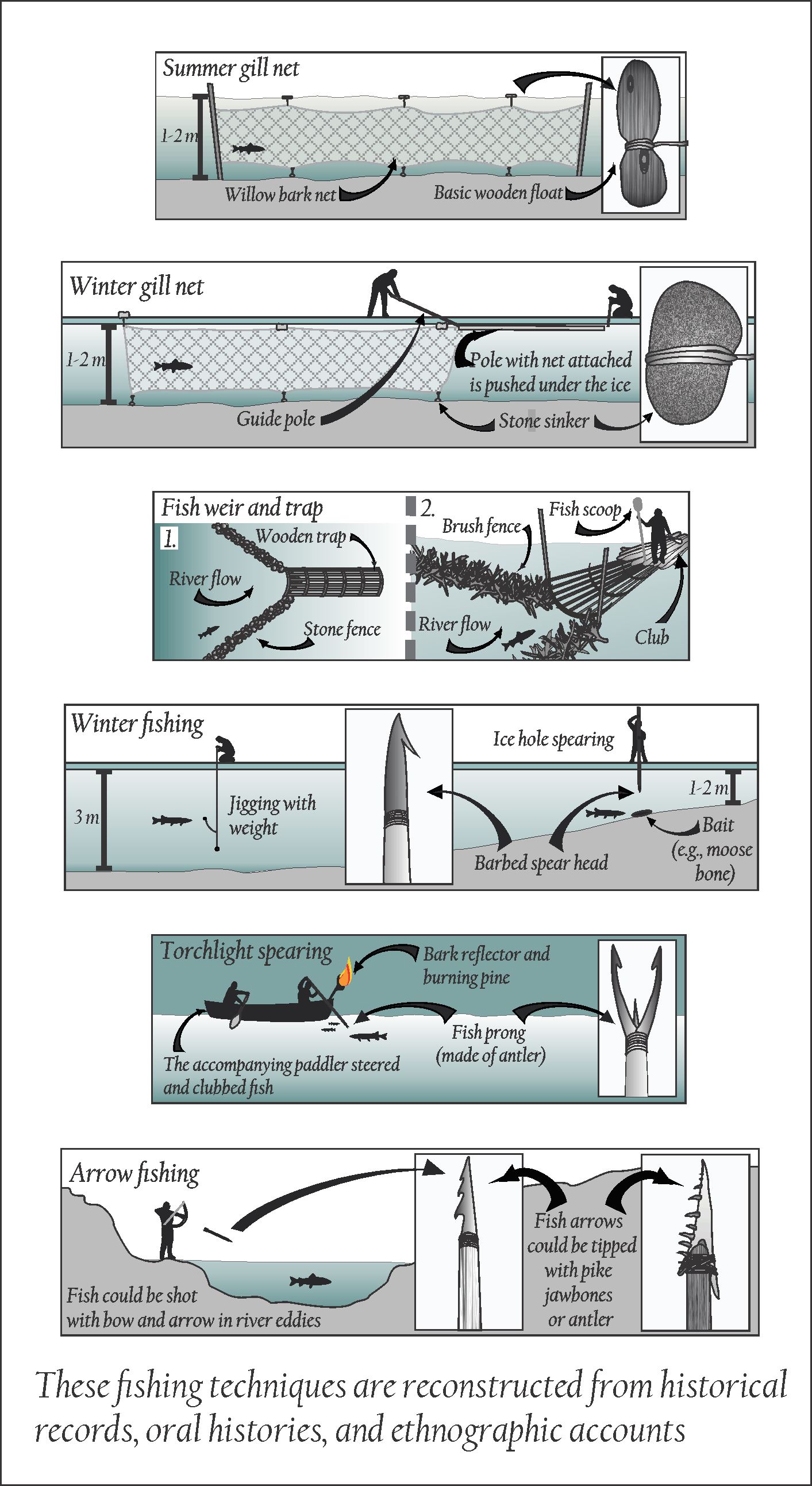
In the boreal forest, where big game animals were often hard to find, fish were a life-saving staple for thousands of years. Archaeological and historical records reveal a wide variety of fascinating angling techniques used by Alberta’s First Nations.

Figure 9. Fishing techniques edit


To increase awareness of these practices and other elements of Alberta’s past, a collaborative team of the Historic Resources Management Branch, the Royal Alberta Museum, and the University of Alberta initiated the Heritage Art Series project. The goal is to create artwork that captivates the public in order to encourage the appreciation and protection of Alberta’s past.

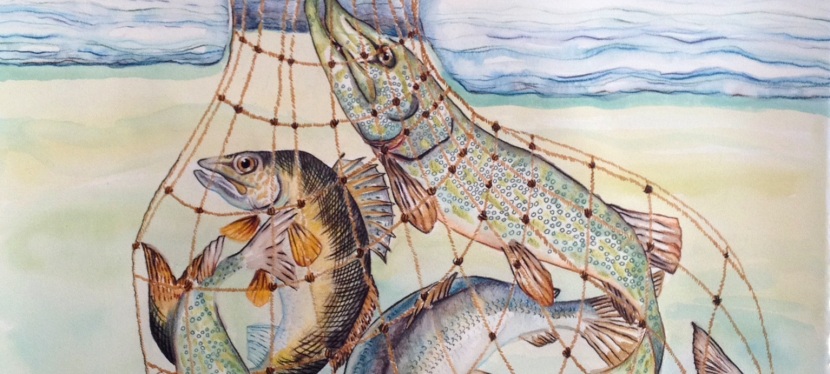
The second painting in the series is a symbolic depiction of a mother teaching her daughter about the relationship between people and fish. First Nations survived in Alberta by passing down immense amounts of knowledge, which this image by Jenny Keith illustrates. The artwork also celebrates the role that women make to traditional diets. Fishng was primarily a women’s task in Northern Alberta. Women needed to know where to catch fish, how to make nets, how often to check them, and when to repair them.

The largest catch of fish was traditionally by gill net during fall spawning runs of whitefish. Whitefish were particularly important because they are high in fat, which becomes scarce in the north during long winters. Gill nets are long rows of interconnected squares that capture fish by the gills. What were nets made of before twine? Amazingly, women spent hundreds of hours weaving twisted willow bark or animal sinew into long nets.

Figure 10. Net IMG_1047
This is an example of a willow bark net from the Royal Alberta Museum.

Gill nets were set across rivers or narrow channels during warmer months or were strung through holes under the ice in winter. Large fish were also shot with bow and arrow or were speared by canoe. Some First Nations made fishing arrowheads out of pike jaw bones: nothing catches fish better than fish! Jigging with hooks made of bone and wood was also done, primarily in winter. Hooks were baited with meat scraps, hair, feathers, and beaver oil.

Fishing increased in importance when Europeans arrived. Fur traders in Northern Alberta made a living on pelts but they lived on fish. At Fort Chipewyan in Northeast Alberta, traders caught 33 000 fish from October to January in 1822. The ration was four fish a day (and a potatoe if they were lucky). Some northern trade posts even had to be relocated because they lacked good access to fisheries.

The archaeological record of fishing is sparse because fishing tools are often organic while fish bones tend to be fragile: very little of this survives in Alberta’s acidic soils. Some interesting fish-related fnds include possible stone fish hooks, bone prongs used on fish spears, sinkers (weights) that weighed down nets, and fish vertebrae that were drilled to make beads.


Artifact compilation
This is a collection of pre-contact fish-related artifacts from Alberta that span several thousand years.

Recently developed scientific techniques have also enabled the recovery of fish blood from the edges of stone tools like arrowheads and knives. Even though fish bones don’t survive, archaeologists studying blood residue have been able to determine that fish like pike, walleye, and whitefish were caught thousands of years ago. Lastly, fur trade forts have yielded an interesting array of early hooks. Some are entirely metal while others, like the example below, are a combination of bone and iron.

Figure 4. Fish hook
This fur trade fish hook was found by Jack McIntosh at Dunvegan near Grande Prairie.

When asked to imagine ancient life and food harvesting practices, people often think of men stalking mammoths or stampeding buffalo over cliffs. In reality, for much of Alberta’s human history, women have made just as important if not more important contributions to traditional diets. The painting above is intended to broaden perspectives of hunting and fishing practices while emphasizing the social dimension of food harvesting. People didn’t just survive by capturing food; they persisted for thousands of years by acquiring generations of knowledge that was passed down from parent to child year after year after year.

Stay tuned for the next installation of the Heritage Art Series, which will present the physical record of cabins and their significance in Alberta’s early history.

Written by: Todd Kristensen, Northern Archaeologist, and Dr. Jack Ives.