Written by: Ron Kelland, Historic Places Research Officer
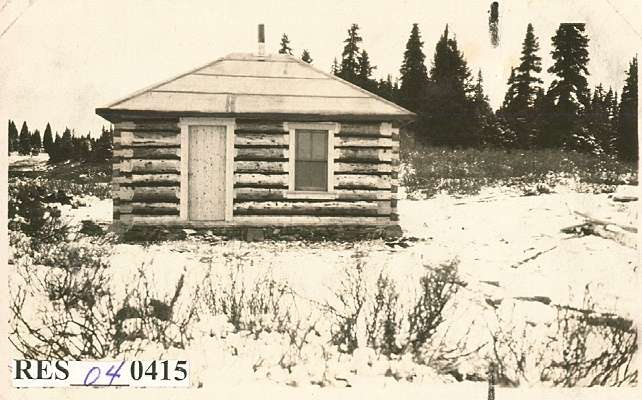
Alberta’s newest Provincial Historic Resource is the Mile 58 Forestry Cabin in the Willmore Wilderness Park. Now the most remotely located designated resource in the province, the cabin tells an interesting and important story about the protection of Alberta’s forests and the forest rangers that sheltered in cabins like this while riding the trails in our province’s forests.
The Dominion Forestry Branch
The story of the Mile 58 Forestry Cabin begins in Ottawa, with the establishment of the Dominion Forestry Branch in 1899. The Dominion Forestry Branch, a sister service to the Dominion Parks Branch (now Parks Canada Agency), was established to manage forest resources on Crown lands. By 1911, a number of protected forest reserves had been created in Alberta, including the Athabasca Forest Reserve north of Jasper.
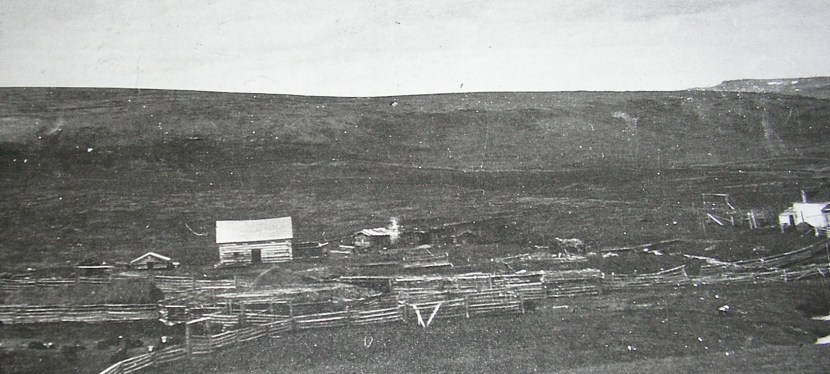
The Mile 58 Forestry Cabin was built by forest ranger Jack Glen with assistance from some of his fellow rangers. Glen was a former Royal North-West Mounted Police officer and had joined the Dominion Forestry Branch in 1920. In addition to the Mile 58 Forestry Cabin, Glenn also built the Eagle’s Nest and Big Grave Flats cabins, and was likely involved in others as well. Source: Alberta Agriculture and Forestry. Alberta Forest History Photographic Collection.
Stained glass at Old St. Stephen’s College, on campus at the University of Alberta in Edmonton.
In 1935, the chapel unveiled within St. Steven’s College displayed plaques commemorating the war service and sacrifices of its brave associates. Dated to 1923, the first plaque honoured 19 Ministers and 61 Probationers who served during the Great War, as well as eight who “bravely fell”. A separate plaque commemorated “To the Glory of God and in Loving Memory” eight students of Robertson College “who fell on the field of Honour” during the war. One individual plaque was also dedicated in memory of Harold G. Riddle of Robertson College who died at St. Omer, France in 1916 and proclaimed Virtute Praeclarus (“Brilliance with Courage”) in his memory.
Written by: Ron Kelland, Historic Places Research Designation Officer
Place names, or toponyms, are an important aspect of language. At their most basic, place names serve an important role in wayfinding and navigation. They allow us to locate ourselves within the landscape, or, perhaps more importantly sometimes, they allow others to locate us.
Place names also have another often-overlooked role. They are cultural artifacts, containing within them the stories of previous generations. They reveal historical land uses and show the values of previous generations. They connect people to both the present physical landscape and to their own culture, history and heritage.
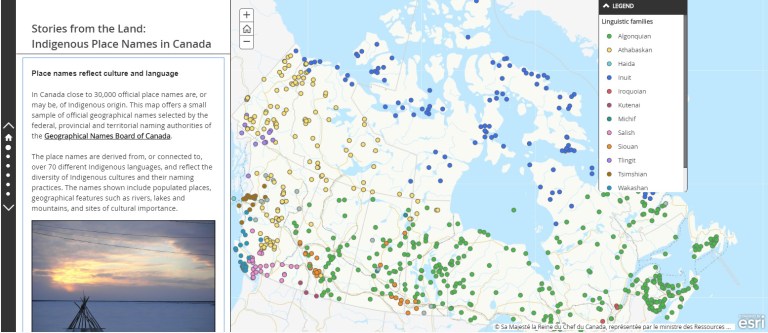
Stories from the Land: Indigenous Place Names in Canada Interactive map. Source: Natural Resources Canada.
2019 is the International Year of Indigenous Languages. The United Nations made the designation in 2016 in order to, “draw attention to the critical loss of indigenous languages and the urgent need to preserve, revitalize and promote indigenous languages.” The resolution was adopted by consensus, with no member nation requesting a vote. Member nations have been encouraged to use 2019 to develop and promote initiatives that further awareness of Indigenous languages.
Editor’s note: All images in the post below were sourced from a report developed by the Archaeological Survey, Lifeways and Stantec.
Written by: Matthew Wangler, Executive Director, Historic Resources Management Branch
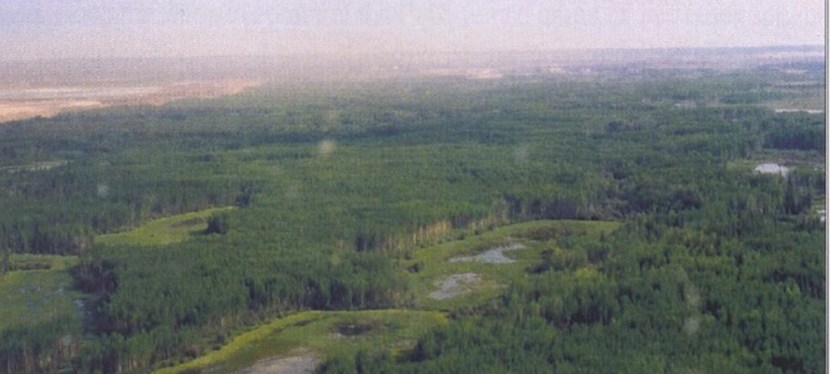
For decades, northeastern Alberta has been home to large-scale industrial activity in the region’s massive petroleum deposits. A remarkable discovery in the midst of the oil sands revealed that the same area of the province also accommodated another significant industry in ancient times; that historic and contemporary land use share a common origin in an epic event that profoundly shaped our province’s past. This blog post will explore how historic resource management in Alberta helped reveal a lost chapter of our province’s history, how the discovery illuminated both the remarkable richness and depth of the Alberta story, and the surprising connections between past and present.
Written by: Krista M. Gilliland, Western Heritage and Todd Kristensen, Archaeological Survey of Alberta
The Archaeological Survey of Alberta is proud to kick-off Occasional Paper Series No. 39 with its first two articles available for free. As with the previous volume, individual articles in the Occasional Paper Series are published online throughout the year, with the final, compiled volume released at the end of the year. We encourage submissions from archaeologists in cultural resource management (CRM), universities, and other heritage professions.
Submissions to Occasional Paper No. 39, edited by Krista M. Gilliland, are welcome.
Occasional Paper Series No. 39, “Advancing archaeology: Industry and practice in Alberta, 2019,” is dedicated to an influential member of the archaeological community in Western Canada, Terry Gibson, who passed away in 2018. The first article in the volume is a tribute to him.
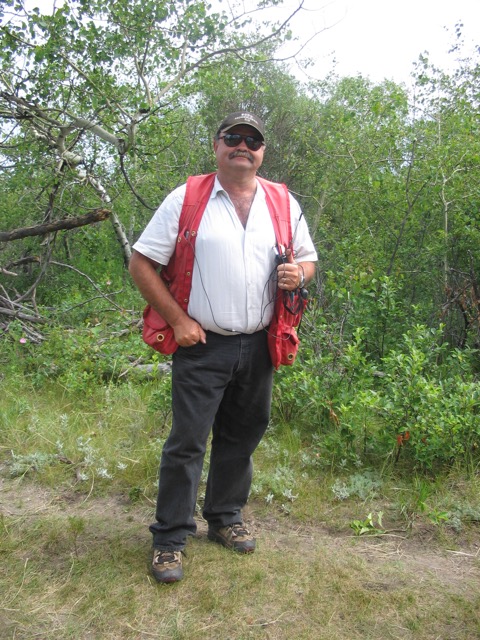
Terry Gibson (1954-2018) played an important role shaping the CRM community in Western Canada.
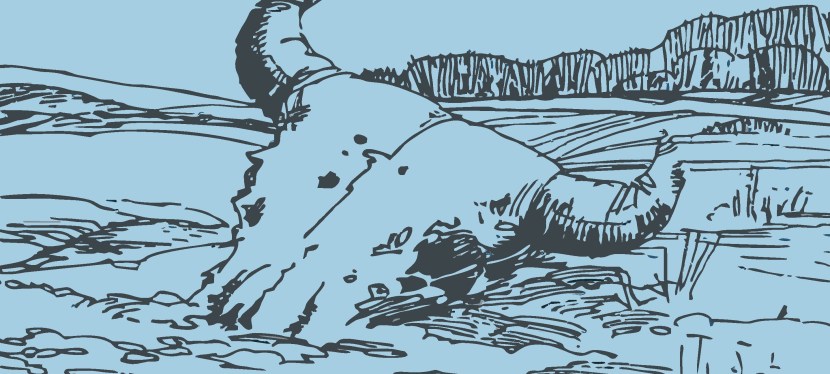
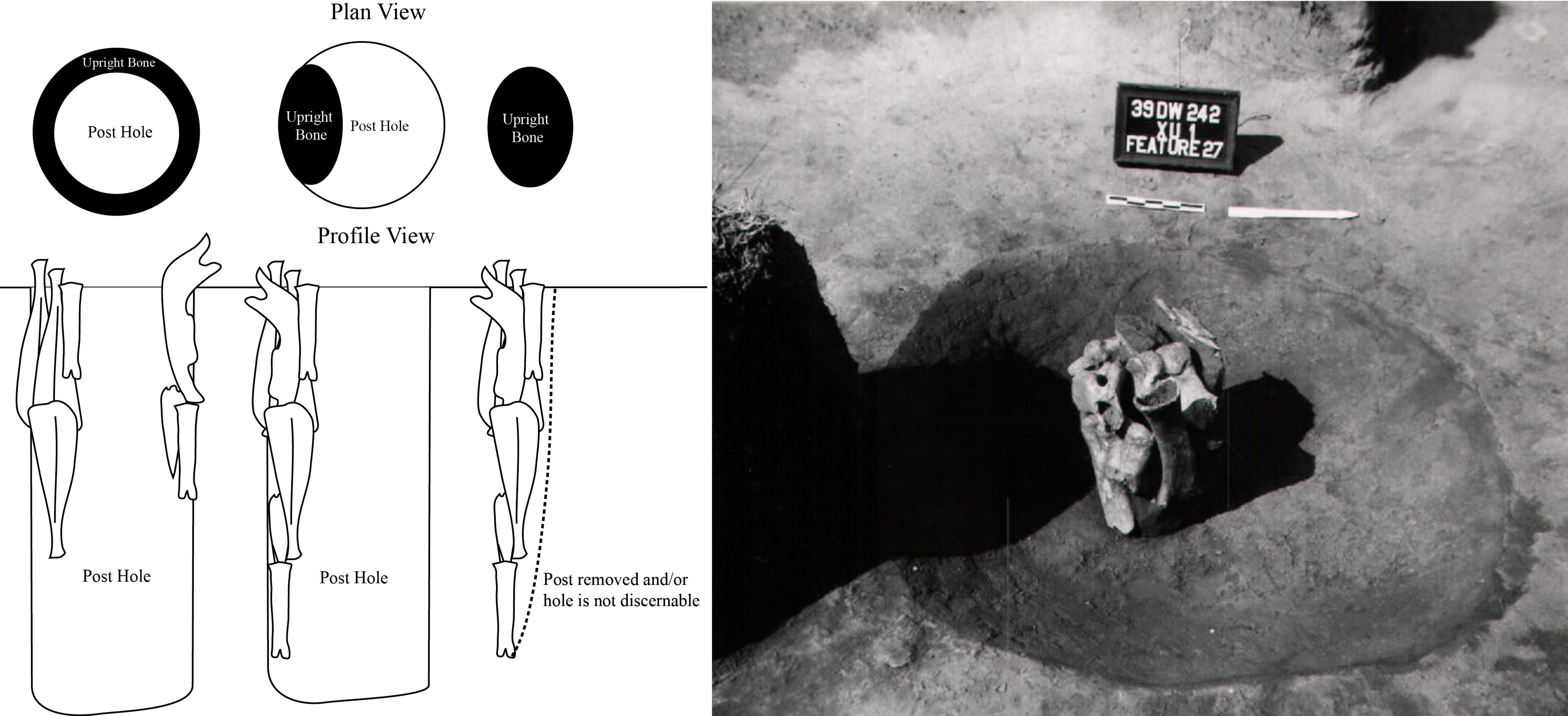
The second paper is a summary of archaeological features called bone uprights that appear in Alberta and across the Northern Plains. These features consist of animal bone (usually bison) that was vertically embedded in the ground. Archaeologists have come up with several ideas to explain these curious components of pre-contact sites.
A sample of bone upright images from Reid Graham and John W. Ives’ paper in the 2019 issue (reproduced with permission).
The title of the current volume – “Advancing archaeology: Industry and practice in Alberta, 2019,” refers to Terry Gibson’s legacy in the province and an important goal of the Occasional Paper Series. We hope the series provides a venue to CRM archaeologists, heritage managers and others to improve the discipline in Alberta. Interested authors can pitch a paper or idea to the editorial committee.
Also, you can download previous volumes of the Occasional Paper Series for free:
Editor’s note: If you’re interested in other restoration projects by the government’s Heritage Conservation Advisers, read about the conservation of Circle L Ranch.
Written by:Fraser Shaw, Heritage Conservation Adviser
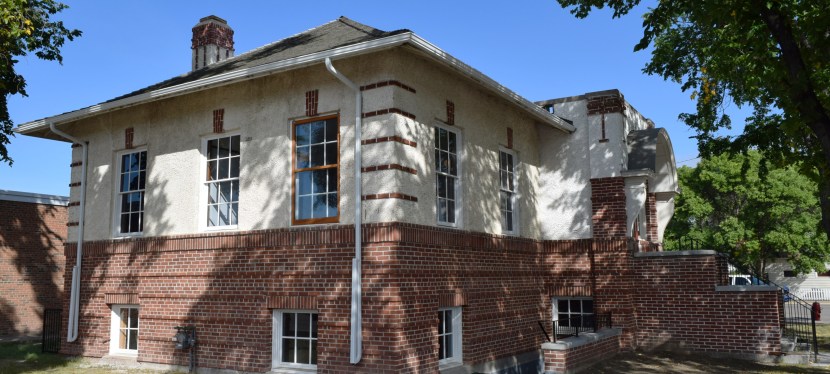
Designated a Provincial Historic Resource in 2013, the Taber Courthouse presides over a quiet park just off Taber’s main street. The building’s stately arched entryway speaks to its historic importance as one of Alberta’s first “sub-jurisdiction” courthouses, a system of provincial justice administration introduced at the time.
Built in 1918, Assistant Provincial Architect J.B. Allan developed the courthouse design and noted Provincial Architect Richard P. Blakey subsequently revised it. Blakey’s eclectic mix of Edwardian, Classical Revival and Spanish Colonial Revival elements eventually became an architectural prototype for other courthouses of the period. Examples of Blakey’s work that are still intact include the Blairmore Courthouse in the Crowsnest Pass and the Medicine Hat Courthouse. Both of these buildings are Provincial Historic Resources.
Written by: Jared Majeski, Historic Resources Management Branch
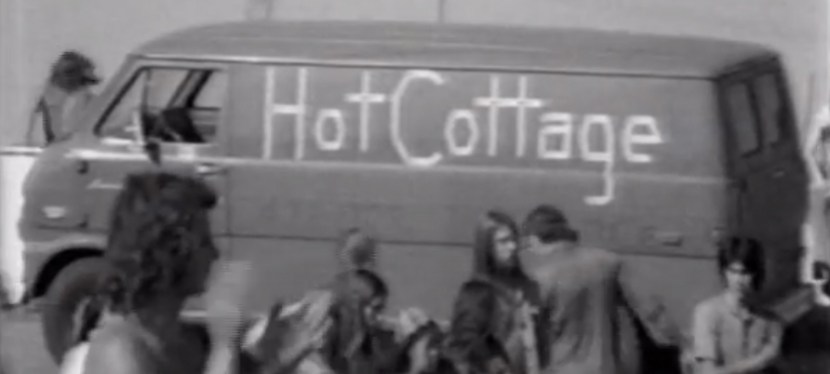
Summer isn’t over just yet, which means its still appropriate to reminisce about the events and people taking part in what’s now a regular, annual tradition: the summer music festival.
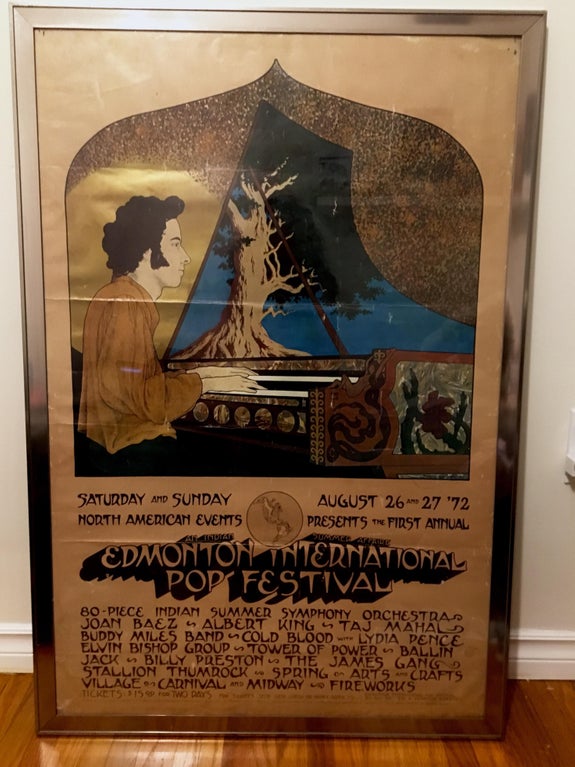
Original poster for the 1972 Edmonton International Pop Festival, by Phoenix & Arabeth. Apparently, glossy colour posters were plastered around the city only a couple weeks before the event. They were replaced almost as fast as they were stolen.
In what may have been one of Edmonton’s first outdoor weekend music events, the Edmonton International Pop Festival took place August 26 and 27, 1972. Held at the old Edmonton International Speedway in northwest Edmonton, the hastily-organized and promoted festival cost $15 to attend, which, if you’ve ever attended a Folk Fest or Interstellar Rodeo festival, is microscopically cheap in comparison.
Written by: Fraser Shaw, Heritage Conservation Advisor
If you’ve ever driven down the beautiful Cowboy Trail, chances are you’ve driven by at least a few historic ranches. Some of these ranches, like Bar U and E.P., have been operating for over a hundred years.
Another of those ranches is the Circle L Ranch, started by a storekeeper from Salt Lake City in the late 1800s. The site recently underwent a restoration project to help ensure historic small-scale ranching in remained intact and accessible. The ranch is a Provincial Historic Resource and an excellent example of an early family-run ranch in southern Alberta.
In June, we featured several buildings that the City of Lethbridge recently designated as Municipal Historic Resources (MHRs). But Lethbridge isn’t the only city that has been actively protecting its heritage resources and listing them on the Alberta Register of Historic Places. Over the past few months, the City of Lacombe has designated five places as MHRs and added them to the Alberta Register of Historic Places.
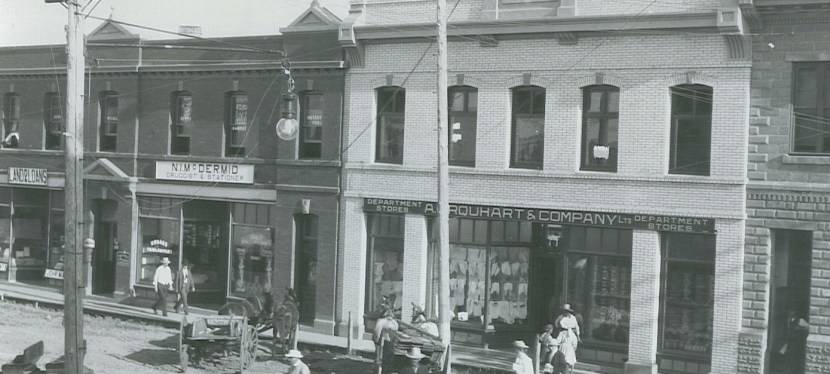
Lacombe has been one of Alberta’s most active communities in protecting its historic places. As an early community in the former Alberta Main Street Program, Lacombe has restored and maintained one of the largest historic downtown cores in the province. As of June 1, 2019, there are six sites in Lacombe designated as Provincial Historic Resources and seven designated as Municipal Historic Resources.
Written by: Todd Kristensen, Regional Archaeologist, Archaeological Survey of Alberta
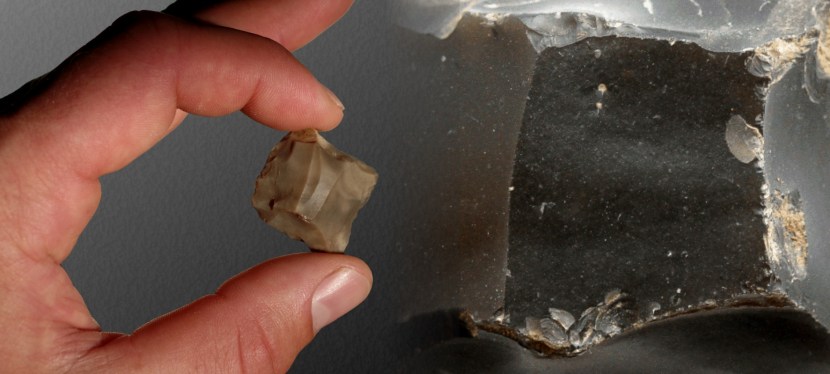
Did you know that for over 200 years, guns around the world had a specific part made of stone that archaeologists have found evidence of in Alberta? Gunflints are chunks of rock that generated sparks to ignite gunpowder. Their use in guns first appeared in Europe in the early 1600s. Most of Alberta’s earliest guns were muskets, which began replacing bows and arrows in the province in the late 1700s.
Gunflints reveal lots of information about fur trade life in Alberta and they tell archaeologists important details about when guns first arrived and who first brought them. Patterns of gunflints at archaeological sites can show where gun repairs took place or where the flints were stored. Historic records of the number of traded gunflints can tell us which forts were specializing in certain tasks and how many hunters or trappers they were supplying. In general, gunflints are interesting historic artifacts that are often the only preserved record of a weapon technology, flintlock firearms, that ultimately changed the West.
Muskets had a metal piece called the flash pan that was mounted on the outside of the gun and held a small pile of gunpowder protected from wind and rain by a movable lid (a ‘frizzen’). When the trigger was pulled, the gunflint pushed the frizzen, opened the flash pan, and created a spark. A small explosion of gunpowder on the outside of the gun (the ‘flash in the pan’) was then sent through a hole to a larger load of powder inside the musket barrel. This explosion then launched the musket ball towards future food or enemies.
Diagram of how flintlock guns worked (by Todd Kristensen).
Flintlock guns were used in North America before 1650, and, in parts of the West, gunflints were used well into the late 1800s. While a technology called percussion caps began replacing the flintlock in the mid-1800s in North America, guns were still hard to come by and flintlocks had a certain durability that kept them in use.




 RETROactive