An important mandate of the Archaeological Survey section of the Historic Resources Management Branch is to undertake extra-regulatory public outreach projects and research initiatives. The staff at the Survey have been busy this last year pursuing this goal. Some of the projects and activities that have taken place, or are underway now, are highlighted below.
Part of this goal includes delivering programs that address Albertan’s desires to learn about their heritage and widen appreciation for Alberta’s archaeological resources. Youth outreach was done through the delivery of eight school programs to elementary and junior high school students. Darryl Bereziuk, Director of Archaeological Survey, and Blair First Rider, Aboriginal Consultation Adviser, presented to students at Leo Nickerson Elementary School in St. Albert; Todd Kristensen, Northern Archaeologist, presented to 6 classrooms as part of the U School Education Program at the University of Alberta; and Wendy Unfreed, Plains Archaeologist, participated in a youth apprenticeship field program for Dr. Swift Junior High School in Lac La Biche. Read more →
In March the Strathcona chapter of the ASA held a flint-knapping and tool-making workshop in Edmonton. The ASA workshop allowed members to get first-hand experience making the stone, or lithic, tools that are among the most common artifacts found in archaeological sites in Alberta. Prior to the arrival of metals with Europeans in North America, First Nations people created tools such as blades, knives, axes, and projectile points, by knapping stones. Knapping technology is not unique to Alberta, but was used by humans and our ancestors in all parts of the world beginning as early as 3.3 million years ago in Africa. Today many archaeologists practice knapping to better understand the material culture recovered from archaeological sites. Knapping is also a common hobby among archaeologists and non-archaeologists alike.
Creating Stone Tools
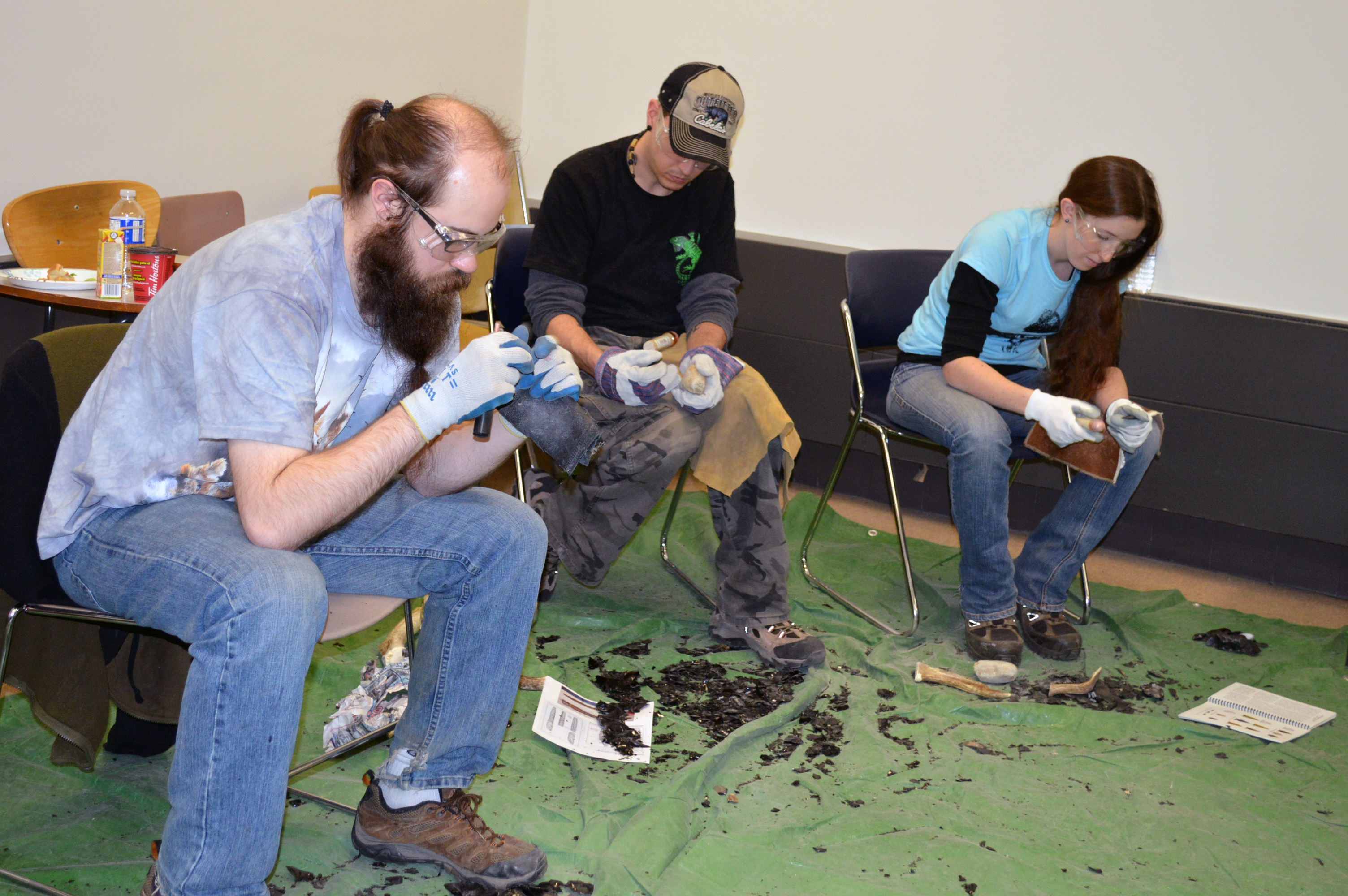
First, cores of lithic raw material are precisely broken using hammerstones (stones and antler) to produce large, flat flakes. At the workshop, participants knapped obsidian and dacite, two types of stone that are easy to use for beginners. When knapping, safety is always top priority. Striking stones such as obsidian produces tiny shards of the material, which tend to scatter and can easily cause injury. To prevent accidents, knappers use hand and eye protection, and always have plenty of bandages at the ready. The scattered waste flakes produced when knapping are called ‘debitage’ by archaeologists.
ASA participants using hammerstones to produce lithic (stone) flakes and debitage.
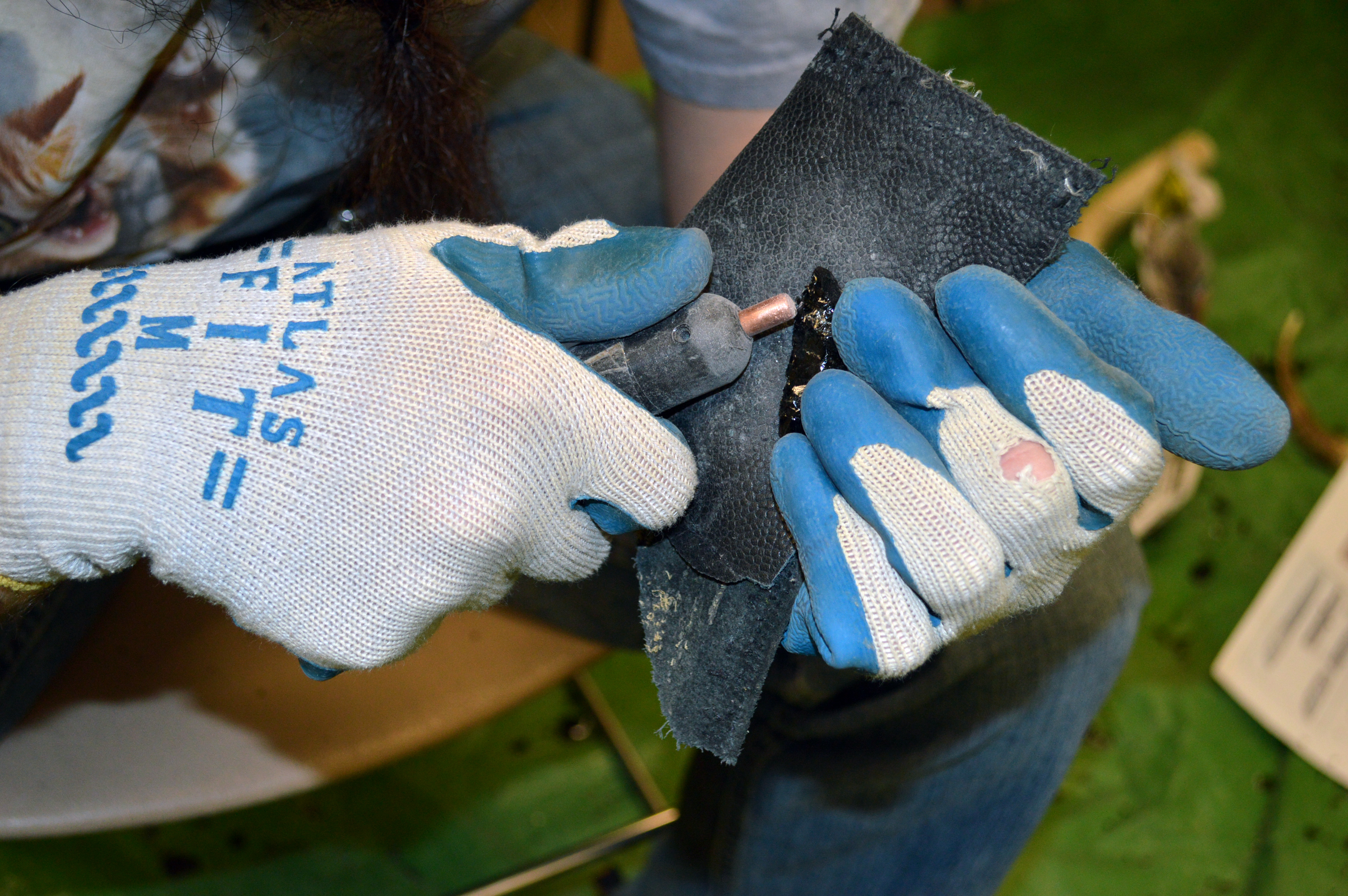
Next, smaller flakes of stone can be worked into tools. Instead of striking the stone, smaller flakes can be removed by applying consistent force in a process called pressure flaking. In the picture below, a knapper is using a copper pressure flaker to work the edge of a projectile point.
A knapper using a copper pressure flaker to work the edge of a projectile point.
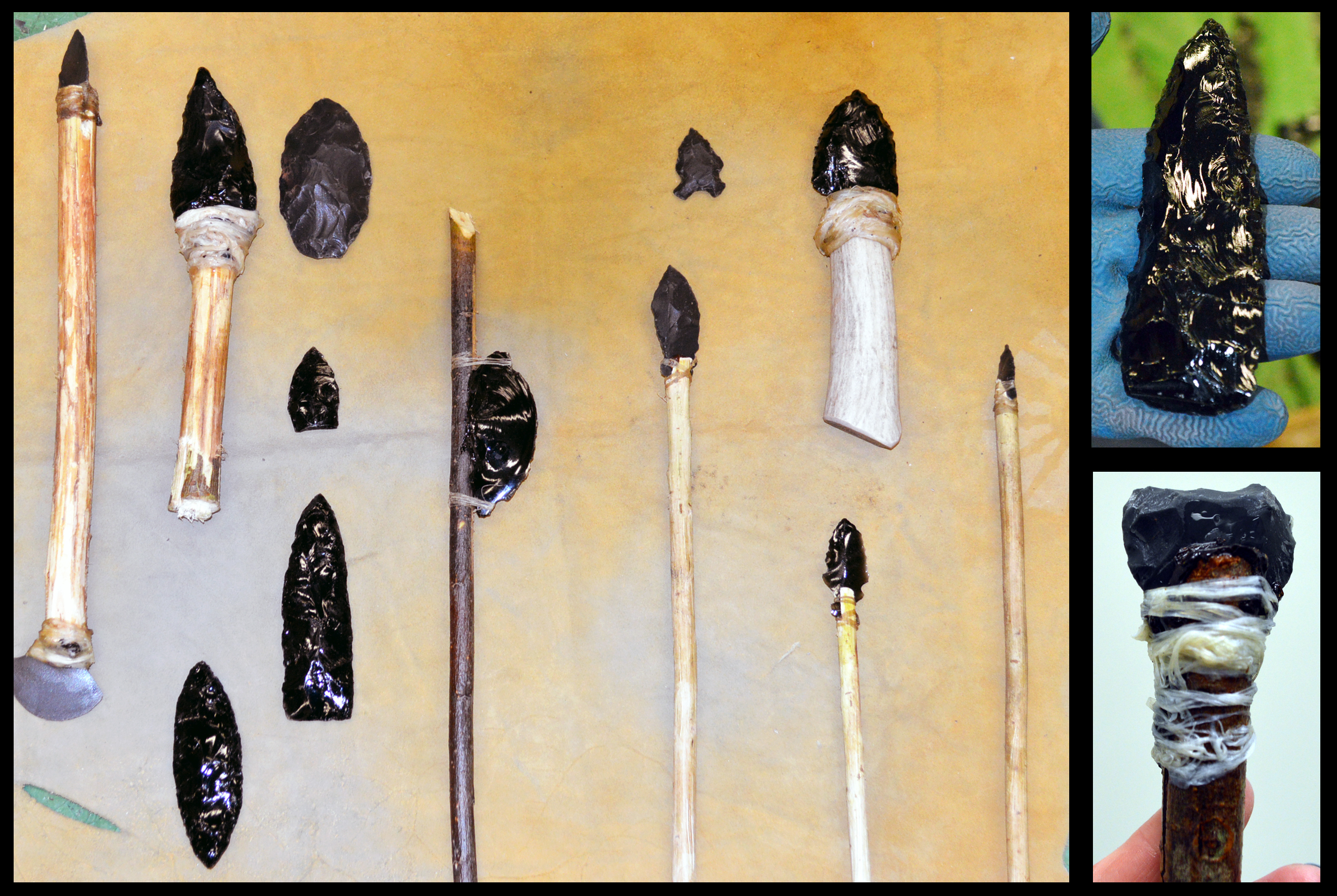
Finally, the knappers were able to haft their new tools onto wood or antler shafts and handles. The stone tools were affixed into the wooden handles using pine pitch, and then fastened using animal sinew and hide glue. In archaeological sites the organic shafts, handles, and fastening materials have usually decayed, leaving only the stone tools behind.
Some of the tools created at the ASA Flint Knapping workshop
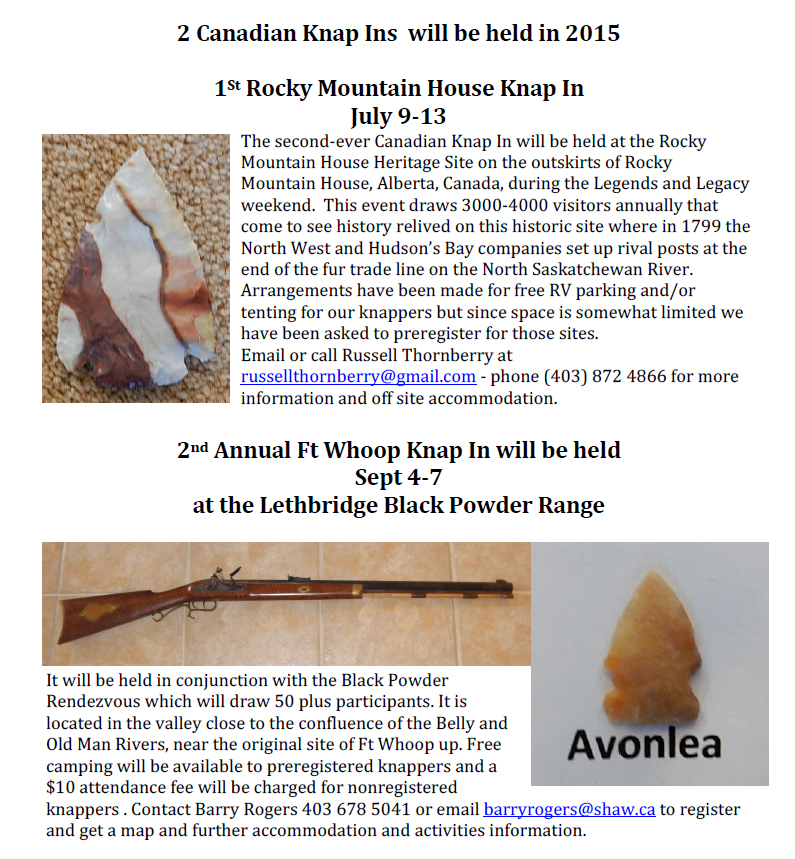
Becoming a good knapper takes a lot of patience and practice, and it helps to have a good teacher. If you are interested in learning how to knap stone tools, there will be two knapping events in Alberta this year in July and September.
Written by: Colleen Haukaas, Archaeological Permits & Digital Information Coordinator.
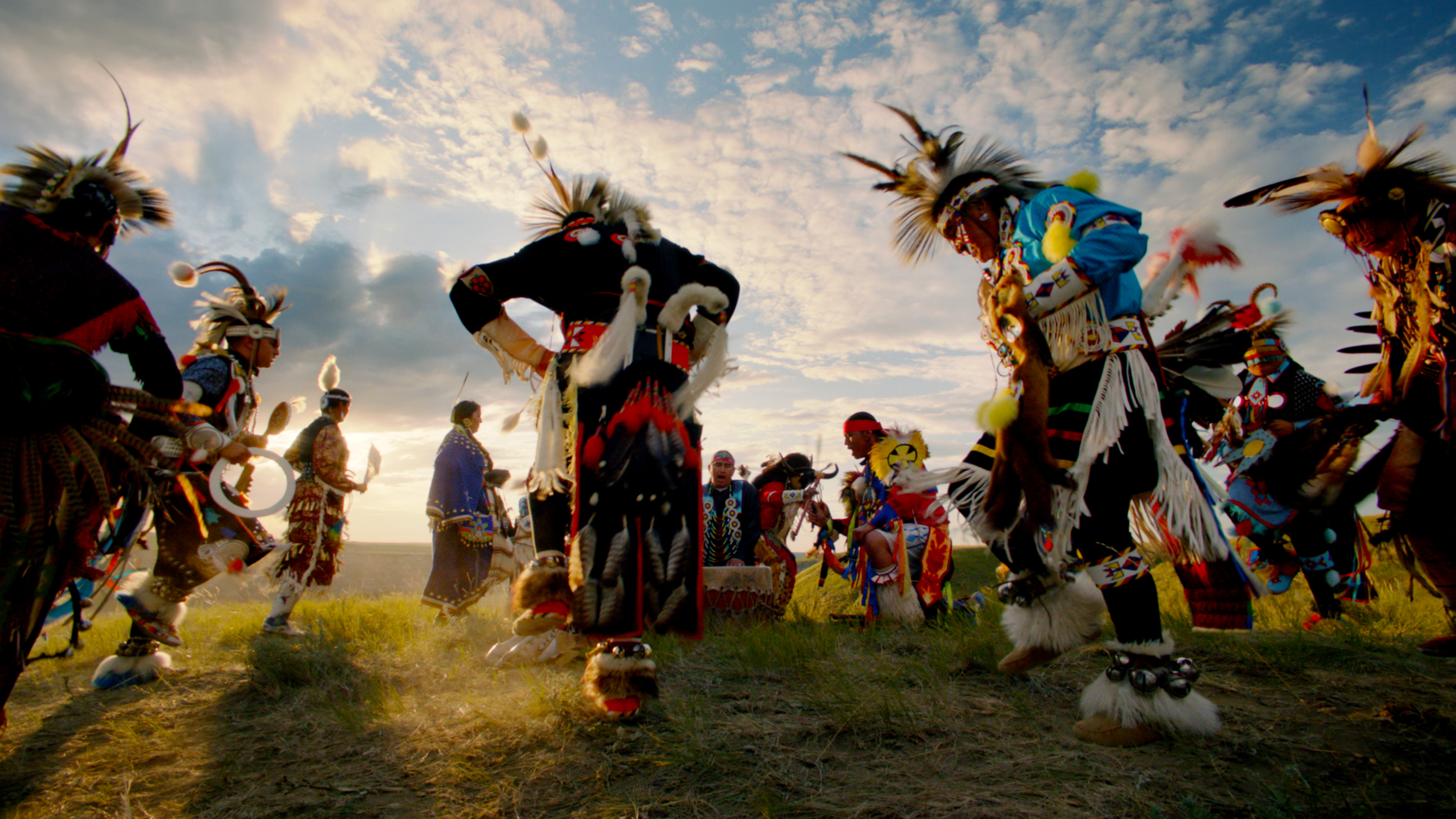
Sunday, June 21 marks National Aboriginal Day—an opportunity to take time to learn, acknowledge and celebrate the rich contributions Canada’s First Nations, Metis and Inuit have made to our country. Officially proclaimed in 1996, National Aboriginal Day is now recognized nation-wide as part of a series of Celebrate Canada days.
If you live in Edmonton, APTN’s Aboriginal Day Live & Celebration will be hosted in Louise McKinney Park on Saturday, June 20 and additional community events will be held throughout the week.
Aboriginal Awareness Week Calgary’s theme this year is ‘Keeping the Circle Strong,’ with events taking place June 14 – 21. Additional events in Alberta are listed here.
Is your community hosting a National Aboriginal Day event? Share it with us in the comments below!
Written By: Laura Golebiowski, Aboriginal Consultation Advisor
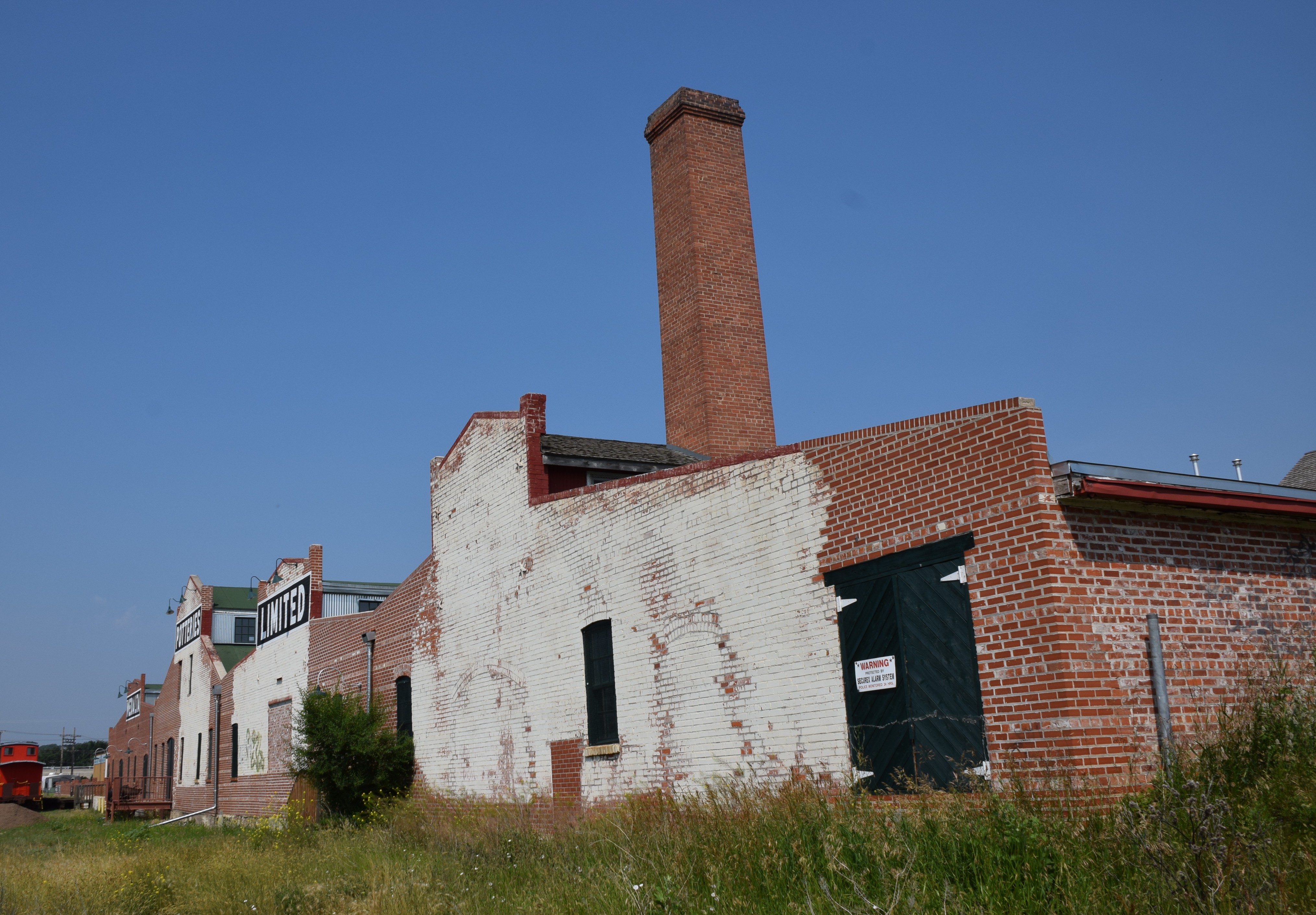
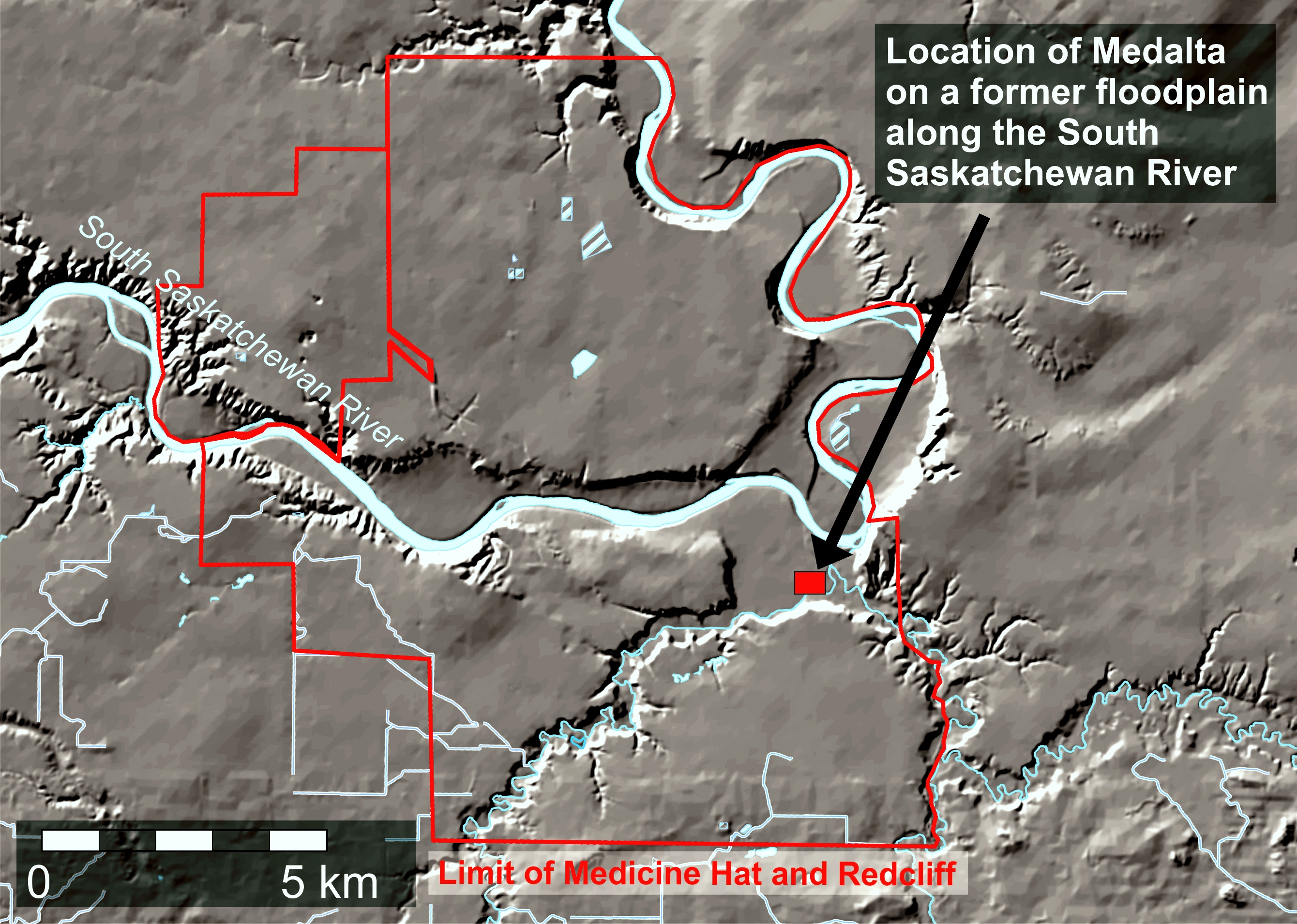
A massive brick chimney at Medalta Potteries towers six metres above the roof of “Building 10” and extends roughly the same distance from the roof to the dusty factory floor below. Two meters wide at its base, the chimney and accompanying boiler were vital in the production of clay products from the early decades of the twentieth century until the plant’s closure in the 1960s. Now a Provincial Historic Resource, Medalta Potteries in Medicine Hat has evolved into a vibrant community hub that includes the Medalta archives and interpretive centre, galleries and displays, a working pottery that reproduces classic Medalta ware, a contemporary ceramics centre for professional artists, and a venue for markets, weddings, concerts and other community events. The tall brick chimney and distinctive monitor roofs of the former factory buildings provide the iconic backdrop for these varied activities.
Medalta Potteries in 2014, looking west to Building 10 before rebuilding of the chimney.
Already leaning slightly to the south, the chimney developed a worrisome new tilt after the June 2013 southern Alberta floods, an event which inundated much of Medalta and the nearby residential neighborhoods. As soil conditions on site gradually normalized in early 2014, the chimney’s foundation shifted and subsided further into the clay-rich soil, raising concerns about its stability. The only practical long-term conservation option was to disassemble the chimney and rebuild it with the original, locally manufactured brick using traditional masonry materials and construction methods.
Conserving the chimney started with extensive photographs and measurements followed by disassembly by a contractor specializing in historic masonry conservation. Medalta’s staff archaeologist monitored and documented the process. As the chimney came down brick by brick, unexpected finds within the masonry included an old whisky bottle; fire bricks from Hebron, North Dakota; and a bizarre series of wasps’ nests occurring at roughly one metre intervals within the stack. This corresponds roughly with the work a team of masons would likely have completed in a typical day – a coincidence that begs further explanation. The chimney-dwelling wasps turned out to be quite blind and fortunately did not harass the masonry crew as dismantling proceeded.
The most intriguing relic, however, was a cluster of bricks inscribed with names and the inscription “IX 44”, presumed to represent a date. The names went unobserved until mortar dust from the disassembly process settled lightly onto the brick and highlighted the writing. Prisoners of war interned in Medicine Hat during the Second World War were recruited for work in local industries to offset the wartime labour shortage. Research now underway may reveal that some of these POWs, possibly even masons in their pre-war lives, helped repair the chimney at Building 10 in September of 1944.
Chimney rebuilding is nearing completion and will replicate its historic appearance — without the lean to the south. Glazed bricks set into the chimney mark the locations of the autographed bricks and, soon, visitors to Medalta will be treated to a new exhibit in Building 10 featuring the original bricks and an account of this chapter in the site’s remarkable history.
Written by: Fraser Shaw, Heritage Conservation Adviser
Board members of the Alberta Historical Resources Foundation (AHRF) recently held their first meeting for 2015 in Drumheller. The two-day meeting kicked off late Thursday afternoon with a walking tour of downtown. Though held under frigid temperatures, the tour was led with a warm welcome from the Town’s staff.
Friday morning was dedicated to a strategic planning session at the Royal Tyrrell Museum. Thanks to Fred Tyrrell, a Community Development Officer from Alberta Culture and Tourism, who served as our facilitator. Topics explored included: promoting greater appreciation for Alberta’s heritage among new Albertans; ensuring that the not-for-profit and voluntary sectors so essential to our province’s heritage facilities and sites are sustainable and strong; and developing innovative and compelling ways to share Alberta’s story.
As part of the foundation’s efforts to reach out to the local heritage stakeholders, Julia Fielding, Executive Director of the Atlas Coal Mine Historical Society came and chatted with the board about the challenges and opportunities faced by the Atlas Coal Mine, a Provincial and National Historic Site in East Coulee.
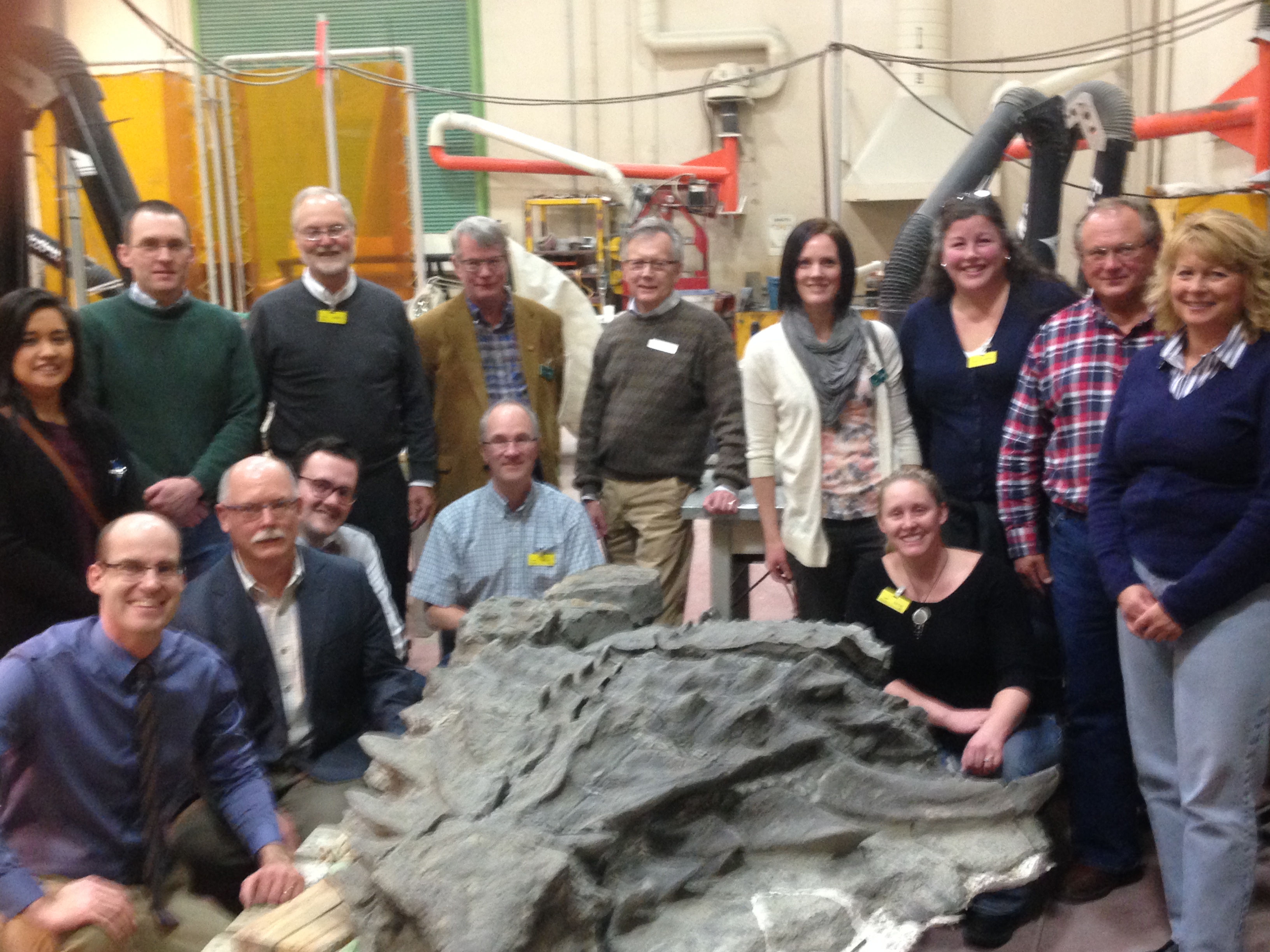
The afternoon continued with a conference call with our colleagues from the Alberta Foundation for the Arts who provided us a glimpse of how they operate. Then it was time to get up for a special treat – a behind the scenes tour led by Don Brinkman, Director of Preservation and Research of the Royal Tyrrell Museum. Don showed us the intricate and exciting process of preparing fossils after being collected from the field.
Sitting from left: Matthew Wangler, Kurt Paterson, Josh Traptow, Joe Friedel, Leah Millar. Standing from left: Carina Naranjilla, Michael Dougherty, Fred Bradley, Larry Pearson, Lorne Simpson, Aimee Benoit, Laurel Halladay, Bob Gaetz, Geraldine Bidulock.
Saturday was another busy day, starting with presentations from the five Provincial Heritage Organizations (Alberta Genealogical Society, Alberta Museums Association, Archives Society of Alberta, Archaeological Society of Alberta and Historical Society of Alberta) that AHRF supports. This gathering provided an excellent opportunity for networking and future collaboration. The rest of the afternoon was the main board meeting where a number of general business items and applications from the Municipal Heritage Partnership Program and Alberta Main Street Program were discussed.
Those two productive days emphasized the need for strategic thinking, collaboration, engagement, and sustainability in order to preserve Alberta’s heritage.
Written by: Carina Naranjilla, Grant Program Coordinator, Alberta Historical Resources Foundation.
In 1973, the Government of Alberta assumed a central role in the management of archaeological research. In the 42 years since then, the Archaeological Survey at Alberta Culture and Tourism has been busy. More than 9,000 archaeological research permits have been issued and as a result, archaeologists have discovered over 40,000 archaeological sites in Alberta.
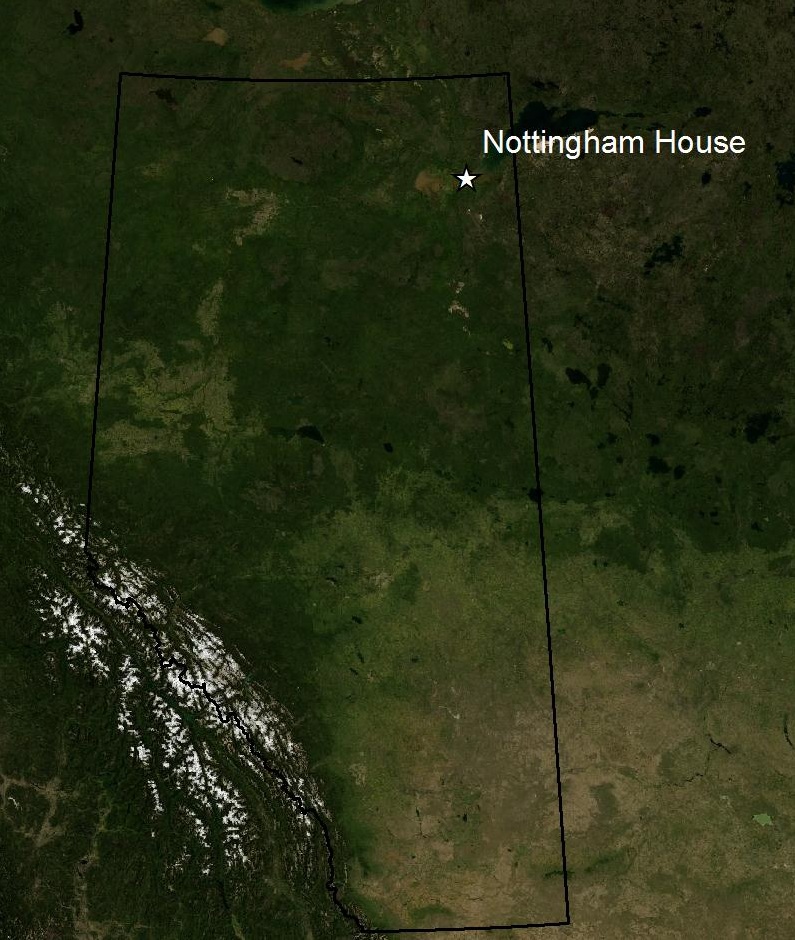
So where did it all begin? The first archaeological research permit in the province was issued to Karlis Karklins in 1973 by Alberta Culture, Youth, and Recreation. The permit was for his research at Nottingham House, a Hudson’s Bay Company trading post near Fort Chipewyan, as a part of the Western Fur Trade Research Programme. The programme was initiated by Parks Canada in 1968 to explore the history and archaeology of the fur trade in the Athabasca region. As part of that project, Karklins began researching Nottingham House in the early 1970s.
Historical Setting
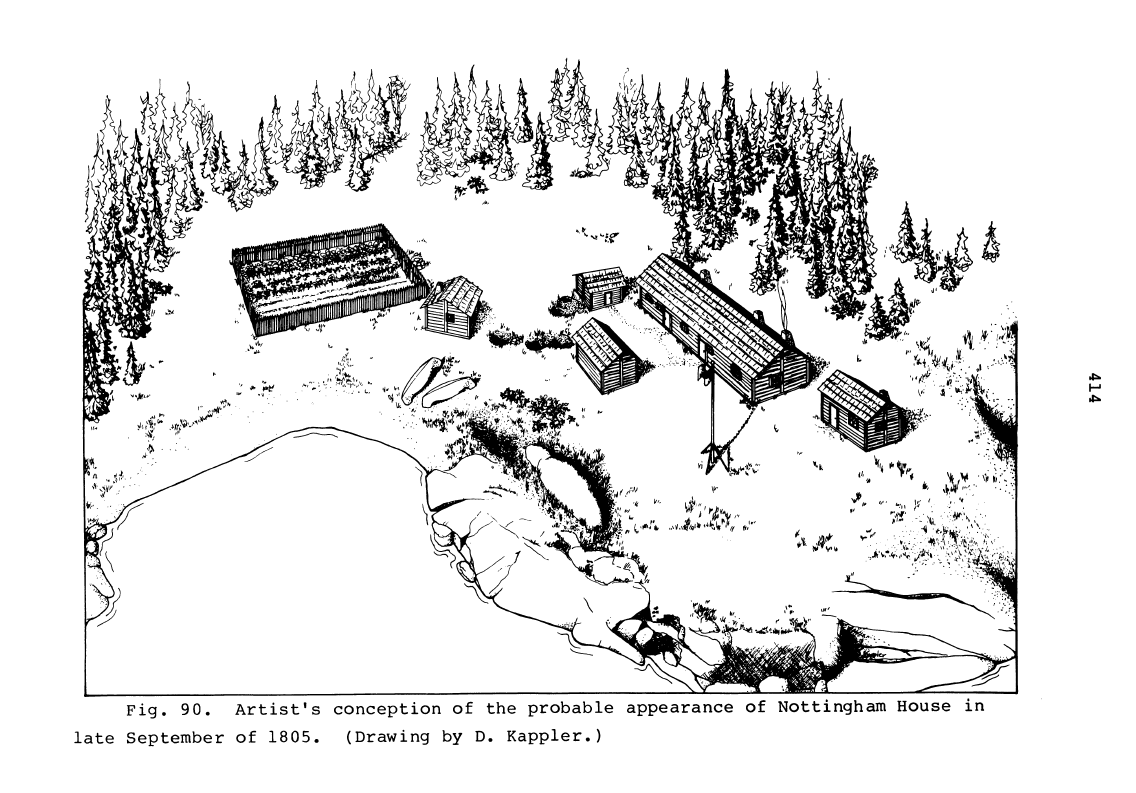
Nottingham House was a fur trade post established by the Hudson’s Bay Company (HBC) in 1802. The HBC hoped to compete with the North West Company (NWC), who held a 20 year monopoly on the famed fur-rich areas of the Athabasca region. Peter Fidler, an experienced HBC surveyor, along with his Swampy Cree wife, Mary, their children and 17 other explorers arrived at Fort Chipewyan in late 1802 to set up the new trading post, Nottingham House. In the style of competitive exploration that characterized the fur trade in western Canada, Nottingham House was erected less than a mile from Fort Chipewyan, a successful NWC trading post established in 1788.
Despite the best intentions of the HBC and Fidler’s crew, Nottingham House was not a successful trading post. The NWC at Fort Chipewyan took every chance to sabotage trade at Nottingham House, even going so far as to burn HBC canoes and to have individuals that were known to trade with the HBC beaten. In their first year, the HBC at Nottingham House generated a return of only six bundles of fur, which did not come close to covering the costs of their expedition. Fidler and his company remained at Nottingham House for four years, during which they struggled with dwindling trade, starvation and increasingly aggressive attacks from the NWC. On June 9, 1806, Nottingham House was abandoned and the HBC traders moved on to other posts.
Archaeological Research
The Nottingham House archaeological site was excavated by Karklins, an employee of the National Historic Parks and Sites Branch of Parks Canada during the 1970s. Karklins and seven others began their first 14-week excavation season in June 1972, returning for a lengthy field season each summer until 1977.
The archaeological crew unearthed just over 1,072 square meters of the site, revealing the remains of several buildings and work areas. The main house, measuring about 15 meters by 5 meters, was made up of four rooms with fireplaces, storage pits and a cellar. The site surrounding the main house included a storehouse, a provisions shed, a garden and several outdoor working areas, storage pits and trash pits. The structures were made from the locally-available wood, stones and clay. Most of the structures showed evidence of burning, which suggests that the NWC may have burned the camp after the HBC abandoned it in 1806.
The archaeology crew also uncovered 5,707 complete artifacts and a further 1,006 broken fragments of artifacts during their field seasons. The artifacts are typical of a fur trade post from that era. Most artifacts were personal items that would have been used by those living at the post or were kept as items for trading. These included beads, combs, mirrors, books and glass and ceramic containers.
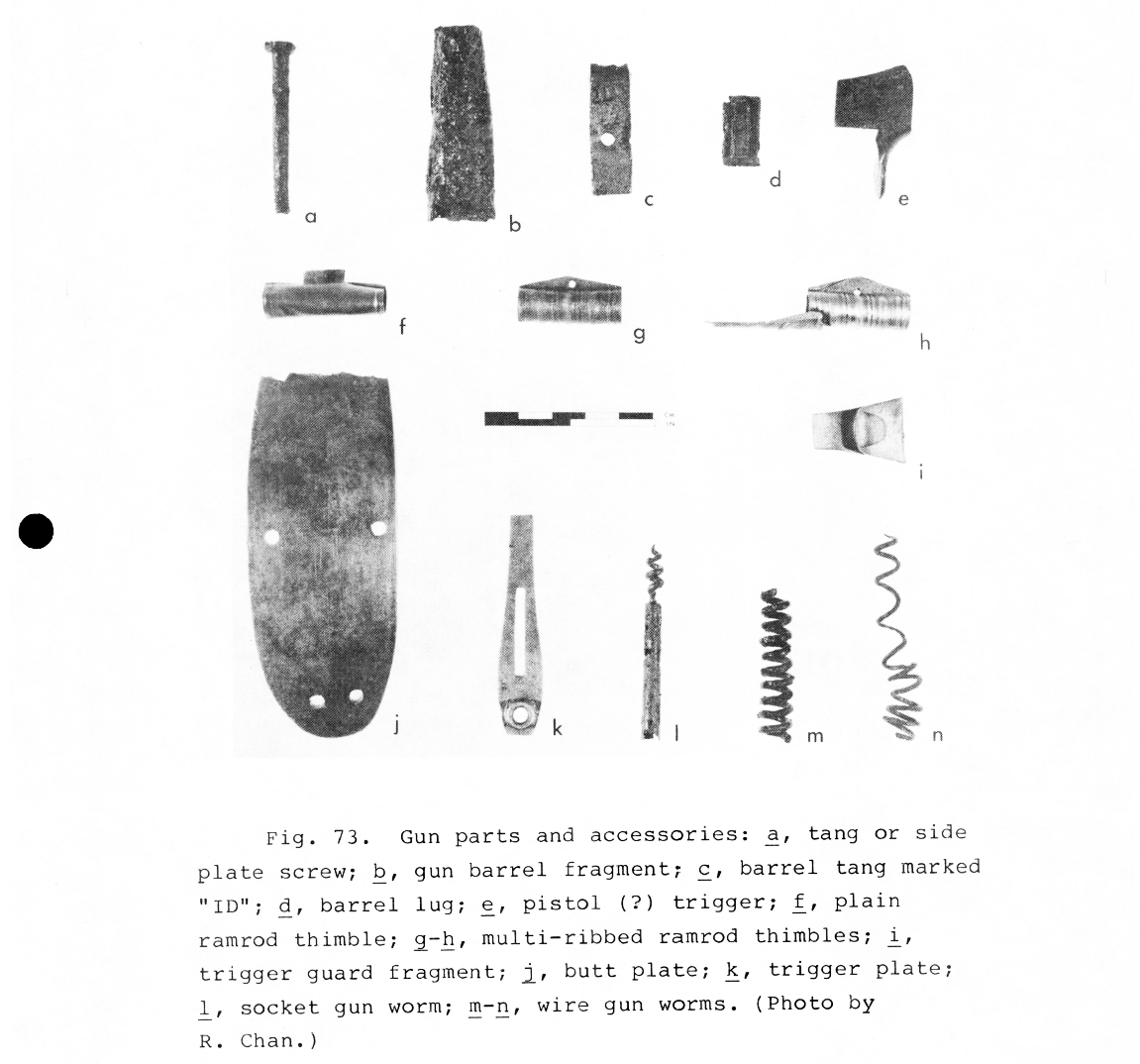
The other artifacts reflect what would be needed to construct and maintain a fur trade post in undeveloped territory in 19th century Boreal Forest Alberta, such as tools and hardware (axes, nails and saws), hunting and fishing gear (gun parts and ammunition) and household items (cookware, furniture and sewing supplies). The historical record suggests that the HBC crew relied on a protein-rich diet, consisting mostly of animals and birds such as moose, bison, caribou, dog/wolf, snowshoe hare, swans, ducks and cranes that were traded from the local Aboriginal population. Other animals identified from the faunal remains included Arctic fox, muskrat, marten, wolverine and lynx, all of which were hunted for their furs and may have been eaten as well. The crew was also able to fish in Lake Athabasca and grow potatoes and turnips in their gardens.
Examples of gun parts and accessories that were found by Karklins at the Nottingham House archaeological site.
Karklins’ research in the 1970s served to build a better understanding of the economy and material culture of the Nottingham House fur trade post. The site has not been excavated by archaeologists since the 1970s, but Karklins’ research has proved valuable for other archaeologists and historians studying the fur trade in western Canada, and especially in the Athabasca region of Alberta. The archaeological site of Nottingham House remains protected by the Historical Resources Act as an Alberta Significant Archaeological Site.
References and Figures: Karklins, K. (1979). Nottingham House: The Hudson’s Bay Company in Athabasca, 1802-1806 (Doctoral dissertation, University of Idaho).
Written by: Colleen Haukaas, Archaeological Permits & Digital Information Coordinator.
Have you ever discovered a projectile point, stone tool, ceramic, bone or other archaeological artifact? If so, we want to hear from you!
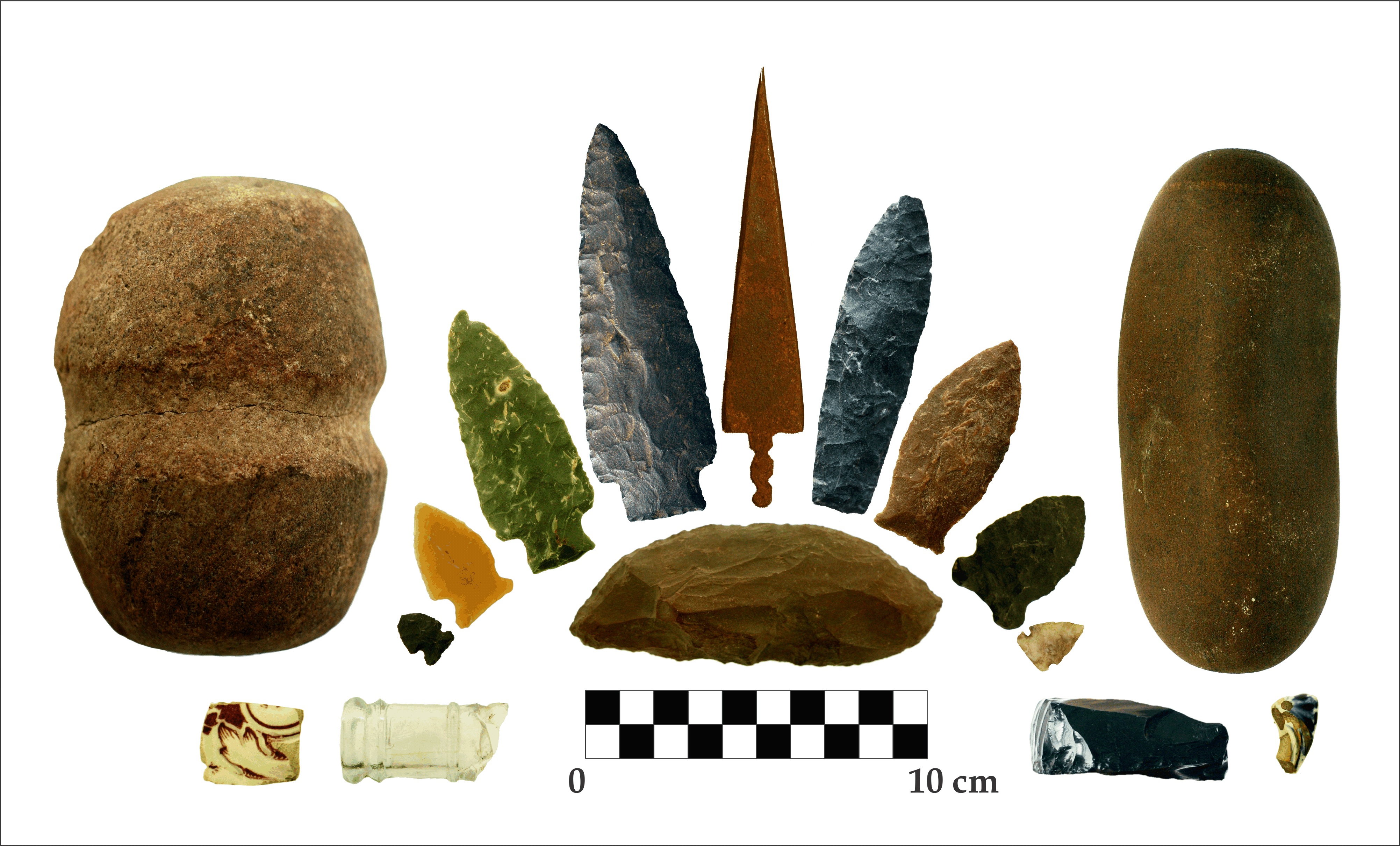
A variety of artifacts typically found in Alberta. Photo credit: Todd Kristensen.
Archaeological artifacts may be exposed by natural events (flooding, freeze/thaw cycles or tree throws) or human modification to a landscape (agriculture, recreation activities or development). As explained in a previous post, Alberta is Rich in Archaeology, archaeologists working in the province discover, or revisit, sites during the course of Historical Resource Impact Assessments. However, there are large stretches of the province that are not subject to Historical Resource Impact Assessments such as previously cultivated areas or areas that do not have development projects on them. This doesn’t mean there are not archaeology sites there. Often, people will discover archaeological artifacts and sites when they are out hiking, fishing, geocaching, working or cultivating their fields. This can include arrowheads or other stone tools, bones, ceramics or tipi rings and other stone features. So, what can people do when they make these discoveries? They can Report A Find!
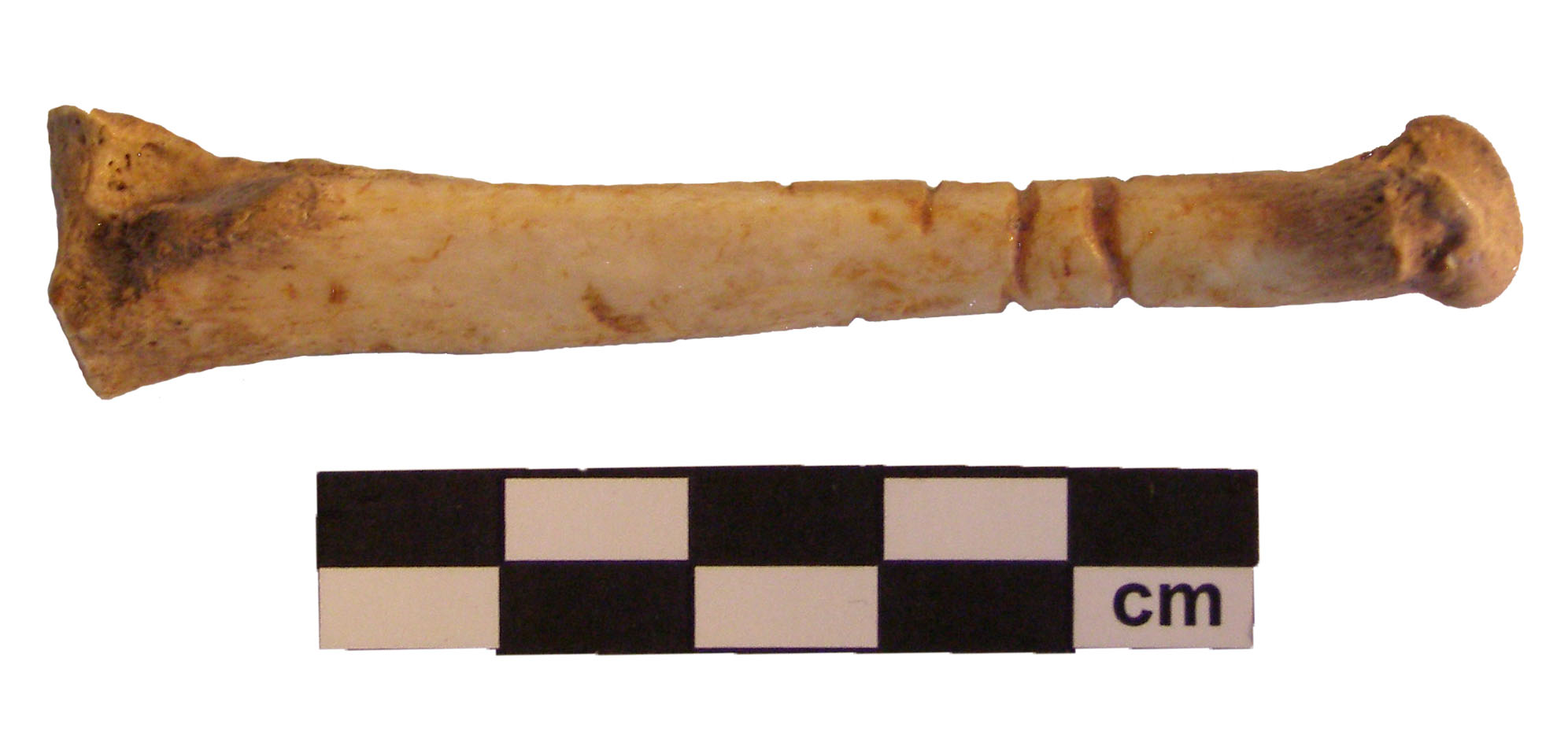
Bone artifact from a “Stones and Bones” event in Coaldale. Photo credit: Royal Alberta Museum.
The Archaeological Survey has set up a webpage where people can report their discoveries. You can get an expert opinion on your find and, who knows, possibly be credited with recording a new archaeological site! Recording this information is a big step in helping to preserve and protect Alberta’s historical resources. But, please remember that if you observe an artifact in your travels, the best practice is to leave it where you found it. Archaeological sites are protected under Alberta’s Historic Resources Act, regardless of where they were found. Removing an artifact from its original context disrupts the integrity of the site and may hinder efforts to further understand the significance of the object. You just need to provide us with a photo of your find and the location it was found, either by providing geographic coordinates or plotting the location on a map. Your find will be reported to staff at the Archaeological Survey and they will follow up with you and possibly ask for additional information. Staff will confirm if the site is already known or if the find warrants a new site designation!
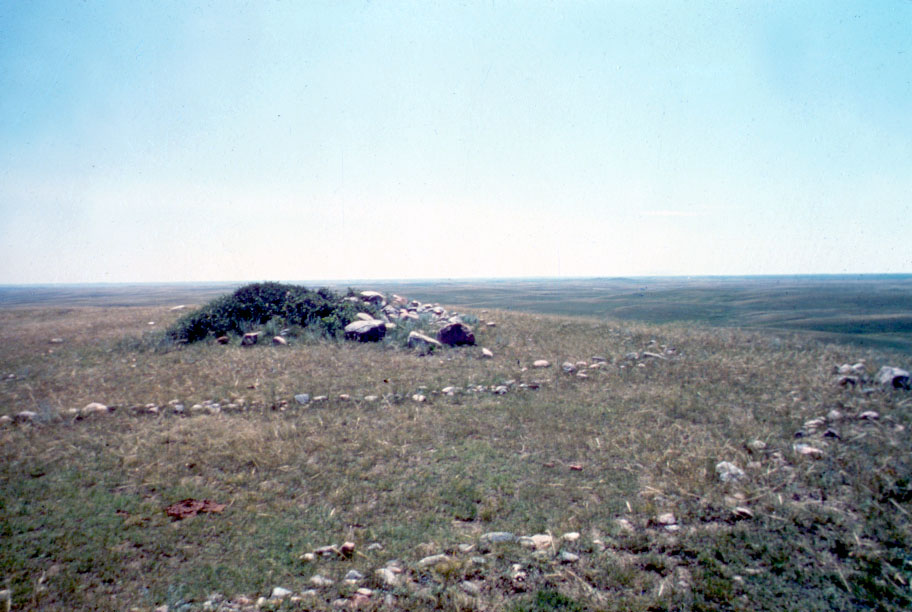
Medicine Wheel with outer rings and a central cairn. Photo credit: Royal Alberta Museum.
Reporting finds can provide valuable information that helps the staff at the Archaeological Survey manage, protect and preserve archaeological resources in Alberta. We can’t wait to hear about your discoveries!
Written by: Courtney Lakevold, Archaeological Information Coordinator.
Alberta Culture and Tourism is responsible for the examination, preservation and protection of Alberta’s historic resources on behalf of the people of Alberta as mandated by the Historical Resources Act. The Listing of Historic Resources (Listing) is an important tool used in this work. The Listing identifies lands that contain, or have high potential to contain, historic resources such as archaeological, palaeontological, historic or aboriginal traditional use sites. The Listing is also a useful tool for developers, their agents and other regulatory bodies to help determine before development if a proposed project may affect historic resources.
The Listing is reviewed and updated twice a year by Alberta Culture and Tourism’s Historic Resources Management Branch (HRMB). The Listing does not include all lands that may contain historic resources. As previously unknown historic resources are discovered, their locations are added to the Listing. The locations of historic resources that have suffered substantial degradation due to human activities or natural forces may be removed from the Listing.
Head-Smashed-In Buffalo Jump, Provincial Historic Resource and UNESCO World Heritage Site, located near Fort Macleod (Historic Resources Management Branch, June 2002).
Each land parcel included in the Listing has been assigned a Historic Resource Value (HRV) ranging from 1 to 5. The highest level of significance, HRV 1, is given to lands that have been designated under the Historical Resources Act as a Provincial Historic Resource. HRV 1 is also used to identify World Heritage Sites and lands owned by Alberta Culture and Tourism for historic resource protection. Other HRVs are defined as follows:
HRV 2: designated as a Municipal Historic Resource or Registered Historic Resource under the Historical Resources Act.
HRV 3: contains a known and significant historic resource that is of great significance and will require avoidance or assessment.
HRV 4: contains a historic resource that may require avoidance or assessment.
HRV 5: has high potential to contain a historic resource.
Each entry in the Listing also includes a letter notation that describes the primary historic resource category of concern, as follows:
a: archaeological
c: cultural
gl: geological
h: historic period
n: natural
p: palaeontological
A parcel of land may be assigned HRVs from more than one category if different types of historic resources have been recorded on or in the vicinity of the property.
Due to their inherently fragile nature, historic resources are susceptible to the effects of time and damage caused by modern activities. Any proposals to develop lands included on the Listing are assessed by the HRMB for their potential to affect the resource. The assessment is comprehensive. For example, any activity for a parcel listed as a “p” (for palaeontological resources) may also be assessed for potential archaeological sites. The staff of the HRMB work together to evaluate what effect the proposed development or activity may have on any historical resources in the area.
The Listing of Historic Resources is employed, in conjunction with other information resources, to ensure that the opportunity for enhancing that knowledge is not lost under the pressures of development. For more information on the Listing of Historic Resources, please see our website.
Written by: Pauline Bodevin, Regulatory Approvals Coordinator
Alberta Culture and Tourism manages the Online Permitting and Clearance (OPaC) system, which has two main purposes: to discover if a historic resource will be impacted by a proposed development and to regulate the approval of archaeological and palaeontological excavation permits.
Developers and municipalities use OPaC as a tool to determine if a proposed development may affect a historic resource. Before beginning development, the project’s proponent submits an application for approval to proceed. The application is reviewed by the Historic Resources Management Branch to determine if the proposed development has the potential to damage any historic resources, such as archaeological, palaeontological, historic or Aboriginal traditional use sites. The Branch reviews approximately 3,000 development applications each year!
Archaeologists and palaeontologists obtain permits through OPaC before proceeding with an excavation. Anyone who intends to excavate for the purpose of archaeological or palaeontological research must submit an application with the details of their project to the Historic Resources Management Branch for review. Permits are given out in order to regulate the amount of excavation activity that takes place in the province and to ensure that those who are excavating for archaeological and palaeontological purposes are qualified to do so. 500 applications for archaeological and palaeontological research permits are received per year by the Branch. The Archaeological and Palaeontological Research Permit Regulation has more information on the qualifications necessary to hold such permits and the conditions under which studies must take place.
Ten years ago, applications were managed the old fashioned, paper-based way and reviewing them was a much slower process. With the boom in the oil and gas industry, the workload increased substantially and this created the need for a more efficient permitting system. In 2009, the idea of OPaC was introduced as a semi-automated way to process applications. This was a welcome transition and has made the application procedure more convenient for developers who are seeking to conduct work on Alberta’s land as well as for the people managing the applications.
There are a number of advantages to the OPaC system:
It has brought a consistent approach to the process and ensures that applications and inquiries are addressed in a timely manner.
The online database stores information on the location of archaeological, palaeontological and historic resources as well as Aboriginal traditional use sites. This data is used to build a cumulative sense of the resources and developments that are on Alberta’s landscape. This way, strategic measures can be taken to protect the resources.
It serves as a starting point to capture heritage data and assists in identifying issues in advance to better protect Alberta’s historic resources.
With the help of the Geographic Information System (GIS), we can map the locations of proposed developments and historic resources to help identify and minimize potential conflicts.
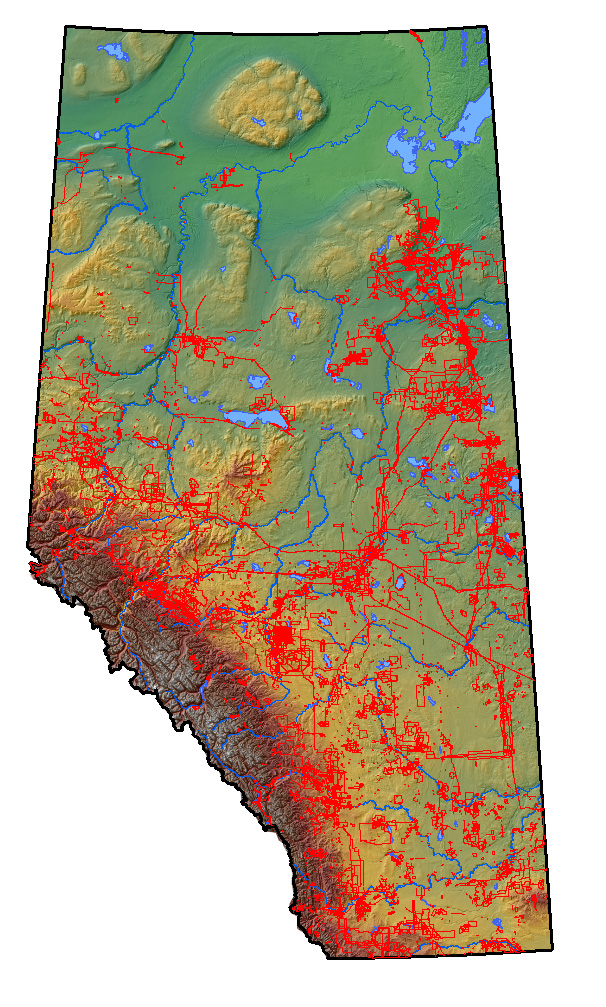
GIS map showing the locations of development projects that have been processed through OPaC.
OPaC has brought efficiency to the application process, but a wider significance lies in the fact that it supports a regulatory process that helps to discover historic resources that may otherwise go unnoticed and, therefore, unprotected – an important point, since the more we can preserve, the clearer picture we can create of Alberta’s past and this has immense benefits for future generations.
The Historic Resources Management Branch is responsible for the preservation and protection of Alberta’s historic resources as mandated by the Historical Resources Act. OPaC is a key tool in fulfilling this responsibility, as it allows experts the ability to easily and quickly determine the level of impact that could potentially threaten Alberta’s historic resources. Alberta Culture is committed to the preservation and protection of Alberta’s historic resources and this system helps to ensure that the opportunity for enhancing that knowledge is not lost.
For more information on OPaC, please refer to our website.
Written by: Erin Hoar, Historic Resources Management Branch Officer, with special thanks to the OPaC team for their assistance.
Which of you RETROactive readers out there doesn’t love the annual Municipal Heritage Forum? What started in 2007 as a small “Summit for Stakeholders,” has grown into something which has brought Alberta’s heritage community together, building connections and raising the bar. We have received lots of positive feedback on the Forum over the years, and – we have to be honest – it’s also a lot of fun to put on!
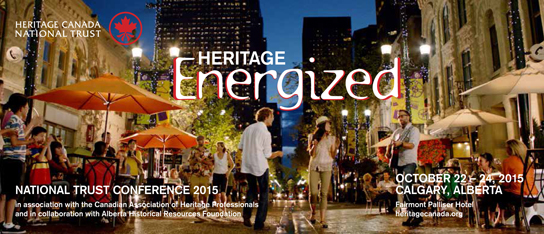
Well, this year, as we announced at the Forum in Lacombe that the 2015 event would have a whole different spin, a whole new energy – Heritage Energized!
Mark your calendars now – October 22-24th – we are linking up our already dynamic Forum with the premier, Canada-wide heritage conservation conversation. We’ll converge in Calgary, one of Canada’s most energetic cities, for a few days of exploration, engagement, and inspiration.
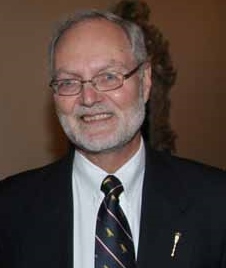
Fred Bradley, Chair, Alberta Historical Resources Foundation
At the 2014 Lacombe Forum, Fred Bradley, Chair of the Alberta Historical Resources Foundation, announced that the Foundation would be assisting 120 Albertans – including municipal heritage advisory boards, Main Street communities, students, and others – to attend the Heritage Energized through sponsored registrations. Henry Maisonneuve, Alberta Governor of Heritage Canada the National Trust, thanked the Foundation for their strategic partnership in this way, stating that he looked forward to a strong contingent of Albertans participating. Stay tuned to RETROactive for additional information on how you may be eligible for one of these spaces.



 RETROactive