Mount Edith Cavell

Located between the Astoria and the Whirlpool rivers is a mountain considered by many to be the most majestic in Jasper National Park, if not the entire Canadian Rocky Mountains. At an impressive altitude of about 3,300 metres, the mountain has been known by a number of names. French Canadian voyageurs using the Athabasca Pass referred to the notable landmark as La Montagne de la Grand Traverse (Mountain of the Great Pass). Dr. James Hector of the Palliser Expedition referred to it as Le Duc, probably after a Metis member of his party. In 1912, Arthur O. Wheeler of the Alpine Club of Canada and the Interprovincial Boundary Survey named it Fitzhugh Mountain, after the townsite of Fitzhugh, which was named for E. L. Fitzhugh, a director of the Grand Trunk Pacific Railway (the townsite of Fitzhugh was later renamed Jasper). It had also been periodically, and incorrectly, referred to as Mount Geikie. Today, and since 1916, the mountain is named Mount Edith Cavell, named for a British nurse who never set foot in Canada, let alone within Jasper National Park or on the mountain itself. How this mountain became a commemoration to Edith Cavell is an interesting lesson in Canada’s role in the First World War, its place in the Empire and the importance of wartime symbolism and the values of myth and memorialization.

PA354.1
North face of Mount Edith Cavell with Lake Cavell in the foreground, ca. 1945.
Provincial Archives of Alberta, PA354.1
Read more

Alberta on Fire: A History of Cultural Burning

Fire science has come a long way but the growing practice of prescribed burning is actually a return to a deep past. Archaeological and paleoecological researchers are demonstrating that Western Canada has been burning at the hands of people for thousands of years. Much of what was thought to be wilderness in the early 1900s was likely a mosaic of manipulated landscapes influenced by controlled burns. Alberta has a rich history of fire use and the recognition of it has implications for modern conservation and land management.

Ancient Fires

Tracking the history of fire in a landscape can be challenging and, in the paleoenvironmental record, it’s particularly difficult to distinguish human from natural burning. Fire scientists, however, are untangling fire history in interesting places. Christina Poletto is a Master’s student at the University of Alberta who will soon extract a long core of lake mud in northern Alberta in order to analyse changing layers of charcoal and pollen deposited over thousands of years. This information provides a baseline of natural fire history that she hopes to compare to cultural landscapes surrounding archaeological sites. “I want to Read more

Naming and Renaming: The Place Names of John Ware

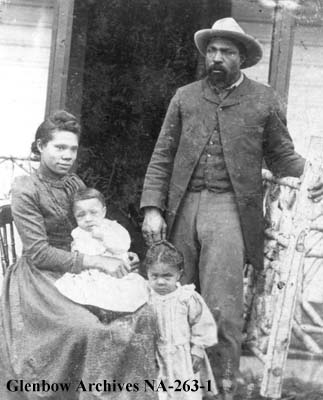
Alberta’s history is rife with many stories of interesting and fascinating cowboys and ranchers. High in this company stands John Ware, a black cowboy and rancher of near-mythic standing in Alberta’s history. John Ware has become almost an unofficial emblem of Alberta and western Canada, featuring prominently in centennial exhibits, in books and even on a Canada Post stamp. He is often portrayed as an embodiment of western Canadian values and as a demonstration of the levelling effect of the pioneer period and the cultural tolerance that was only possible on the Canadian prairies. There is little doubt that John Ware truly did enjoy the respect of his fellow ranchers and cowboys and his story, even if exaggerated, is an inspiring one. Yet, despite this outpouring of goodwill, respect and admiration, for many years John Ware was commemorated by a racially derogatory name prominently displayed on maps.

Glenbow Archives, na-263-1
John Ware with his wife Mildred and two of their children, Robert and Nettie, ca. 1896.
Glenbow Archives: NA-263-1

Read more

Hangar 14 and the British Commonwealth Air Training Plan

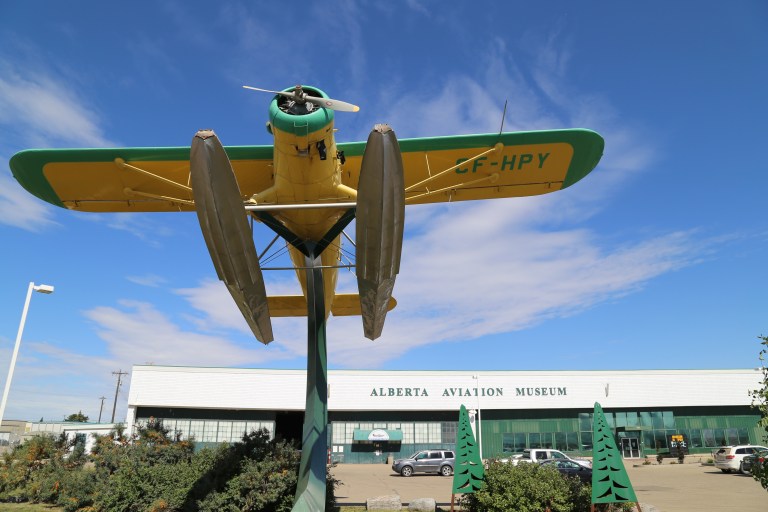
The British Commonwealth Air Training Plan (BCATP) is considered to be Canada’s primary contribution to the Second World War. Although the Plan was only in existence from 1940 to 1945, it left a lasting impact on Alberta and Canada as a whole. One of the most visible results of the Plan was the building construction that boomed during this time. There are examples of buildings produced during the BCATP period that are still in existence and the historical significance of these structures is evident today, one of which is Hangar 14, located at the former Blatchford Field and Municipal Airport site in Edmonton. This post will look at the foundation of the BCATP and summarize the distinct features of Hangar 14 that demonstrate the building’s significance as a provincial historic resource.

AAM 019
Hanger 14, the home of the Alberta Aviation Museum, Edmonton.
(Erin Hoar, 2015)

Read more

Yellowhead Townsite and Mine: Archaeology in Alberta’s Coal Branch

Alberta’s Coal Branch region, southwest of Edson, was once an area bustling with activity, not only due to coal production, but also with the day-to-day goings-on of communities. In its heyday, the Coal Branch supported a population of almost 3,000 people spread out among several towns including Cadomin, Mercoal, Mountain Park, Luscar, Lovettville, Coalspur, Robb, Coal Valley, and Beacon Hill. These communities, though small, had many amenities including stores, community halls, sports fields, schools, churches, and hospitals. Today, many of them have been completely abandoned or are only used for part of the year.

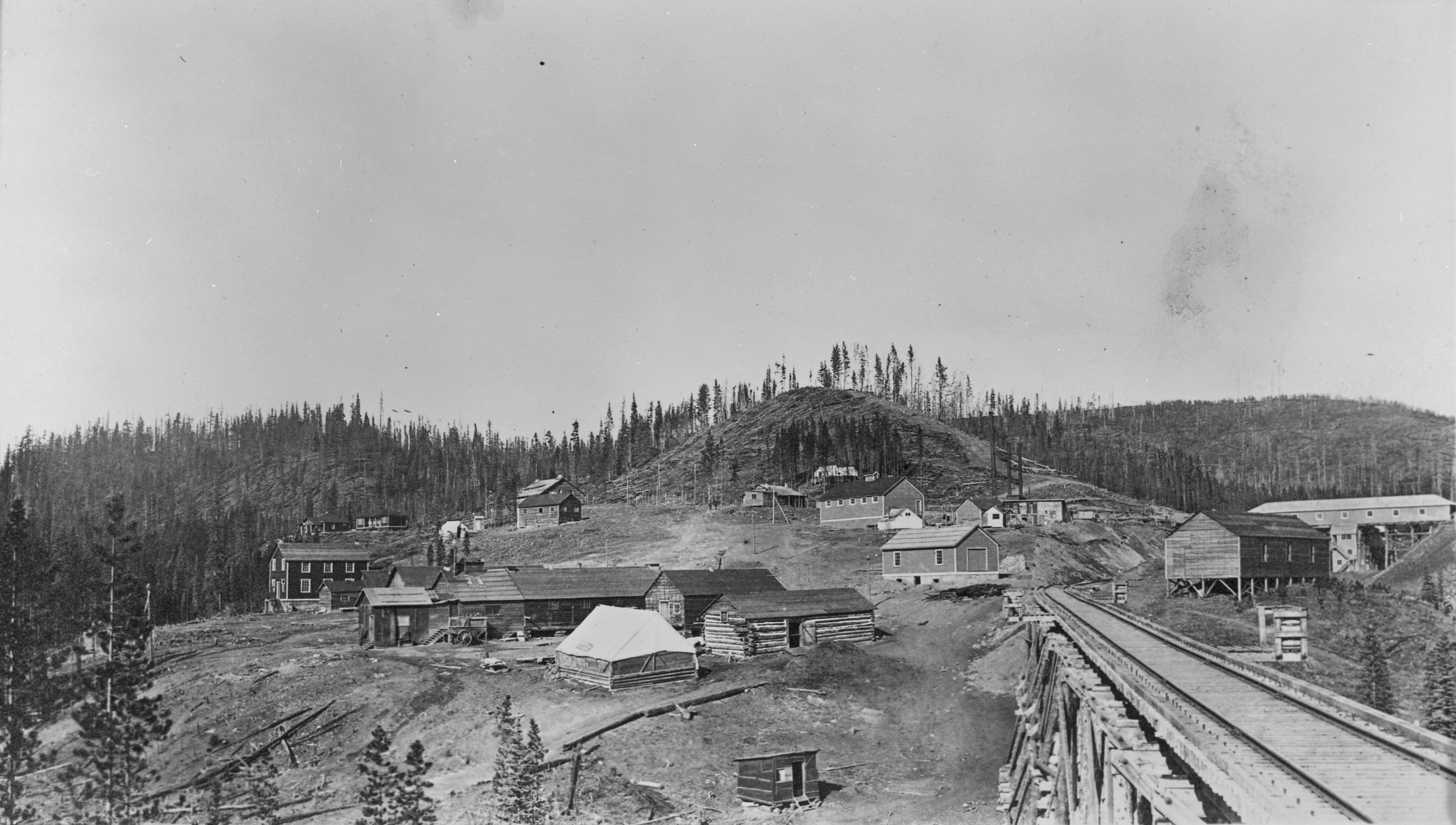
Part of the Yellowhead site, likely during the mid-to-late stages of mine development (Photo Credit: Provincial Archives of Alberta, Edmonton, PR1991.0312 A19987)
Part of the Yellowhead Townsite and Mine which was in operation from 1909-1919 (Photo Credit: Provincial Archives of Alberta, PR1991.0312 A19987)

Yellowhead Mine and its associated “stag camp”, and later townsite, was the first mining operation in production in the Coal Branch. Run by the Yellowhead Pass Coal and Coke Co., the mine began operations in 1909, before railroads or roads reached the area. Since the only way in and out of Yellowhead was by pack trail, the settlement was fairly isolated and difficult to get to. When mining first began, the coal could not be shipped out due to lack of rail access, so coal was stockpiled. The railroad Read more

Historic Burial near Viking, Alberta: A story of excavation, ceremony and community

In late August 2015, Brian Rozmahel, a farmer near the Town of Viking, was working in one of his fields. He recently experienced problems with gophers causing damage to his crops and decided to set up several traps as a preventative measure. One morning he went out to check the traps he set the day before and discovered something he was not expecting to find. A badger got to the site overnight and dug into the gopher burrows. Quite a bit of earth was brought up through the badger’s digging. However, there was more than just earth that was surfaced by the badger. Resting on the ground near the burrows were human remains and other items such as buttons and beads.

When Brian encountered the remains he immediately contacted the Viking Detachment of the RCMP. The RCMP cordoned off the site and did an initial investigation of the area. In the meantime, the exposed human remains were sent to the Office of the Chief Medical Examiner (OCME) for further analysis.

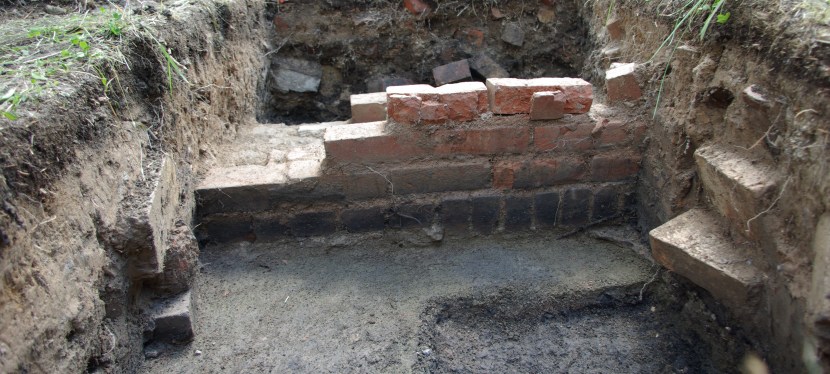
In consultation with forensic anthropologist, Pamela Mayne-Correia, the OCME concluded that the human remains were historic in nature and were likely of a young Aboriginal individual. The RCMP deemed the situation to not be criminal and the Historic Resources Management Branch (HRMB) was then contacted by the OCME. As the remains were considered historic, the HRMB now had jurisdiction over the site. Read more

She’s Got Bette Davis Eyes

Her hair is Harlowe gold
Her lips sweet surprise
Her hands are never cold
She’s got Bette Davis eyes
(from Bette Davis Eyes; Kim Carnes, 1981)

Backstory

Everyone says my mother (Marina Lynch-Staunton) has Bette Davis eyes. Perhaps she used them, back in 1955, to catch the judges’ eyes. That’s when Marina was crowned Queen at the Crow’s Nest Pass Winter Carnival.

The tale of Marina’s crowning achievement has an unlikely beginning.

Picture this: a grassy hillside overlooking the Oldman River. There, a hop, skip and jump east of The Gap—the water gap through which the Oldman River cuts through the Livingstone Range—a farm tractor was used to power a rope tow that pulled skiing enthusiasts from the surrounding ranching community to the top of “Mount Pleasant,” a modest climb from the Oldman’s storied shores.

It was here that the Maycroft Ski Club was born. Read more

Romanian Settlement in Alberta

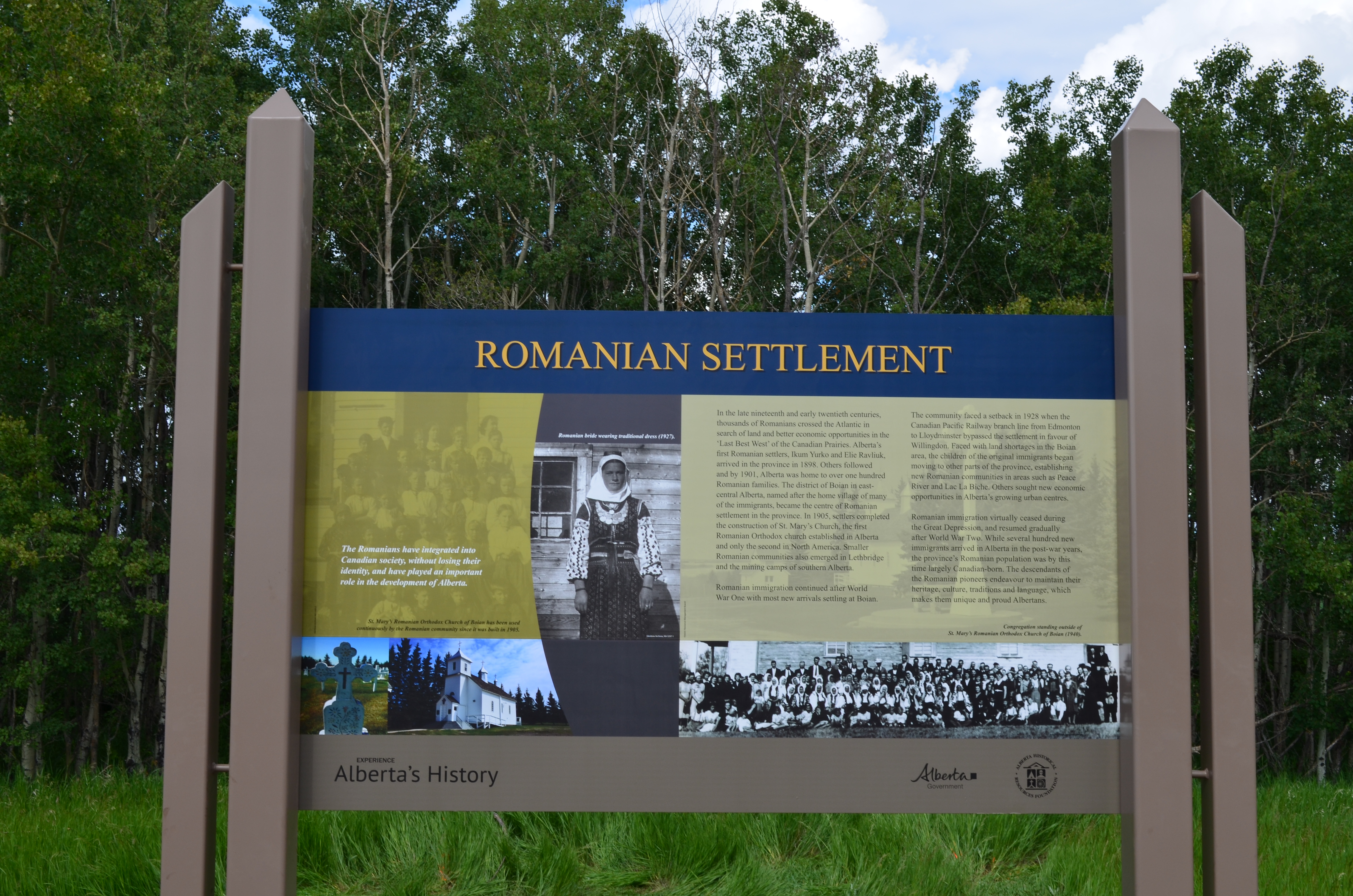
One of the latest additions to the Provincial Heritage Marker collection details the history of Romanian settlement in Alberta, starting with the first Romanian pioneers to settle in the province in 1898, Ikum Yurko and Elie Ravliuk. The earliest Romanian settlements in Alberta were concentrated in the east-central part of the province, where communities such as Boian flourished in the early twentieth century. New Romanian-Albertan communities emerged in the late 1920s as the children of the first generation began to move to other parts of the province in search of land and new opportunities. By the 1950s the province’s Romanian population was predominantly Canadian-born, but Romanian culture, traditions and language still flourished in Alberta.

New Heritage Marker installed in June 2015 on Highway 45 east of Willingdon.

The marker was installed on Highway 45 east of Willingdon in June 2015. The Provincial Heritage Marker Program promotes greater awareness of the provincially-significant people, places, events and themes that have defined the history and character of our province. Topics relevant to the history of immigration, settlement and ethnic history has been an important part of the program since it was first launched in 1955. The public plays an important role in the program, and we welcome applications from groups or individuals who want to propose topics and locations for future markers, including our popular urban/trail-sized markers, suitable for placement in towns, parks, and other locations with pedestrian traffic. For more information about the program, please visit our website.

Written By: Allan Rowe, Historic Places Research Officer

Christmas at the Ukrainian Cultural Heritage Village

Photo Credit: Ukrainian Cultural Heritage Village
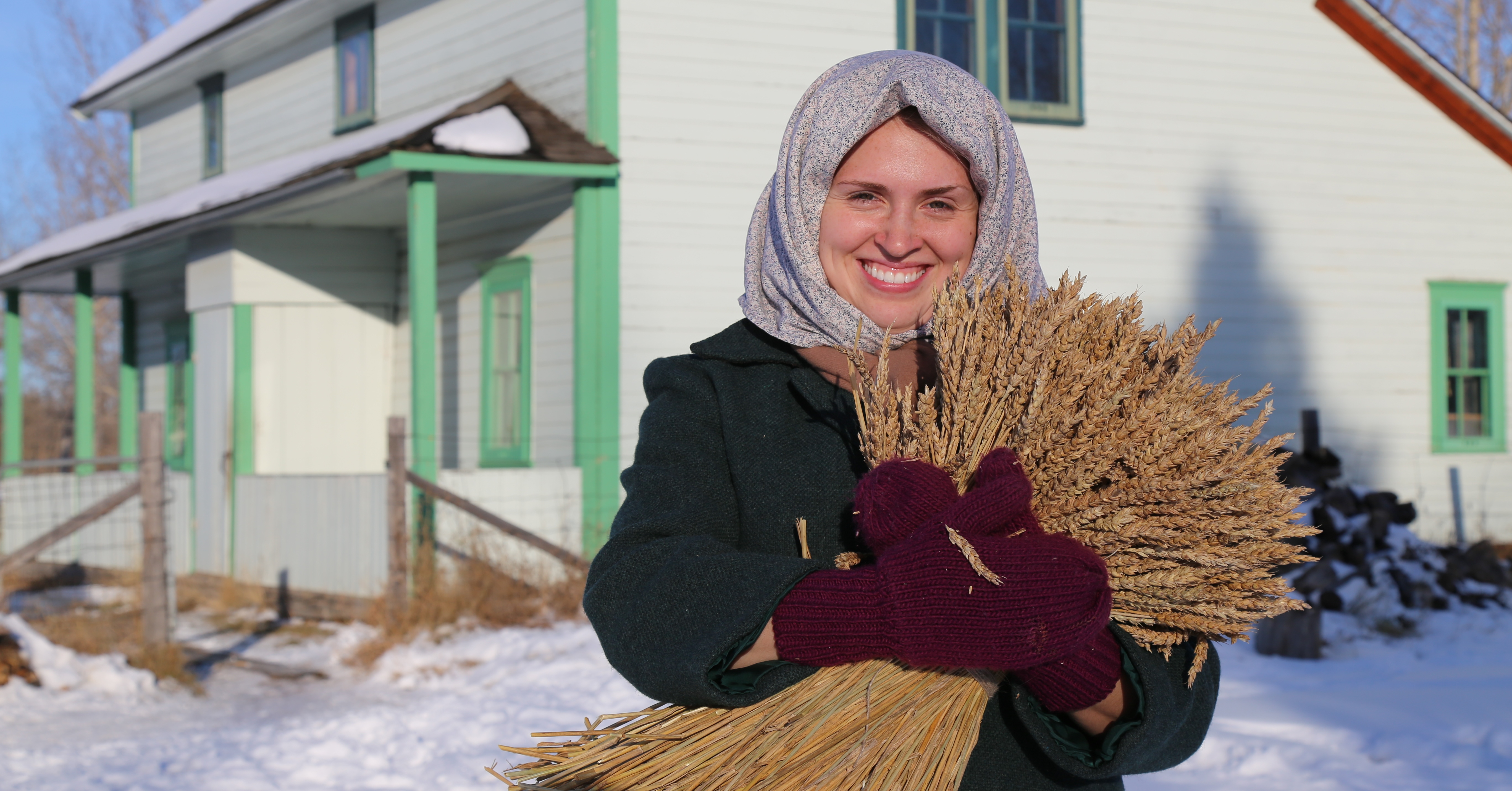
An employee at the UCHV holding a Didukh (sheaf of grain). Photo Credit: Ukrainian Cultural Heritage Village

The Ukrainian Cultural Heritage Village is a major open-air museum operated by the Historic Sites and Museums Branch of Alberta Culture and Tourism. Located 50 km east of Edmonton the museum preserves more than 30 historic structures and interprets the lives of Ukrainian settlers in east central Alberta between the years of 1892 and 1930. Based on extensive contextual and site specific research, the museum is an important steward of the intangible cultural heritage of Alberta’s Ukrainian settlers.

Among the customs which the Village documents and observes is Christmas. As Byzantine Eastern rite Orthodox and Catholic Christians, Ukrainians celebrated Christmas according to the Julian calendar, which predated the introduction of the current Gregorian calendar. What is popularly referred to as “Ukrainian Christmas” is celebrated on January 7 rather than December 25. On January 6, Ukrainians celebrate Sviat Vechir (or Holy Evening, Christmas Eve) with a special meal. For the early Ukrainian settlers of east central Alberta as well as their descendants in urban settings, this was an evening filled with ritual and tradition, including pre-Christian agrarian elements.

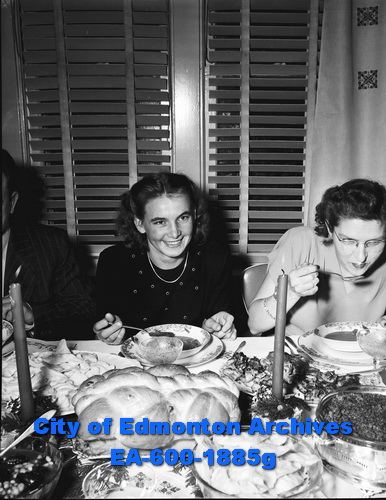
Christmas Eve meal, January 5, 1949. Photo: Eric Bland, from City of Edmonton Archives.
Christmas Eve meal, January 1949. Photo: Eric Bland. From City of Edmonton Archives, EA-600-1885g.

The evening meal on Sviat Vechir would begin when the children in the family spotted the first star in the night sky. After it was spotted, the family assembled around the table and shared a prayer or carol. The patriarch of the family then brought the first of 12 Lenten dishes to the table. This dish is Read more

Conservation at the E.P. Ranch

E.P. (Prince Edward) Ranch, established by the Bedingfeld family in 1886, is located in the foothills southwest of Calgary near the Bar U Ranch National Historic Site. In 1919, during a cross-Canada tour, the Bedingfeld’s ranch captured the fancy of His Royal Highness Edward, Prince of Wales, upon his visit to the area.  Prince Edward purchased the ranch shortly thereafter from Frank Bedingfeld. Under Edward’s direction, the ranch developed a breeding program for sheep, cattle, and horses with livestock imported from the Prince’s breeding farms in the Duchy of Cornwall in England.  Prince Edward, later King Edward VIII, visited the ranch in the 1920s and in the 1940s and 1950s, after his abdication, as the Duke of Windsor.  Photographs in the Glenbow Archives show Edward and his wife Wallis Simpson, the Duchess of Windsor, strolling among the ranch buildings that still stand at the site today. The E.P. Ranch was designated a Provincial Historic Resource in 2004 for its association with Edward, who owned the site from 1919 to 1962. Fans of the 1992 movie Unforgiven will also recognize scenes shot on location at the ranch.

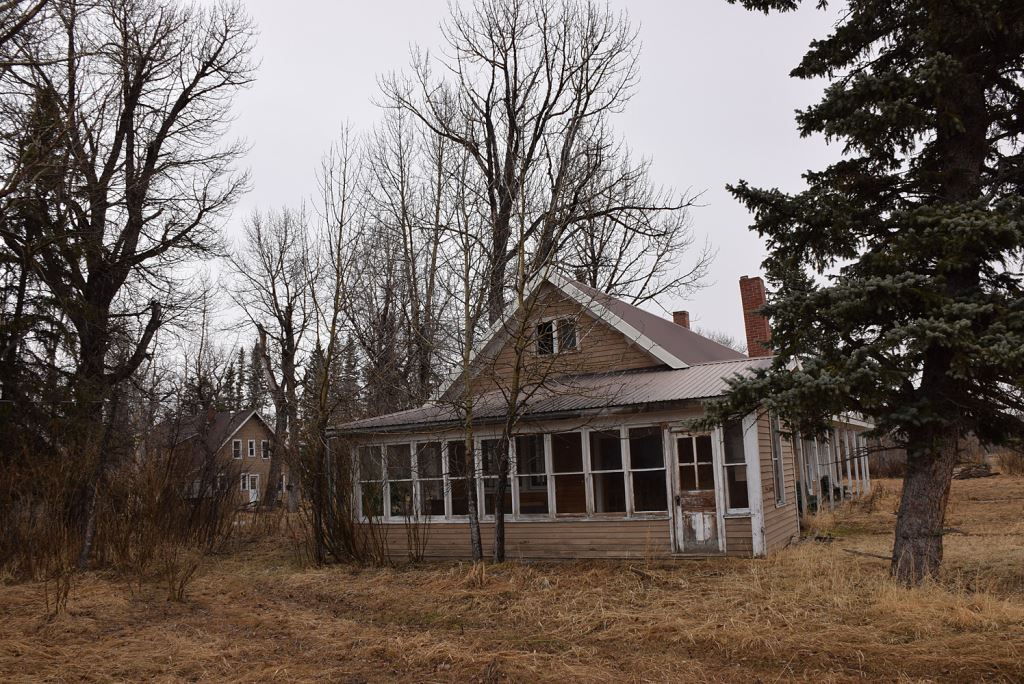
The main ranch (or Prince's) house prior to restoration, April 2014.
The main ranch (or Prince’s) house prior to restoration, April 2014.

In June 2013, the E.P. Ranch found itself at the epicentre of the torrential rains that flooded communities and historic sites across southern Alberta. Pekisko Creek overflowed its banks and swept through the site, turning grazing lands into a virtual river.  While the large and distinctive horse barn was unaffected, four other buildings were damaged. Read more