Has the boreal forest always been a boreal forest? How do vegetation communities change with age? One thing for certain is that northern boreal forests are young. Compared to the redwood forests of California for example, Alberta’s boreal forest is a ‘baby’. That being said, it’s no baby in size. The boreal forest region in Alberta covers over 55% of the province and is a ‘hot spot’ for ecological diversity.
The forested parts of Alberta figured here are dominated by the boreal forest. The boreal region is renowned for its ecological diversity and is home to hundreds of plants and animals (created by Christina Poletto).
Why is Alberta’s boreal forest so young and how has it changed? Some 12,000 years ago, ice sheets that covered Alberta began to melt and the landscape opened. The Laurentide Ice Sheet retreated to the northeast so that the northwest corner of Alberta was the first region to become free of ice. The newly opened landscape was a productive steppe-tundra environment that lasted for a short period. Species like birch and alder were dominant while smaller shrubs of grasses and willow covered the remaining landscape. Read more →
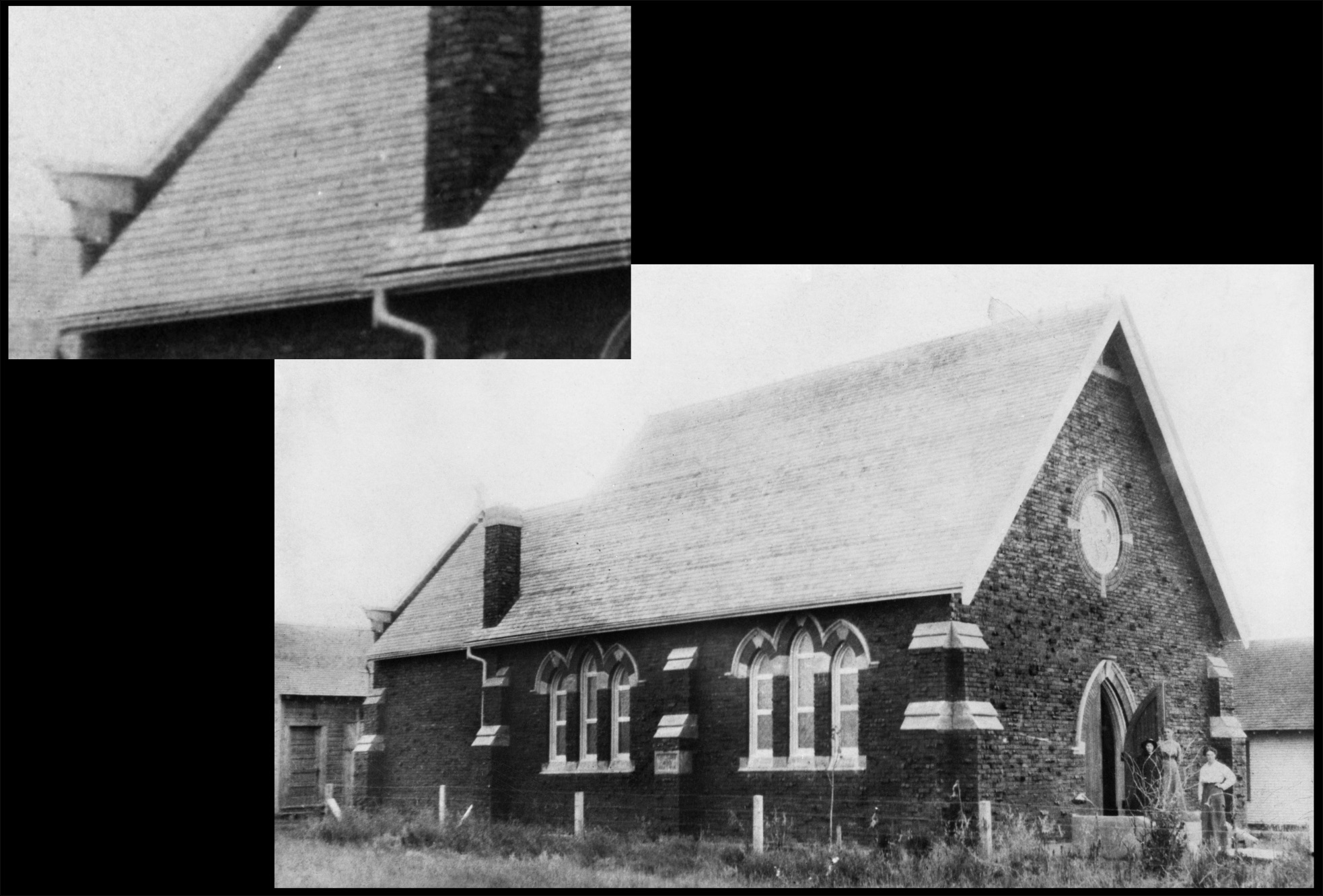
Located on a quiet residential street in Redcliff, Alberta, St. Ambrose Anglican Church is distinguished by its buttressed brick masonry exterior, steeply-pitched gable roof and pointed arch windows. These characteristics strongly identify the 1914 church with the Gothic Revival style popular in the Victorian era for ecclesiastical architecture in England, a style also eagerly adopted by Anglican, Presbyterian, Methodist and Congregational churches across Canada. Unlike many churches, though, St. Ambrose was modelled on small Anglican parish churches in England and is a variant of the Gothic Revival style seldom found in Alberta.
St. Ambrose’s architecture hearkens back to England but the building’s local roots are evident in the “clinker brick” masonry exterior, an overfired brick with distinctive irregular or lumpy shapes and striking colour variations. Clinker brick resulted from high firing temperatures in the kiln which caused the clay to partly vitrify or melt, sometimes to the point where clumps of bricks would fuse together and had to be broken apart. This lack of uniformity was appreciated for its decorative qualities and the clinker brick at St. Ambrose was produced at the Redcliff Brick and Coal Company just blocks away. The combination of far-reaching colonial stylistic influences and distinctive local materials contributed to the church’s designation as a Provincial Historic Resource in 2008.
St. Ambrose Church from the northwest in 1914, with inset showing the original narrow exposure, traditional step flashings, and rows of slightly offset shingles (inset) to create shadow lines and decorative horizontal bands across the roof. Glenbow Archives photograph NA -2701-5.
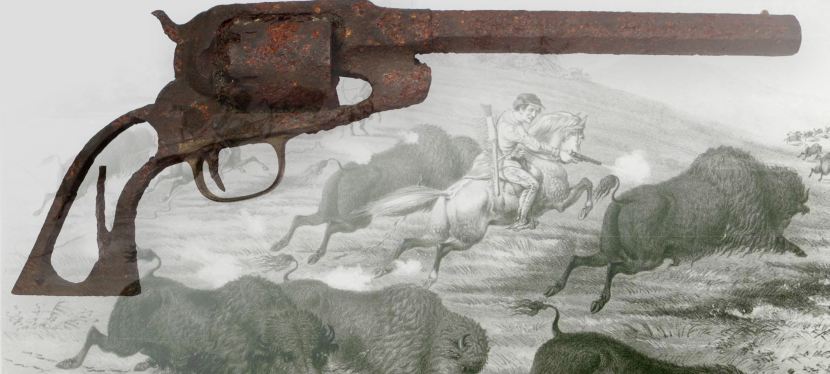
The story of a rusty gun found in central Alberta begins across the continent in 1863 when 100,000 New Model Army revolvers were being made at the Remington & Sons factory near the banks of the Mohawk River in New York State. The New Model Army was a popular sidearm because it was affordable and tough: most were destined for use in close combat by U.S. Army soldiers in the American Civil War. Between New York and Alberta, much of the revolver’s story is a mystery. Read more →
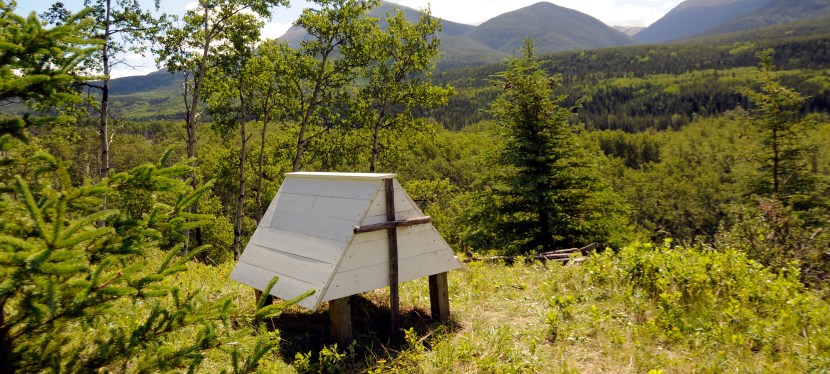
This week’s blog post is guest-authored by the Willmore Wilderness Preservation and Historical Foundation and features work conducted in the summer of 2016 with the support of the Government of Alberta through the Alberta Historical Resources Foundation. We hope you enjoy their fascinating stories and stunning photographs.
Willmore Wilderness Preservation & Historical Foundation is a non-profit society registered under the Alberta Societies Act in 2002. The Foundation became a Registered Charitable Organization in 2003. The Foundation preserves the history of the area; focuses on the advancement of education of the park; restores historical pack trails and sites; and enhances the use of Willmore Wilderness Park for Albertans and visitors alike. Read more →
For this week’s blog post we welcome Meg Stanley, a historian with Parks Canada. Meg has done extensive research on war-related place names in the Canadian Rocky Mountains, particularly place names in the National Parks. We welcome her to RETROactive!
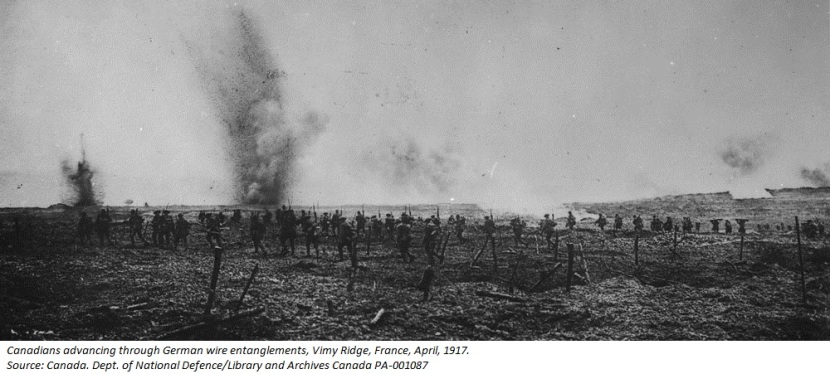
During the First World War, the Geographic Board of Canada assigned place names to various geographic features in the southern Rocky Mountains commemorating battles, military leaders, individual soldiers, and others with strong associations with the war. The Board’s inscription of the war onto the mountain landscape began in 1915 and continued through the war years and into the early 1920s.
Earlier this month, we received an “Ask an Expert” question via our Facebook page (Alberta’s Historic Places) about early stone and brick masonry in Alberta. The question was:
“I am wondering what information can be found on early stone and brick masonry in Alberta. I find a very limited amount of this type of information available and would love to learn more. Are there any experts in this field, websites, or books written on this subject? Are there any museums that may have displays? Historians or archivists planning guided tours in Alberta? Also, any information on quarries, masons, relative architects, and existing or demolished masonry buildings from the nineteenth and twentieth century would be much appreciated.”
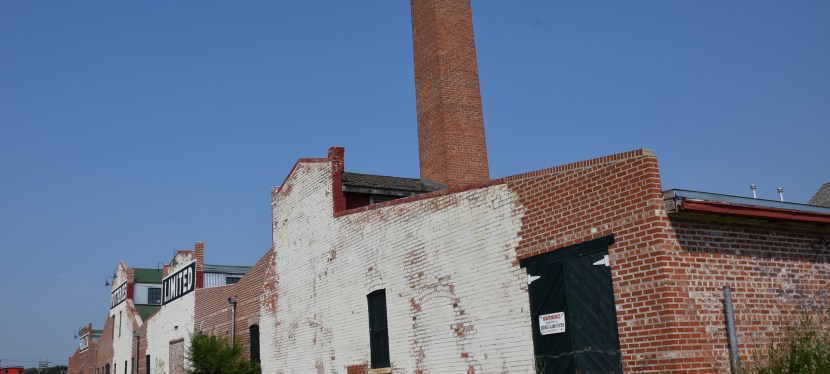
Our experts here at the Historic Resources Management Branch have compiled the following list of resources on this topic, including books, webpages, historic sites and events. We hope that you find it helpful! Read more →
Knowing the date of an archaeological site is one of the things that makes it most interesting – when were people here?
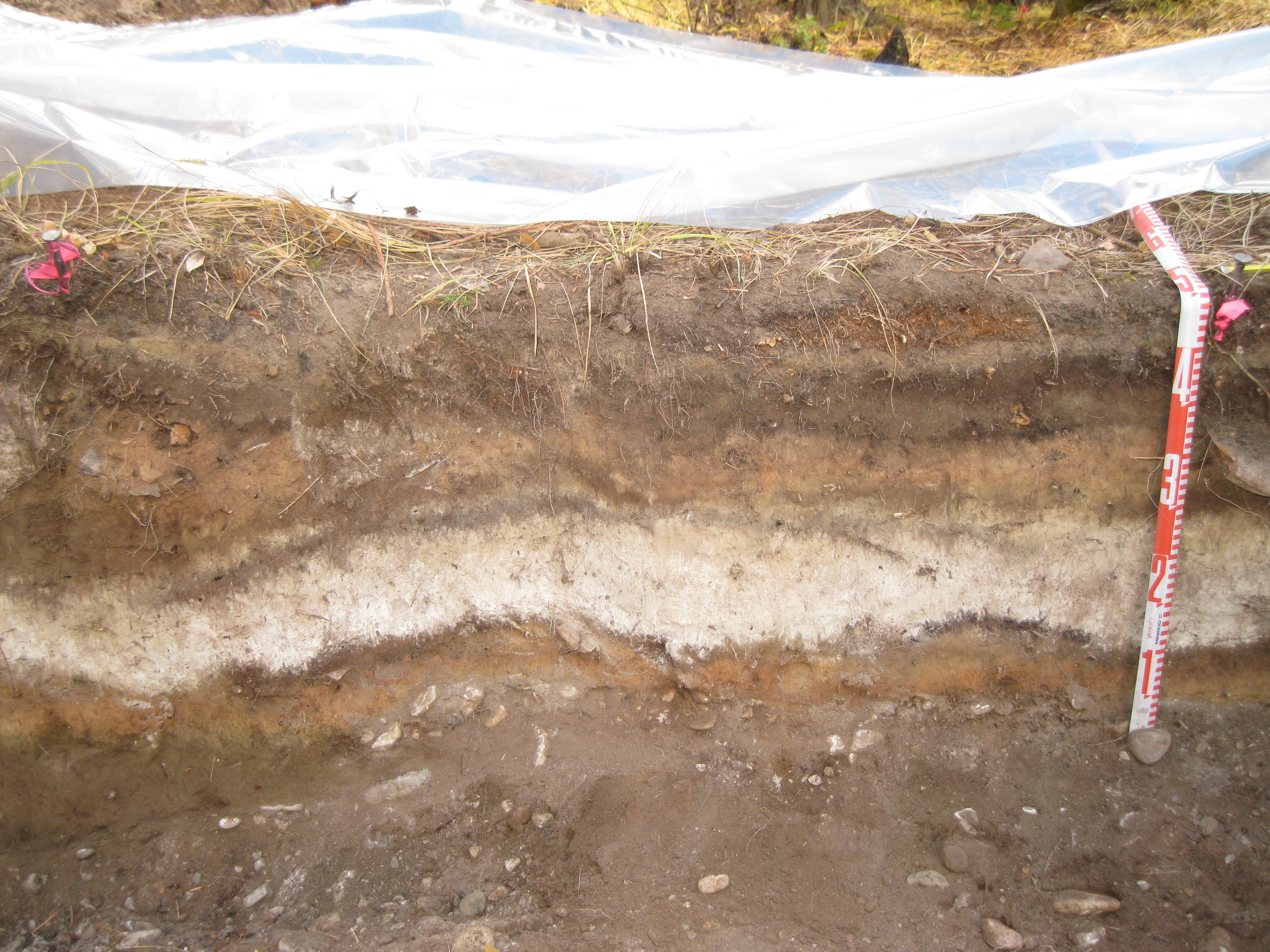
Two main types of dating are applied to archaeological sites when possible– relative and absolute dating. Relative dating puts sites or artifacts “in order” by simply determining if one event happened before or after another. A common example of relative dating in Alberta is by using Mazama Ash. About 7600 years ago, Alberta was blanketed in ash after the Mazama volcanic eruption. This ash is still sometimes found today in stratigraphic profiles, buried under other deposits of sediment. When this ash is encountered it can be used as a time marker. Anything below it is older than 7600 years and anything found above it is younger than 7600 years.
Example of a buried volcanic ash (also known as tephra) found during archaeological excavation. The ash is the lightest coloured layer in the profile, between 25 and 35 cm below the surface (between the 1 and 3 on the tape measure).
Relative dates can also be obtained using artifact styles. Projectile points are one of the most common types of artifacts used to relatively date sites. Spearpoints represent the oldest projectile point technology and indicate that the site falls within the “Early Prehistoric Period” (11,200-7,500 calendar years before present), dartpoints are representative of the “Middle Prehistoric Period” (7,500-1,350 calendar years before present) and arrowpoints represent the emergence of the use of bow and arrow in the “Late Prehistoric Period” (1,350-250 calendar years before present). Dates can be further refined within each general time period based on the spear, dart or arrow style.
Absolute dating is more specific than relative dating and provides a more exact date (with standard deviation) of when the site or artifact was used. There are several methods of absolute dating but one of the most common methods used by archaeologists is radiocarbon dating. Radiocarbon dating can be used on organic material such as bone or charcoal. A radiocarbon date can be obtained by measuring the amount of Read more →
This post was originally published on RETROactive on March 17th, 2015. We are once again approaching St. Patrick’s Day and we wanted to highlight this great post that talks about the history of the holiday in Alberta. Happy St. Patrick’s Day! Enjoy.
“What is the matter with the Calgary Irishmen?” asked a frustrated correspondent to the Calgary Herald in March 1916. The writer, who identified themself as ‘F. Fitzsimmons,’ was complaining about the city’s apparent lack of enthusiasm for St. Patrick’s Day, with no public events planned to celebrate the day. Fitzsimmons conceded that people were likely distracted by the war effort, but lamented that Calgary’s leading Irish citizens had gotten “cold feet” and failed to plan any celebrations. “If all Irishmen were like the Calgary bunch” closed the writer, then “‘God Save Ireland.’”
The language used by Fitzsimmons in this letter is highly suggestive. By stating that Calgary’s Irish leaders had gotten ‘cold feet,’ he/she was implying that they lacked the courage to publicly celebrate their ethnic heritage. Further, ‘God Save Ireland’ was an explicitly nationalist slogan, associated with the last words of three Irish revolutionaries executed by the British in 1867. In short, Fitzsimmons was calling for an open celebration of Irish identity that did not shy away from nationalist politics. What Fitzsimmons saw as a simple issue, however, was much more complex for the majority of Irish people in Calgary and across Alberta. The often turbulent politics of the Irish homeland, and the campaign for Irish autonomy from Read more →
This week’s post is part two of a series of infographics about the Archaeological Research Permit Management System at the Archaeological Survey of the Historic Resources Management Branch. This infographic discusses the professional archaeologists and archaeological consulting companies working in Alberta.


 RETROactive