Second World War Service, Decorations and Sacrifice: Geographical Names Commemorating Alberta’s War Casualties

Written by: Ronald Kelland, Geographical Place Names Coordinator

Remembrance Day, November 11, is the day Canadians honour and memorialize those who gave their lives while in military service. While honouring all Canadian service personnel this Remembrance Day, this year RETROactive is drawing attention to a few geographical features named to commemorate casualties of the Second World War. Following the Second World War, the Province of Alberta, through collaboration between the Geographic Board of Alberta and the Geographic Board of Canada began naming geographical features, mostly lakes, for decorated military personnel from Alberta that were casualties of the Second World War. This is the story of two of those individuals.

Conn Lake

Located approximately 35 kilometres northwest of Bonnyville is Conn Lake.        

The lake is named for Leading Steward James Conn. Born at Hillcrest, Alberta on December 7, 1914, Conn was the son of John Robert (died 1921) and Lillian Maude Conn (died 1916). At some point, James and his siblings moved to Quebec and by 1932 James Conn was living on University Street (now Robert-Bourassa Boulevard) in Montreal.

At the outbreak of the war, James Conn was a waiter with the Canadian Pacific Railway. Conn enlisted in the Royal Canadian Naval Volunteer Reserve in August 1943 and trained at Navy Reserve Divisions HMCS Montreal (now HMCS Donnacona) and at Winnipeg with HMCS Chippawa and at Ottawa with HMCS Carleton. He served a short stint on HMCS Stadacona, a steam yacht that had been acquired by the Royal Canadian Navy in 1915 and was used as a home waters patrol vessel during the Second World War. On October 17, 1944, he reported to HMCS Esquimalt at the rank of Leading Steward.

HMCS Esquimalt was a Bangor-class minesweeper operating out of the port of Halifax to hunt enemy submarines and keep approaches to the harbour clear of mines. Named for the Township of Esquimalt on Vancouver Island, she was launched in 1941 and was originally assigned to patrol duties off Newfoundland and was transferred to Halifax in September 1944. On 15 April 1945, Esquimalt sailed on a patrol to hunt a German U-boat that was suspected to be in the waters near Halifax. At approximately 6:30 a.m. on the morning of April 16, with the lights of Halifax visible on the horizon, a torpedo from German U-boat U-190 struck Esquimalt on its starboard, flooding the engine room and causing a loss of power. In less than five minutes, and before a distress call could be sent, Esquimalt rolled onto her starboard side and sank beneath the surface.

Sources differ regarding the number of sailors lost in the sinking of HMCS Esquimalt, with a range of 39 to 44 crew perishing that night either going down with the sinking vessel or of exposure in the frigid waters awaiting rescue. Six hours after the sinking, survivors were picked up by Esquimalt’s sister ship, HMCS Sarnia. Twenty-seven of Esquimalt’s crew survived. Leading Steward James Conn was not one of them
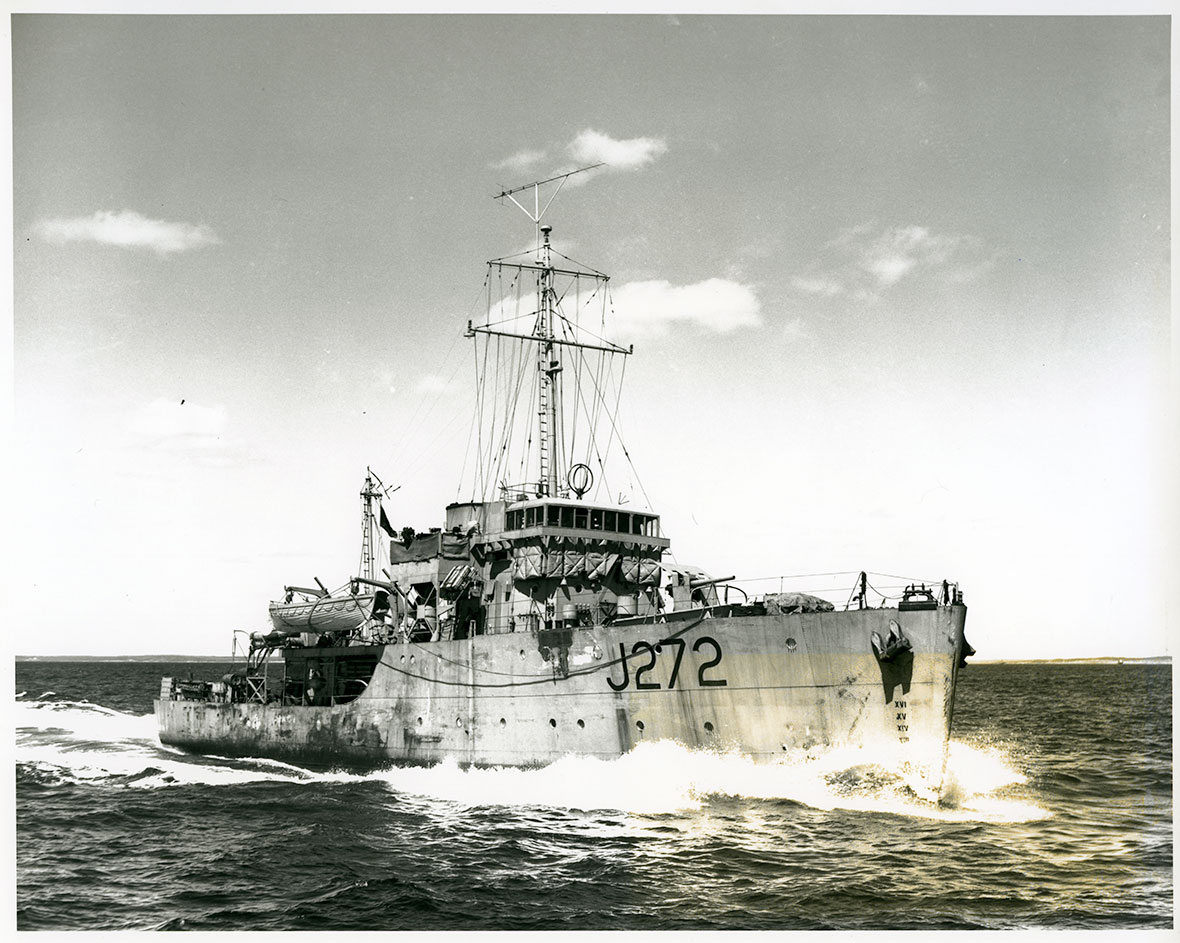
HMCS Esquimalt, 1944. Source: Department of National Defense.
Read more

Remembrance Day: Commemorating the fallen through place names

Written by: Ron Kelland, MA, MLIS, Geographical Names Program Coordinator

November 11 is Remembrance Day. The day that Canadians are called to set aside in honour and recognition of its military service personnel that paid the ultimate price in their defence of our nation and its values. Canadians have fought in numerous wars and as the memories of some of those wars are fading as decades pass and the last surviving veterans of those wars pass away, it becomes even more important to remember those that fought and died and those that fought and lived to preserve the memories of their fallen comrades. Canada’s Commemorative Map is one of the ways to keep the memory of those sacrifices alive.   

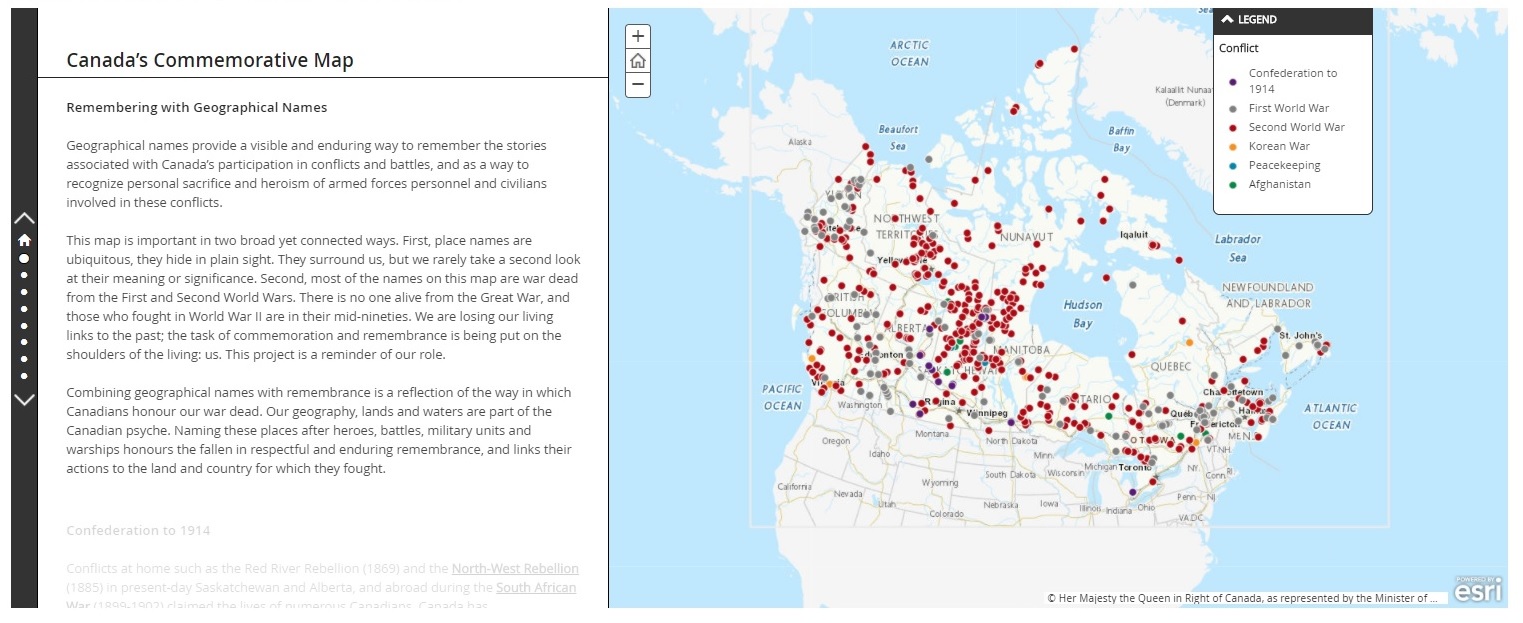
In 2018, the Geographical Names Board of Canada launched Canada’s Commemorative Map, an interactive, digital map that highlights places and features in Canada that were named to honour and commemorate Canada’s war heroes and casualties. Source: Geographical Names Board of Canada.

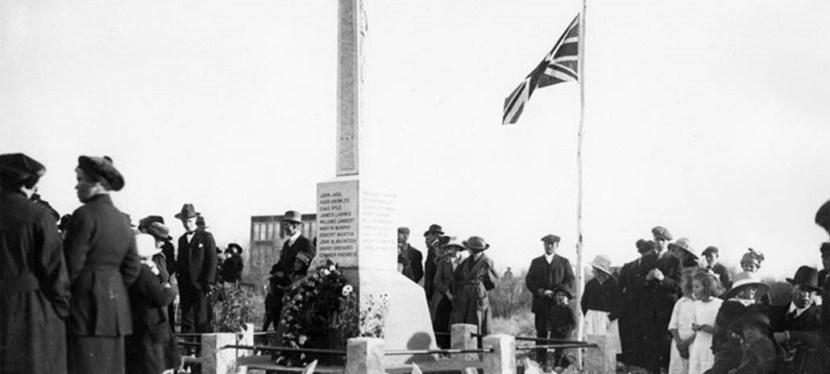
Commemoration of Canada’s war casualties have taken many forms. Following the end of the First World War, there was a national effort to erect plaques, cenotaphs and other memorials in cities, towns and villages across the country. These memorials of the First World War are often the sites of our Remembrance Day services and ceremonies to this day. Some communities built needed infrastructure and facilities, such as arenas, performing arts centres, libraries and community halls dedicated to memory of those that gave their lives in military services.

Read more

POW and Internment Camps in Alberta: WWII

On September 1, 1939, the Second World War began and Canadians responded with more than one million of its men and women enlisting in the military. Many were sent overseas, and stories of the courageousness of Canadians on the battlefront emerged. This war is known for uniting the country and forging its own national identity, but a lesser known aspect from this period takes place at home. In a significant reaction to the war, internment camps were established and Canada detained citizens of its own country, discriminating against members of German, Japanese and Italian communities. In addition, Canada had an active part in accepting German prisoners of war who were captured in active duty. This blog post will look at the establishment of prisoner of war and internment camps in Alberta, and briefly at the people who were detained, and the life they experienced.

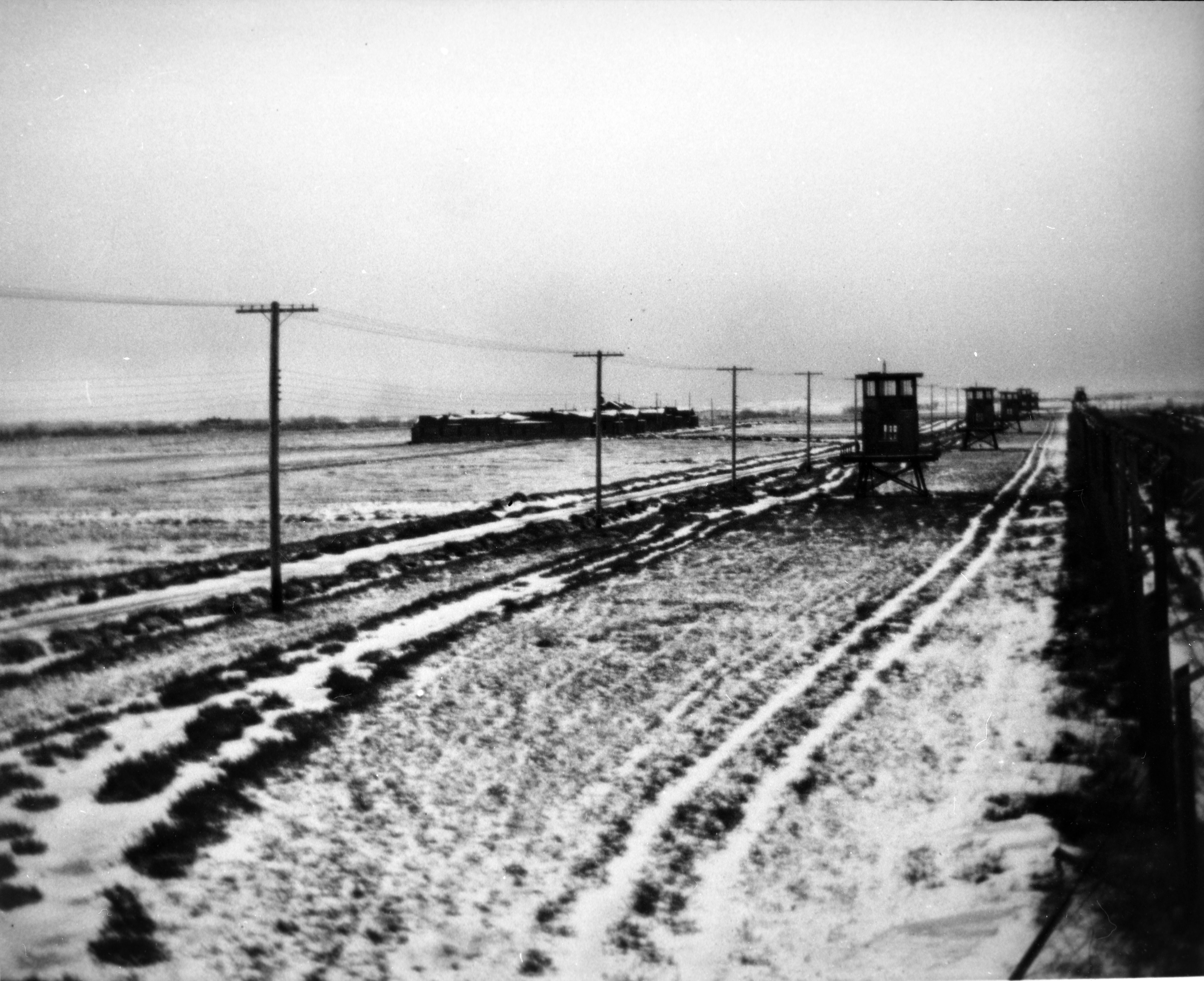
View of guard towers at the POW camp in Medicine Hat, c.1948 (Image courtesy of Esplanade Archives, 0590.0017).

Read more

Floods, Bricks, and POWs: Rebuilding Medalta’s Historic Chimney

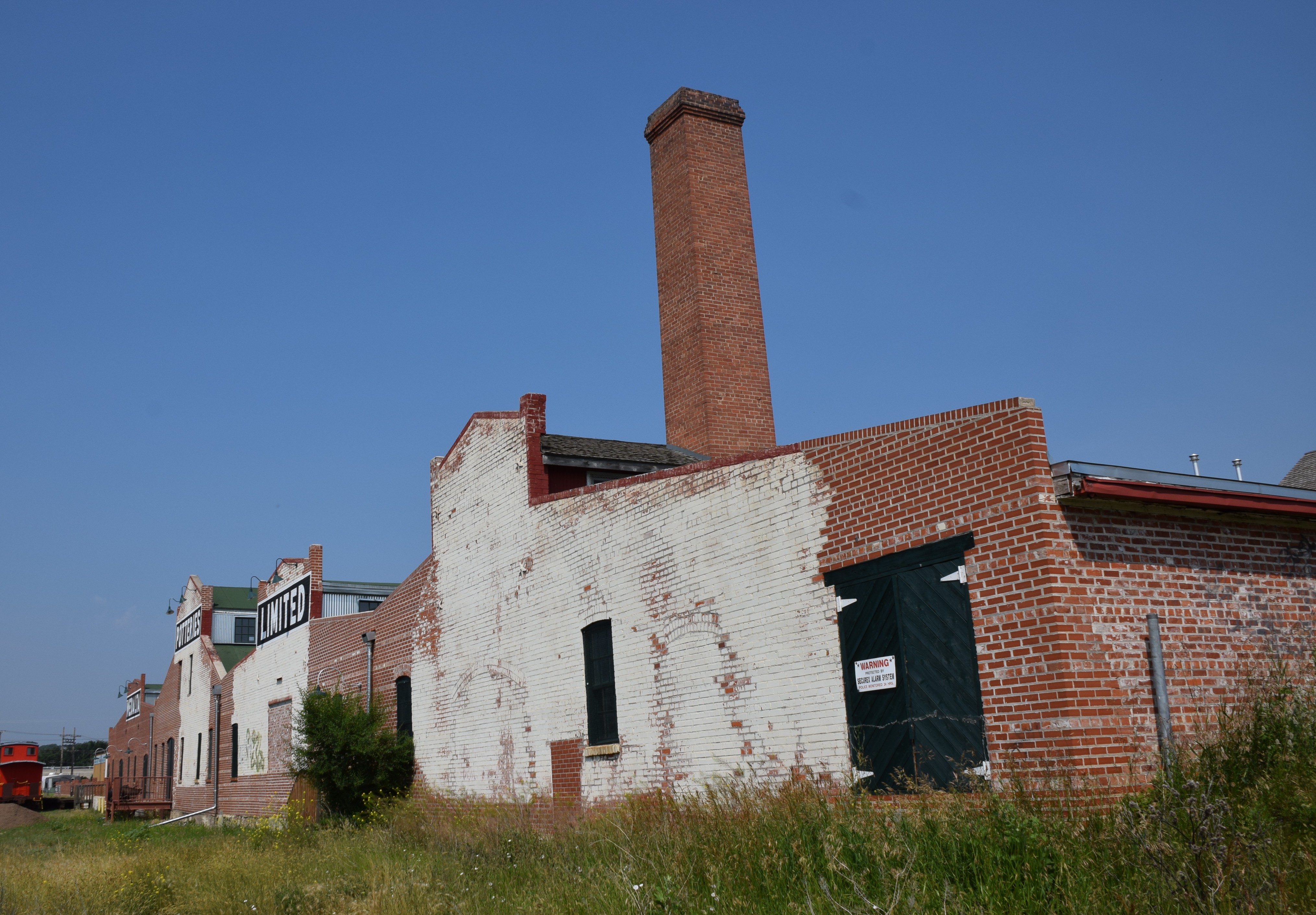
A massive brick chimney at Medalta Potteries towers six metres above the roof of “Building 10” and extends roughly the same distance from the roof to the dusty factory floor below. Two meters wide at its base, the chimney and accompanying boiler were vital in the production of clay products from the early decades of the twentieth century until the plant’s closure in the 1960s. Now a Provincial Historic Resource, Medalta Potteries in Medicine Hat has evolved into a vibrant community hub that includes the Medalta archives and interpretive centre, galleries and displays, a working pottery that reproduces classic Medalta ware, a contemporary ceramics centre for professional artists, and a venue for markets, weddings, concerts and other community events. The tall brick chimney and distinctive monitor roofs of the former factory buildings provide the iconic backdrop for these varied activities.

20140717_0047
Medalta Potteries in 2014, looking west to Building 10 before rebuilding of the chimney.

Already leaning slightly to the south, the chimney developed a worrisome new tilt after the June 2013 southern Alberta floods, an event which inundated much of Medalta and the nearby residential neighborhoods. As soil conditions on site gradually normalized in early 2014, the chimney’s foundation shifted and subsided further into the clay-rich soil, raising concerns about its stability. The only practical long-term conservation option was to disassemble the chimney and rebuild it with the original, locally manufactured brick using traditional masonry materials and construction methods.

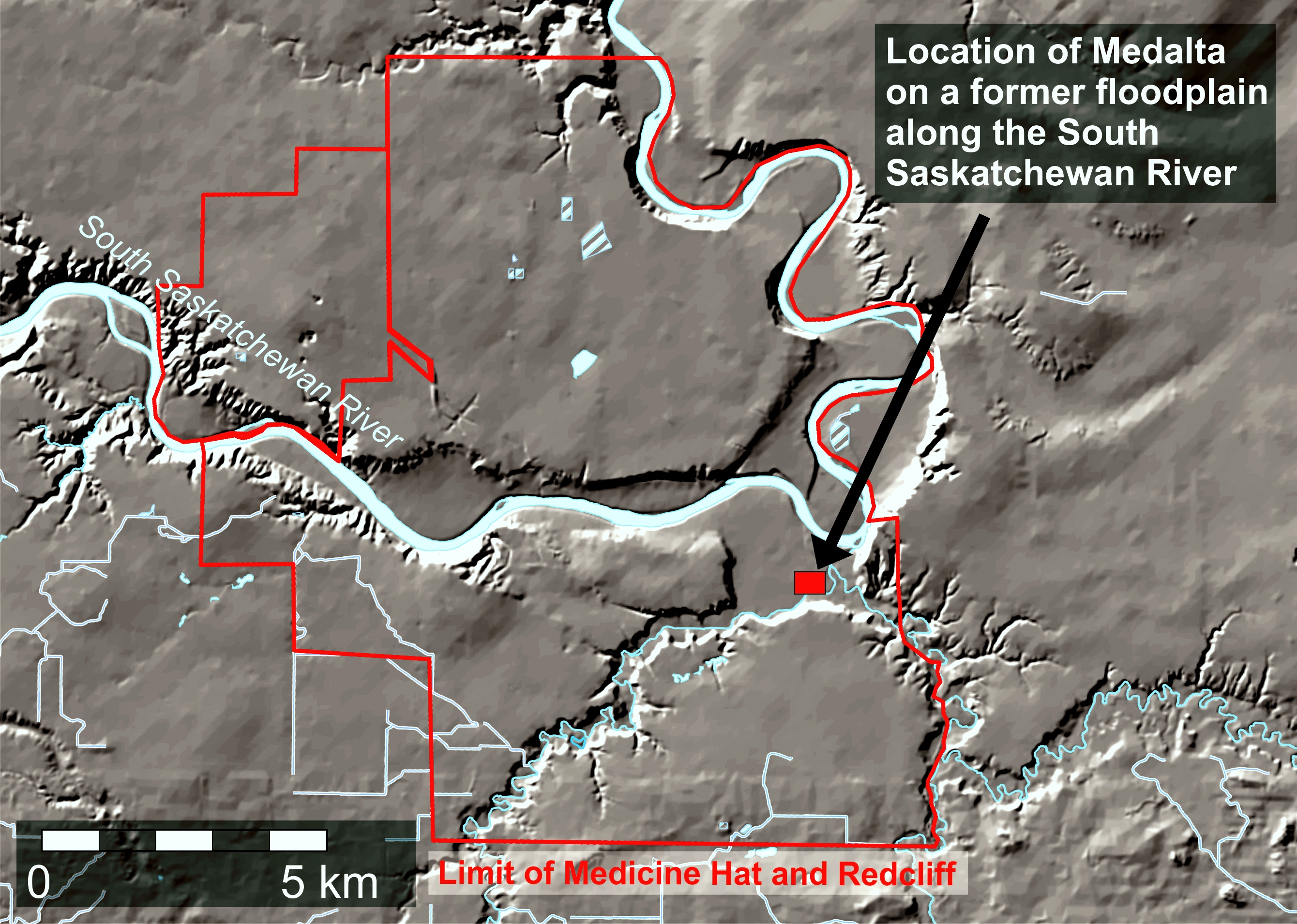
Medalta map draft

Conserving the chimney started with extensive photographs and measurements followed by disassembly by a contractor specializing in historic masonry conservation. Medalta’s staff archaeologist monitored and documented the process. As the chimney came down brick by brick, unexpected finds within the masonry included an old whisky bottle; fire bricks from Hebron, North Dakota; and a bizarre series of wasps’ nests occurring at roughly one metre intervals within the stack. This corresponds roughly with the work a team of masons would likely have completed in a typical day – a coincidence that begs further explanation. The chimney-dwelling wasps turned out to be quite blind and fortunately did not harass the masonry crew as dismantling proceeded.

The most intriguing relic, however, was a cluster of bricks inscribed with names and the inscription “IX 44”, presumed to represent a date. The names went unobserved until mortar dust from the disassembly process settled lightly onto the brick and highlighted the writing. Prisoners of war interned in Medicine Hat during the Second World War were recruited for work in local industries to offset the wartime labour shortage. Research now underway may reveal that some of these POWs, possibly even masons in their pre-war lives, helped repair the chimney at Building 10 in September of 1944.

Chimney rebuilding is nearing completion and will replicate its historic appearance — without the lean to the south. Glazed bricks set into the chimney mark the locations of the autographed bricks and, soon, visitors to Medalta will be treated to a new exhibit in Building 10 featuring the original bricks and an account of this chapter in the site’s remarkable history.

Written by: Fraser Shaw, Heritage Conservation Adviser