

Editor’s note: The following is an excerpt summary of a study by Megan Beiraugle et al. For more details, the full study and references can be found here.
Written by: Megan Bieraugle
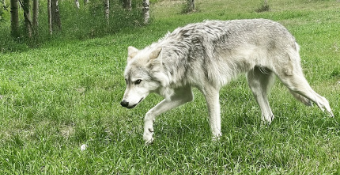
Despite their tight connection to people over the past several thousand years, understanding the past lives of dogs and wolves is a challenge. Ancient canine companions in Alberta are no different. Despite more than 300 archaeological sites in Alberta having canids (dogs, wolves, coyotes and foxes), we know comparatively very little about their relationships with Indigenous people. One of the best ways for understanding the lives of archaeological dogs stems from age-at-death studies; essentially asking, “how old was this critter when it died?”
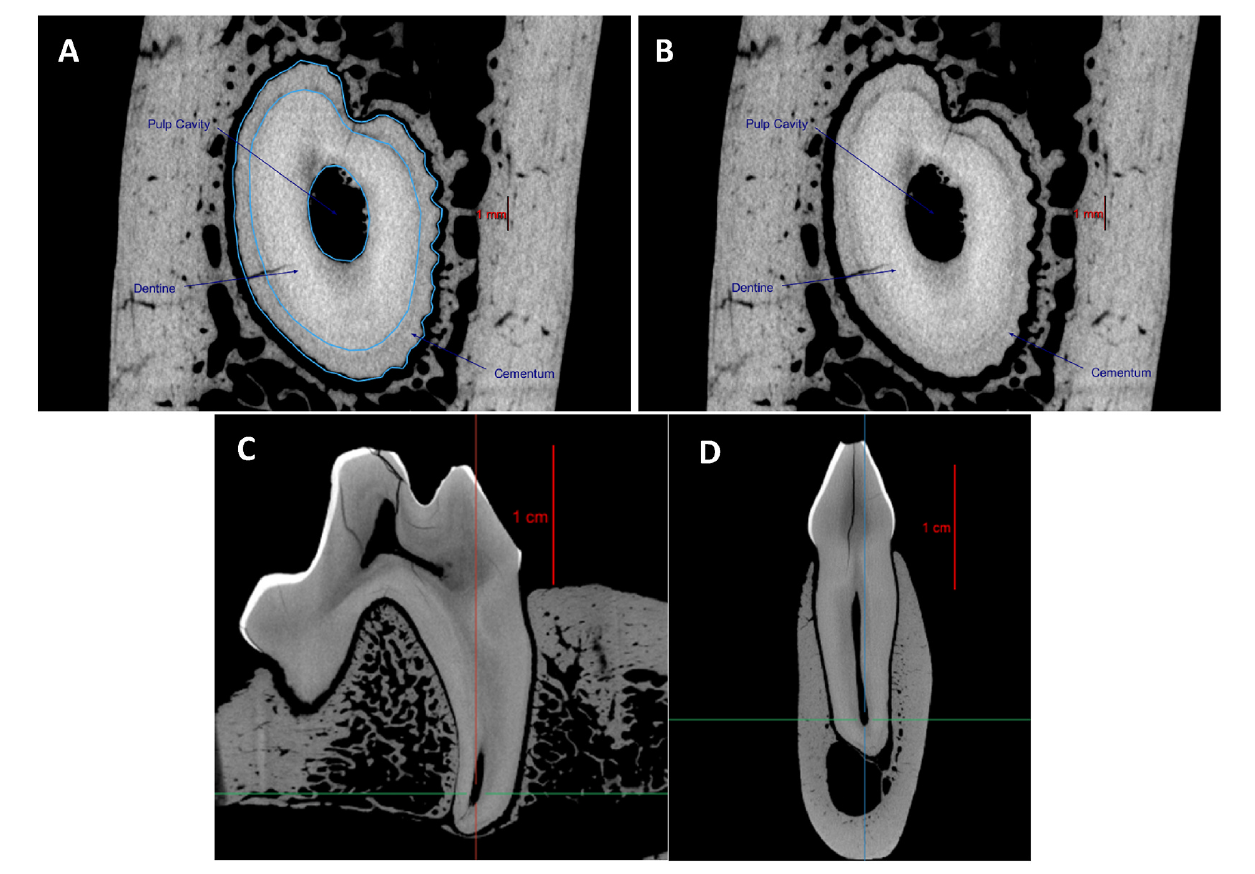
Traditional age-at-death studies involve destructive methods, where a sliver of bone or tooth is cut from the fossil and examined. A recent method, developed by Bieraugle et al. (2025), avoids causing this damage by micro-CT (micro-computed tomography) scanning teeth to view the cementum bands instead. Cementum is a non-uniform mineralized connective tissue that grows on tooth roots and essentially anchors the tooth within its socket. What makes cementum interesting is that it kind of grows like tree rings do, with a new ring being added roughly each year.
Of course, things like diet, genetics and season can all influence how fast these rings grow. In essence, we were able to view the cementum with a CT machine and calculate the proportion of cementum compared to the total tooth root area. Using this method, the research team was able to estimate the age-at-death for the dogs and wolves in their study within 1.65 years.
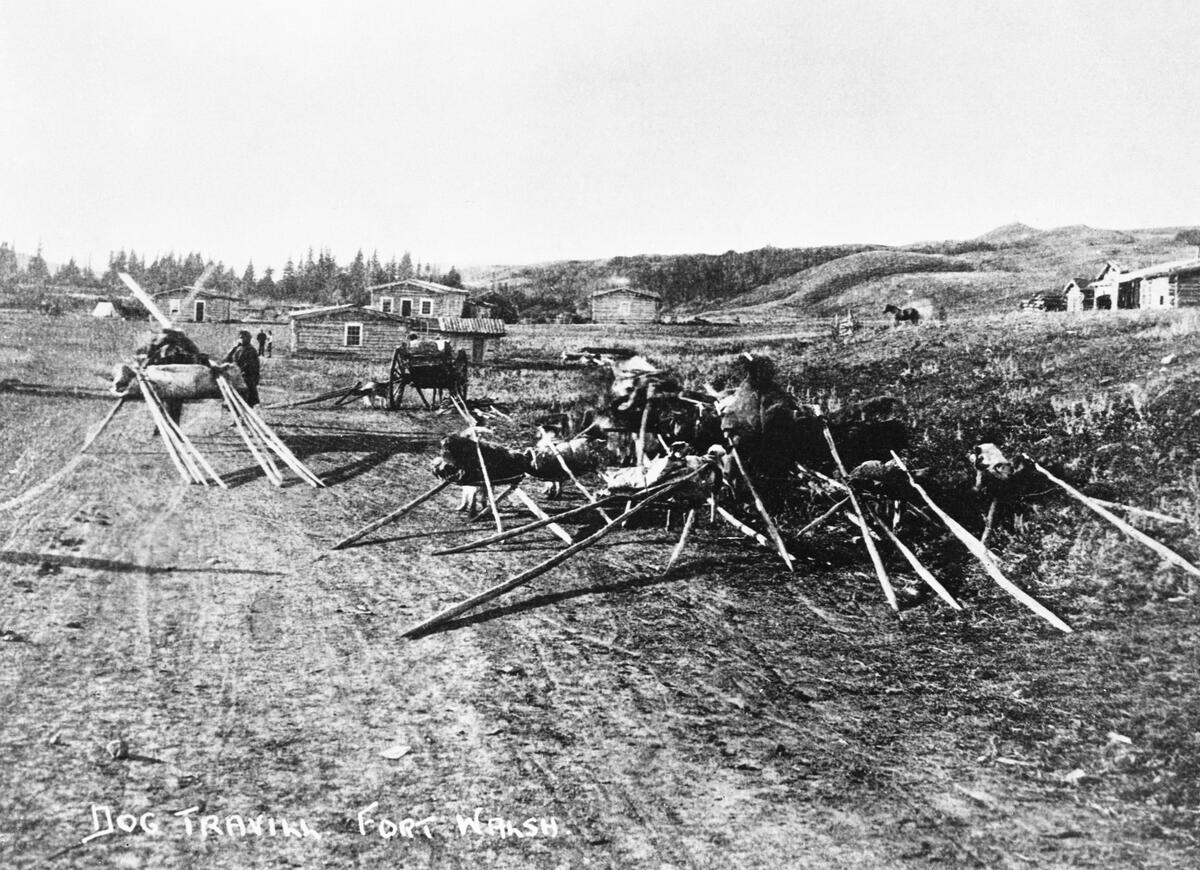
This new method was then applied to the Highway 2/3 Junction archaeological site (DkPi-2), located near Fort McLeod in Southern Alberta on the upper prairie and lower river terraces adjacent to the Oldman River. The site was a hub of activity and was used for bison entrapment, butchering and processing, but also for camping between late fall and early spring. The site was first identified in 1965 by the Glenbow Foundation, though it has been revisited for additional study and excavation many times since then.
The Junction site includes the largest assemblage of archaeological canids in Alberta, with more than 1,200 specimens represented from close to 30 individual animals. Of particular interest were nine nearly complete mandibles that could easily be CT-scanned to determine age-at-death.
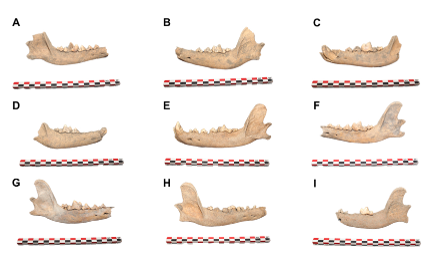
After scanning, they found that a wide age range of dogs and wolves could be excavated at Junction, including juvenile, adult and senior canines. It is possible that all these dogs and wolves either died in the bison kill events at Junction, were culled prior to reaching reproductive maturity, were killed while trying to scavenge the leftovers at Junction or possibly died of old age within the Indigenous settlement.
Unexpectedly, we also noticed that the CT scans of dogs and wolves looked a little different from each other. The pulp cavity of wolves was distinctly U-shaped, while the pulp cavity of dogs was distinctly O-shaped. Determining the species of ancient canids is extremely difficult, especially when their remains are often fragmented and poorly preserved. This observation of a difference in pulp cavity shape between dogs and wolves could turn out to be an incredibly useful non-metric trait for species identification. Of course, future research is needed to determine the extent of this observation, and to see if it applies to other canines like coyotes and foxes too.

