Bread, salt and water: the history of Doukhobors in Alberta (Part 2)

Editor’s note: The following blog post is part two of a two-part series looking at the history and influence of Doukhobors in Alberta. Read part 1 here.

Written by: Matthew Wangler, Historic Resources Management Branch

Following the establishment of the community in British Columbia, Verigin sought to diversify and strengthen the Doukhobor economy by purchasing new land in southern Alberta. It was not the first time that the Doukhobors had considered Alberta as a home for their community. In 1898, members of a Doukhobor delegation had initially explored purchasing land near Beaverhills Lake by Edmonton, but the proposal was scuttled, as local Member of Parliament Frank Oliver was opposed to their presence. While some Saskatchewan Doukhobors were working in Alberta as agricultural labourers and construction workers in 1911 and 1912, the first Doukhobor villages in the province were established in 1915 in the Cowley/Lundbreck area. Additional land was purchased in the following years, and Verigin arranged to rent land in the Vulcan area on a crop-share basis. The Alberta Doukhobors dedicated themselves to growing grain and raising horses and cattle. The settlements were successful, and at their peak, they boasted 300 members in 13 small villages. The communities tended to 300 horses and 400 shorthorn cattle, and produced 100,000 bushels of grain annually; they also constructed two-grain elevators and a flour mill. The Doukhobors seemed well-suited to the physical landscape of southern Alberta, and found that the region was also distinctly accommodating to smaller religious communities. Anabaptist groups like the Mennonites and Hutterites had already established themselves in the area, as had Mormons fleeing persecution in the United States. During their time in Alberta, the Doukhobors also developed positive relations with their Blackfoot neighbours.
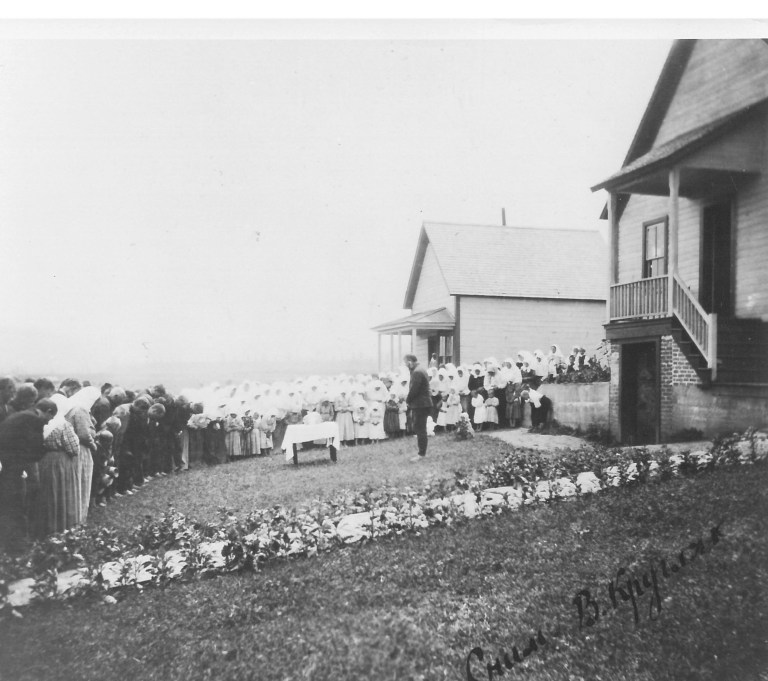
Village of Bogatoi Rodnik near Lundreck, Alberta. Taken circa 1920.
Village of Bogatoi Rodnik near Lundreck, Alberta. Taken circa 1920. Source: Royal Alberta Museum.


Read more

Municipal Historic Resource spotlight: Lethbridge

Written by: Ron Kelland, MA, MLIS

Over the past few months, some of Alberta’s municipalities have been protecting their built heritage by designating a number of new Municipal Historic Resources (MHRs). These resources are structures and other sites that the municipality has deemed to be of significant heritage value to their community. Like Provincial Historic Resources, municipal designations are listed on the Alberta Register of Historic Places. Municipally designated properties also qualify for conservation grants from the Alberta Historic Resources Foundation.

The City of Lethbridge recently added six new MHRs to the Alberta Register of Historic Places. As of May 31, 2019, the City of Lethbridge has 26 designated MHRs listed.

The most recent listed designations by the City of Lethbridge are:

Watson Residence

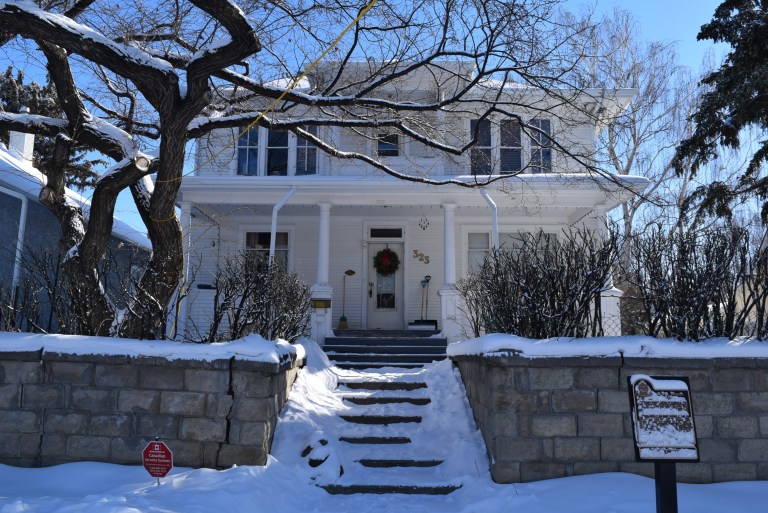
Located in the Victoria Park neighbourhood on 14th Street South between 3rd and 4th Avenue, the Watson Residence is an Edwardian Foursquare with classical revival detailing and ornamentation. It was built in 1910/11. It has heritage value as an example of residential construction during Lethbridge’s rapid expansion in the pre-First World War period, and as an excellent example of an urban foursquare home. It was also the residence of Allan James Watson, who was a long-serving superintendent of the Lethbridge School District.

Watson Residence, Lethbridge, Alberta
Watson Residence, Lethbridge, February 2019. Source: Historic Resources Management, Government of Alberta

Read more

Pebble Chert Quarries in East Central Alberta

Stone tools and debitage, also known as lithics, are one of the most common types of artifacts found in Alberta. In the past, stone tools were an essential part of Indigenous ways of life. These stone tools and associated debitage (pieces flaked off while the stone tool was being manufactured) are made from a variety of stone types, but generally they need to be produced from quality raw materials. The characteristics of a quality raw material for making stone tools include stones that are finer-grained, somewhat brittle and uniform in texture and structure, and have few or no inclusions because these might make the rock break in unpredictable ways. Some of the highest quality material that was used in Alberta in the past comes from other places around North America, such as Knife River Flint from North Dakota, obsidian from British Columbia and the northwestern United States, and other types of cherts, argillites and other materials from neighboring provinces and states. However, several material types are available locally. Some of the most common types available in Alberta include quartzites, siltstones, cherts and petrified wood. In East Central Alberta, a common type of rock utilized by Indigenous groups in the past was pebble chert. There are areas where this stone is readily available and it can be high enough quality to be knapped into tools. While these pebble cherts can sometimes be found today in road cuts or blowouts all across East Central Alberta, there are two pre-contact quarries and associated archaeological sites near Consort, AB where large concentrations of these materials were found, collected and utilized. At these sites, there is evidence that Indigenous groups used rounded and fist-sized pebbles of chert to make stone tools.

The Misty Hills quarry site and complex (Borden block EkOp) is unique because it has large densities of both high quality chert and quartzite pebbles found in more than 130 blowouts across the site. In addition to the raw pebbles, there are many associated quarry Read more

Bread, salt and water: the history of Doukhobors in Alberta

Editor’s note: The following blog post is part one of a two-part series looking at the history and influence of Doukhobors in Alberta.

East of the Crowsnest Pass, nestled within the small community of Lundbreck, sits a simple white building clad in asbestos shingles and covered with metal roof. The structure looks utilitarian and spare; it could easily be mistaken for the kind of modest community halls one occasionally sees in Alberta’s small towns. While the building is almost entirely non-descript, the history that it embodies is extraordinarily rich.

The history of the Alberta Doukhobors is an essential chapter in the story of one of the largest experiments in communal living in North America. Approximately 7,500 Doukhobors came to Canada in 1899, at the time it was the largest mass migration in the country’s history. In stark contrast, at a 2018 meeting of Doukhobors in British Columbia, a grim question was posed: will there be any Doukhobors active in their faith by 2030? Between their noteworthy arrival at the end of the nineteenth century and their dwindling membership today, the Doukhobors have lived a tumultuous and compelling experience in Canada. This post attempts to explore the vision and roots of the Doukhobor community, and their early experiences in Canada.

Doukhobor Prayer Home in Lundbreck, 2013
The Doukhobor Prayer Home in Lundreck (also known as the Doukhobor Hall [dom or house]) is one of the few tangible reminders of one of the most remarkable communities of people to ever settle in this province.
Read more

The Coveted Christmas Catalogue

Seasons Greetings to all! With the holidays approaching rapidly, many of us reminisce about the Christmas experiences from childhood. One of the common memories my co- workers and I share is waiting impatiently for the fabled Sears Wish Book to arrive in our mail boxes. For many of us, the arrival of Christmas catalogues was a much anticipated event in our households. The very name, Christmas catalogue, conjures up images of flipping excitedly through pages filled with shiny new toys destined for children’s wish lists. I for one, remember spending hours pouring over the catalogues, carefully folding the corners of the pages containing coveted items and circling of all the gifts I hoped Santa might bring me.

Children waiting for Santa Claus on Christmas Eve, 24-Dec-1947 (City of Edmonton Archives EA-600-663b)

In the late 19th Century, mail order catalogues for larger department stores in urban centres, such as Montreal and Toronto, were the norm for purchasing goods in rural communities in Canada. In 1822, the first mail order catalog in Canada was introduced by Carsley’s department store in Montreal. The first Eaton’s Christmas catalogue, called “The Wishing Book” was produced in 1884. Timothy Eaton’s vision was for the book to be accessible to all and “go wherever the maple leaf grows, throughout the vast Dominion.” The department stores had vast mail-order departments dedicated to making sure mail-order customers received their purchases no matter how far the goods had to travel. By the 1950’s, the ability to purchase a variety of consumer goods through mail-order catalogues expanded rapidly. Many department stores marketed to the young and old, with catalogues specifically designed for the lucrative holiday season. The catalogues offered a variety of gift-giving options from fashions to merchandise and included a special section containing all manner of toys for under the Christmas tree. In 1953, Canadian department store giant Simpson’s was acquired by the American Sears. The business merger resulted in the first Simpsons-Sears catalogue to be published and would eventually become the most successful department store catalogue in the country.

If you would like to take a stroll down memory lane and revisit Christmas catalogues from your childhood, please visit Wishbookweb. This fabulous online resource of vintage Christmas catalogues has a current catalog page count of 25,617 pages. For Flash-enabled desktop browsers, users can enjoy full-featured navigation, including text-search features and special page-turning sound effects! Happy browsing!!

Eaton Catalogues:

Simpson-Sears Catalogues:

Snapshot of a few Wishbook Web catalogue resources available, accessed via: Wishbook Web – The Christmas Catalog Archive Project, Dec 4/18.
“A sincere wish for happiness at Christmas and throughout the New Year.” Christmas card, made in Canada date unknown.

Written By: Marsha Mickalyk, Archaeological Permits and Digital Information Coordinator & Pauline Bodevin, Regulatory Approvals Coordinator, Historic Resources Management Branch.

References

“The Story of the Mail-order Catalogue” http://www.virtualmuseum.ca/edu/ViewLoitCollection.do?method=preview&lang=EN&id=25258 retrieved Dec 06, 2018.

City of Edmonton Archives – https://archivesphotos.edmonton.ca

WishbookWeb – http://www.wishbookweb.com/

Boomtown heritage building ready for new life

The rehabilitation of the Tipton Investment Company is now complete! Designated a Provincial and Municipal Historic Resource, the building is located within the Old Strathcona Provincial Historic Area along Whyte Avenue in Edmonton. It was constructed in the early days of the 1900s and survives as one of the last wood “boom town” style commercial structures in the district.

The current owners, with the assistance from their consultants, contractors, and provincial and municipal heritage regulators, have successfully preserved the heritage values of the modest single-story structure while expertly incorporating an addition. The rehabilitation not only changes the property to a creative two-story multi-tenant complex, but does so while honouring the wood building as the primary heritage value on the lot. Now that’s how it’s done!

The rehabilitation of the Tipton Investment Company is a shining example of how to keep what is of value, provide upgrades to services and Read more

It’s Métis Week!

Commemorated annually in Alberta, Métis Week remembers the efforts and execution of Louis Riel, while also celebrating the historical and contemporary achievements of Métis people working toward rights and recognition of their Nation.

Many of the historical resources, sites and museums across Alberta contain Métis connections and stories. As the owners and managers of many of these sites, the Heritage Division strives to foster partnerships and collaborations with community to ensure that these stories are told accurately and respectfully. We also recognize how significant it is when these heritage places are owned and managed by Indigenous peoples and communities themselves. In honour of Métis Week, we are pleased to share the work of the team at Métis Crossing, who recently celebrated the ground-breaking at their new gathering centre, slated to open next fall.

Métis Crossing is the first major Métis cultural interpretive centre in Alberta and began as a major initiative of the Métis Nation of Alberta. Their mission is to be a premiere center for Alberta Métis cultural interpretation, education, gatherings, and business development. The 512-acre site is designed to engage and excite visitors, and is comprised of river lot titles from the original Métis settlers who arrived in the late 1800’s. Their programming encourages active participation of visitors in activities that promote appreciation of Métis people, customs, and celebrations. Read more

Alberta Remembers

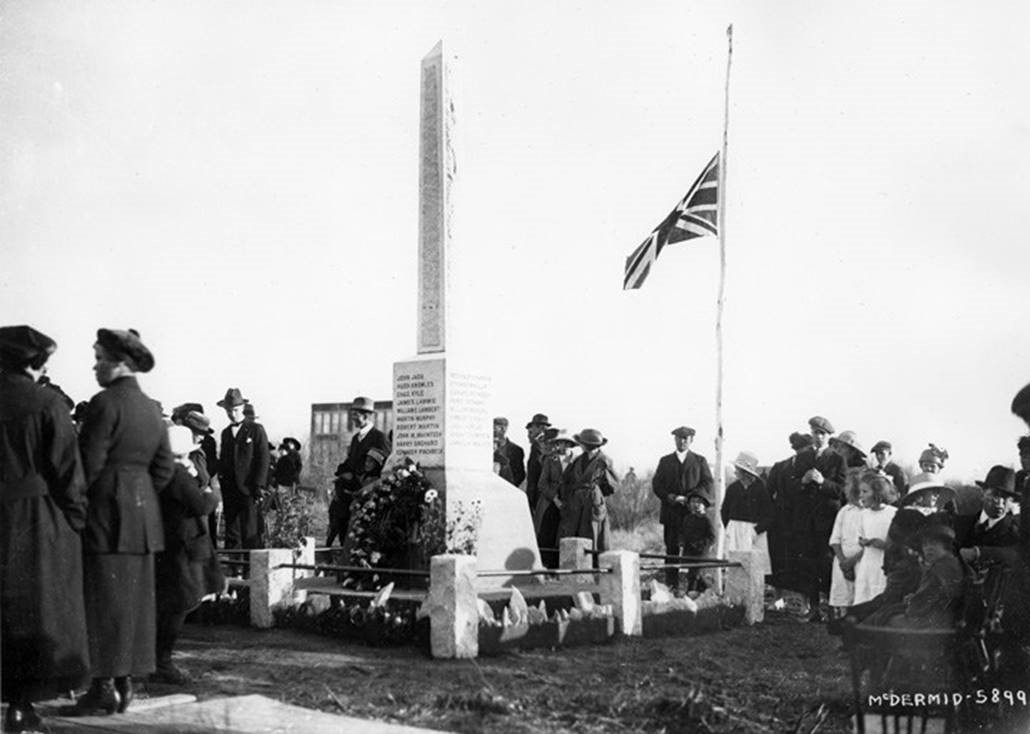
The Beverly Cenotaph, a simple stone obelisk, was unveiled on October 17, 1920. (City of Edmonton Archives, EA-160-14)

On November 11, 1918, after more than four years of fighting the “war to end war”, an armistice was called in France and all hostilities came to an end on the Western Front of the First World War. While the battles may have ceased, the effects of the conflict continued to reverberate around the world and across the years, even to the present day, a century later.

Albertans were among those who fought alongside fellow British citizens, as well as French and American soldiers – among others – to defeat Germany and its allies. Estimates place the number of Albertan soldiers at 48,885 – or over one third of the province’s male population aged 18 to 45. Of these, about one in eight did not return from the war, and almost half of those who did return had been wounded.1 The effect of the distant, unseen war was felt throughout the province on a personal level.

One way Albertans dealt with the trauma and loss was to come together and commemorate those who had sacrificed their lives. A model for these activities was provided by “Peace Day”, celebrated on July 19, 1919, in London, England, in honour of the signing of the Treaty of Read more

Frost is in the air!

This post was originally published on RETROactive on October 31, 2012. However, since we live in Alberta, this topic is almost ALWAYS relevant – what to do about frosty windows!

With winter coming, some owners of historic places might be witnessing the formation of frost on their single pane wood windows and storms, most notably on the second storey. The reasons for this will vary and subsequently so will the solutions. Generally speaking, a little frost now and again should not harm the window frame but a more persistent formation will saturate the surrounding material and, in the long run, potentially cause significant damage. Should this be the case, ignoring the situation is far from the recommended solution.

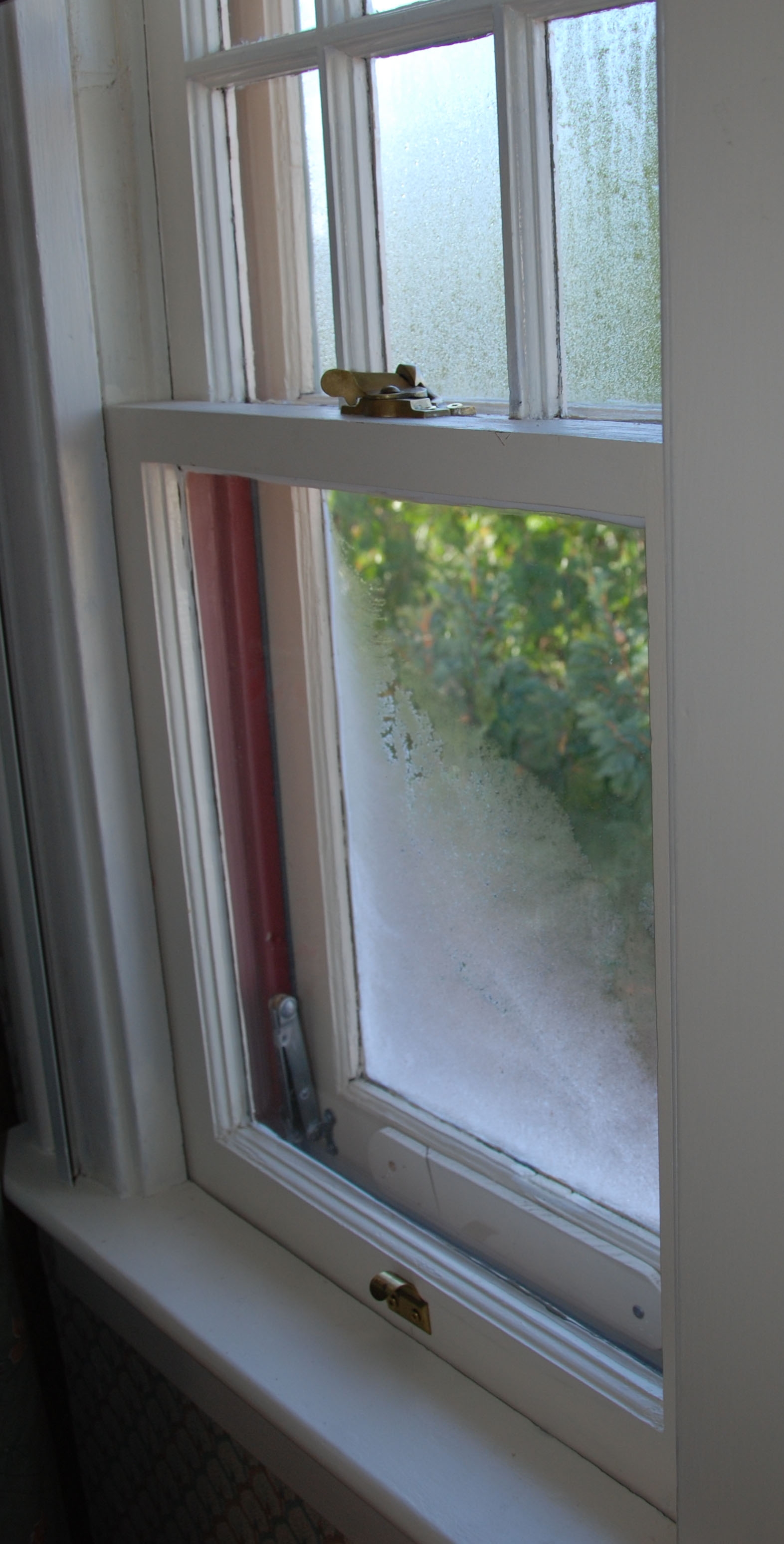
Frosty window. Note the closed storm window vent cover. During the winter it should be open.

So what is one to do?  The first step, as with any intervention on a historic place, is to develop an understanding of the problem.  What is causing frost to form on the window? The answer: warm moist air comes in contact with the cold glass and condenses, which then freezes on the surface. So how does one mitigate this? Should you let the house freeze so that the interior temperature matches the outside, or should you turn the house into an oven to eliminate any and all moisture in the air? Obviously, neither scenario is plausible.

So what is one to do – replace the windows?  Speaking from a heritage conservation perspective, replacing authentic historic windows would be the equivalent to someone shaving their head bald because they found a grey hair. Historic windows have, in my experience, proven themselves to be longer lasting than any modern window and can continue to serve their function with proper care and maintenance, while modern windows wear out and routinely need to be replaced.

As air moisture is the general cause of frosted windows, controlling it would appear to be the most appropriate approach. However, there is more than one way to control moisture during the winter. One can control moisture levels with a dehumidifier, or by preventing it from reaching the cold glass with weather stripping techniques. As well, one could better manage the presence of moisture with exhaust fans and insulation. Any combination of these efforts will help to reduce the frost on windows but it should also be noted that there are pre-existing systems that should be taken advantage of in regards to this problem.

Storm windows traditionally have three holes at their bases with a flap cover. During the winter, these should be open to let moisture and condensation escape. When bugs arrive with spring, close the flap. Double hung windows generally have locks where the sashes meet – use them to tighten the window and reduce air leakage. Should you decide to proceed with a form of weather stripping, concentrate on the interior side of the window and allow the storm window to breathe. This will create a micro-climate (similar to the ventilation in one’s roof), which should help prevent frost and therefore better sustain and protect the window.

Hopefully, the preceding information will be useful for those who might be dealing with frosty windows. There are many articles on the Internet, which tackle this issue and propose similar, different and additional solutions ranging from “free to expensive”.  As a Heritage Conservation Adviser, my advice, and that of the Standards and Guidelines for the Conservation of Historic Places in Canada, is to start with the minimal approach.  With any luck, that is all that will be needed.

Written by: Carlo Laforge, Heritage Conservation Adviser.