Commemorated annually in Alberta, Métis Week remembers the efforts and execution of Louis Riel, while also celebrating the historical and contemporary achievements of Métis people working toward rights and recognition of their Nation.
Many of the historical resources, sites and museums across Alberta contain Métis connections and stories. As the owners and managers of many of these sites, the Heritage Division strives to foster partnerships and collaborations with community to ensure that these stories are told accurately and respectfully. We also recognize how significant it is when these heritage places are owned and managed by Indigenous peoples and communities themselves. In honour of Métis Week, we are pleased to share the work of the team at Métis Crossing, who recently celebrated the ground-breaking at their new gathering centre, slated to open next fall.
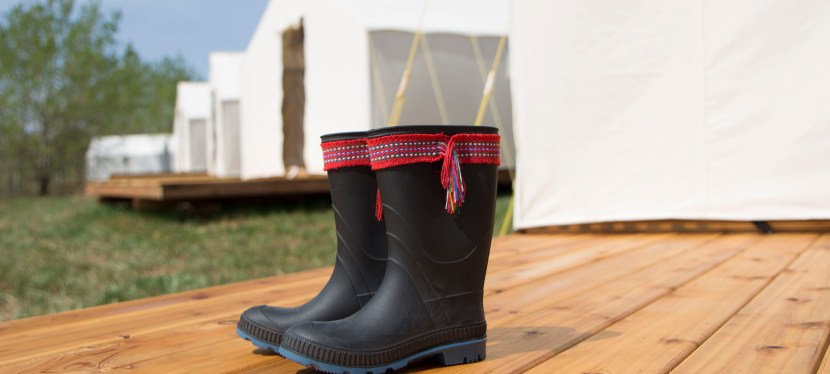
Métis Crossing is the first major Métis cultural interpretive centre in Alberta and began as a major initiative of the Métis Nation of Alberta. Their mission is to be a premiere center for Alberta Métis cultural interpretation, education, gatherings, and business development. The 512-acre site is designed to engage and excite visitors, and is comprised of river lot titles from the original Métis settlers who arrived in the late 1800’s. Their programming encourages active participation of visitors in activities that promote appreciation of Métis people, customs, and celebrations.Read more →
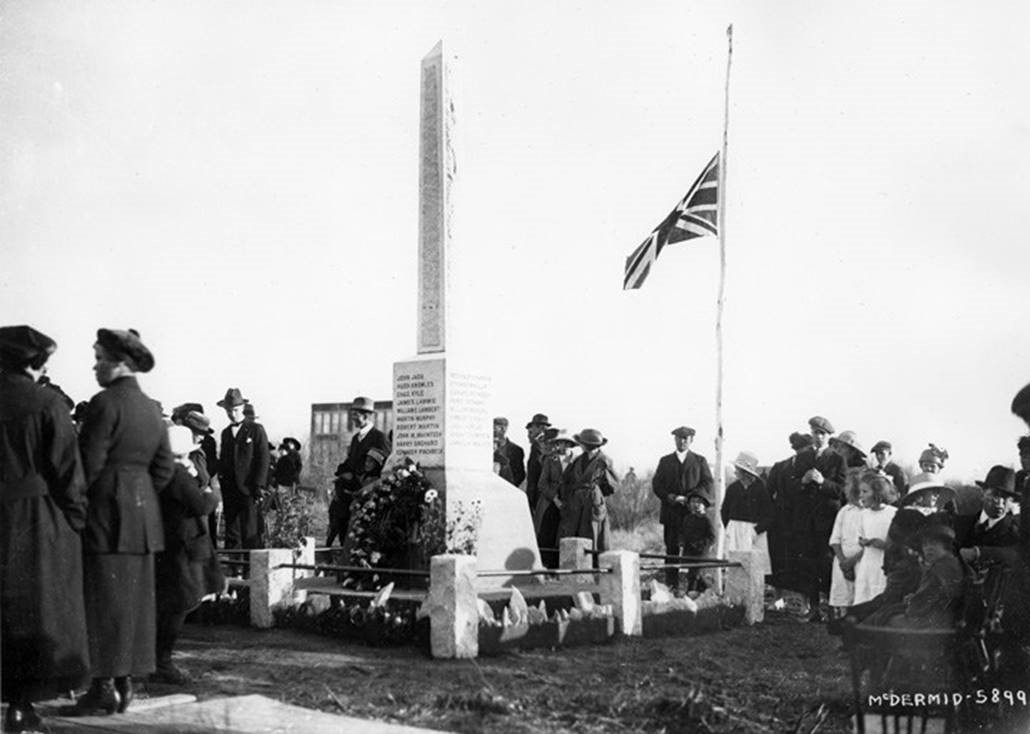
The Beverly Cenotaph, a simple stone obelisk, was unveiled on October 17, 1920. (City of Edmonton Archives, EA-160-14)
On November 11, 1918, after more than four years of fighting the “war to end war”, an armistice was called in France and all hostilities came to an end on the Western Front of the First World War. While the battles may have ceased, the effects of the conflict continued to reverberate around the world and across the years, even to the present day, a century later.
Albertans were among those who fought alongside fellow British citizens, as well as French and American soldiers – among others – to defeat Germany and its allies. Estimates place the number of Albertan soldiers at 48,885 – or over one third of the province’s male population aged 18 to 45. Of these, about one in eight did not return from the war, and almost half of those who did return had been wounded.1 The effect of the distant, unseen war was felt throughout the province on a personal level.
One way Albertans dealt with the trauma and loss was to come together and commemorate those who had sacrificed their lives. A model for these activities was provided by “Peace Day”, celebrated on July 19, 1919, in London, England, in honour of the signing of the Treaty of Read more →
This post was originally published on RETROactive on October 31, 2012. However, since we live in Alberta, this topic is almost ALWAYS relevant – what to do about frosty windows!
With winter coming, some owners of historic places might be witnessing the formation of frost on their single pane wood windows and storms, most notably on the second storey. The reasons for this will vary and subsequently so will the solutions. Generally speaking, a little frost now and again should not harm the window frame but a more persistent formation will saturate the surrounding material and, in the long run, potentially cause significant damage. Should this be the case, ignoring the situation is far from the recommended solution.
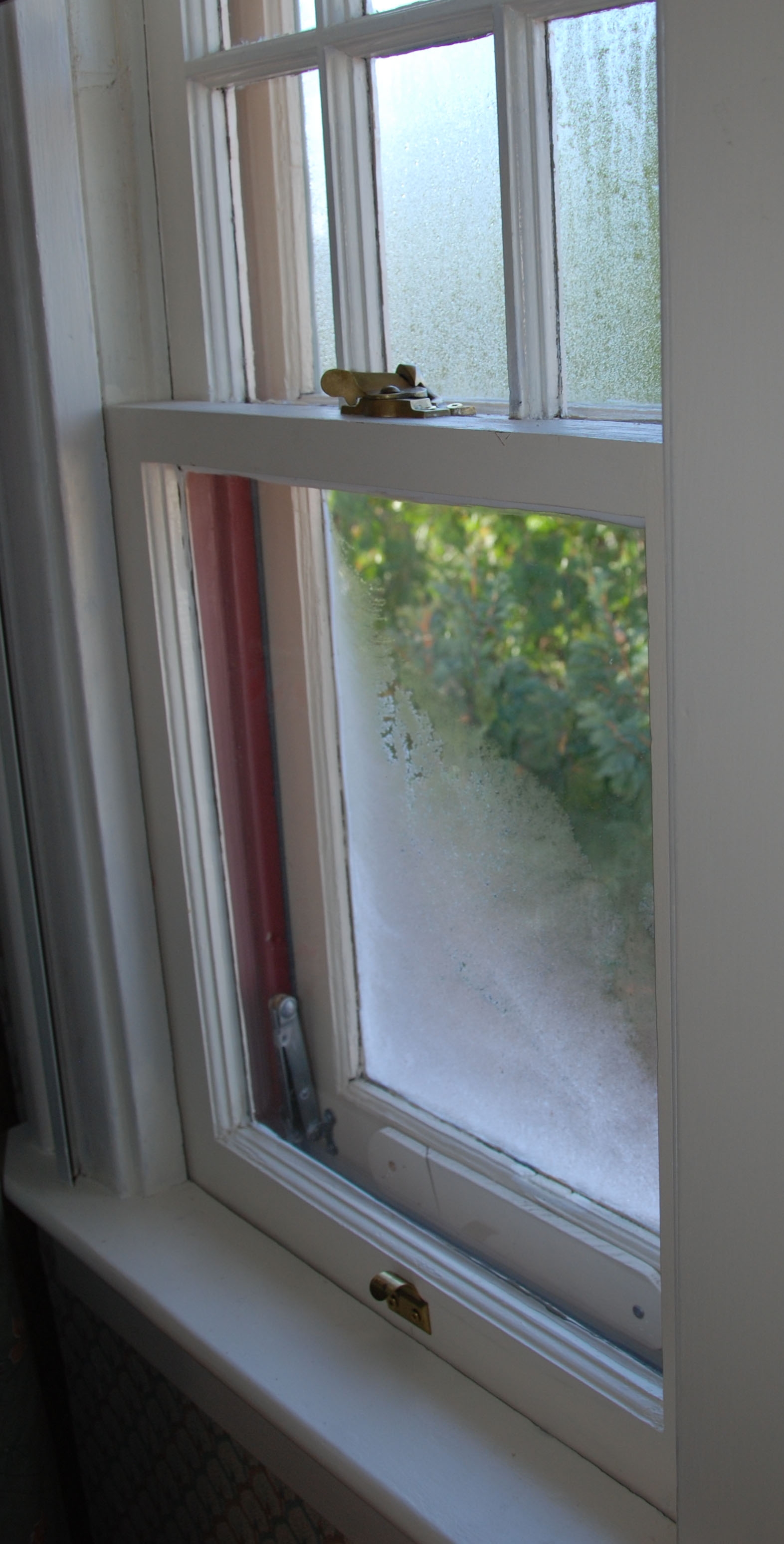
Frosty window. Note the closed storm window vent cover. During the winter it should be open.
So what is one to do? The first step, as with any intervention on a historic place, is to develop an understanding of the problem. What is causing frost to form on the window? The answer: warm moist air comes in contact with the cold glass and condenses, which then freezes on the surface. So how does one mitigate this? Should you let the house freeze so that the interior temperature matches the outside, or should you turn the house into an oven to eliminate any and all moisture in the air? Obviously, neither scenario is plausible.
So what is one to do – replace the windows? Speaking from a heritage conservation perspective, replacing authentic historic windows would be the equivalent to someone shaving their head bald because they found a grey hair. Historic windows have, in my experience, proven themselves to be longer lasting than any modern window and can continue to serve their function with proper care and maintenance, while modern windows wear out and routinely need to be replaced.
As air moisture is the general cause of frosted windows, controlling it would appear to be the most appropriate approach. However, there is more than one way to control moisture during the winter. One can control moisture levels with a dehumidifier, or by preventing it from reaching the cold glass with weather stripping techniques. As well, one could better manage the presence of moisture with exhaust fans and insulation. Any combination of these efforts will help to reduce the frost on windows but it should also be noted that there are pre-existing systems that should be taken advantage of in regards to this problem.
Storm windows traditionally have three holes at their bases with a flap cover. During the winter, these should be open to let moisture and condensation escape. When bugs arrive with spring, close the flap. Double hung windows generally have locks where the sashes meet – use them to tighten the window and reduce air leakage. Should you decide to proceed with a form of weather stripping, concentrate on the interior side of the window and allow the storm window to breathe. This will create a micro-climate (similar to the ventilation in one’s roof), which should help prevent frost and therefore better sustain and protect the window.
Hopefully, the preceding information will be useful for those who might be dealing with frosty windows. There are many articles on the Internet, which tackle this issue and propose similar, different and additional solutions ranging from “free to expensive”. As a Heritage Conservation Adviser, my advice, and that of the Standards and Guidelines for the Conservation of Historic Places in Canada, is to start with the minimal approach. With any luck, that is all that will be needed.
Written by: Carlo Laforge, Heritage Conservation Adviser.
October is Canadian Library Month – a time to raise awareness about the valuable role of libraries in our communities. Thank you to guest writer, Erin Hoar, for this post about some of Alberta’s first libraries.
The earliest libraries in Canada were generally private collections of books and documents brought over by European immigrants. Some religious orders, fur trade and military posts would also collect books, but these were generally not accessible to the wider public. Canada’s earliest public libraries were offered by subscription only and began to appear in the early nineteenth century. By 1900 the modern public library, similar to what we would think of as a library today, began to acquire, classify and organize books, periodicals and newspapers with the purpose of providing users with access to these collections.
The idea of libraries was becoming more recognized as a public need that enriched growing communities, as was the case in Alberta. Many of Alberta’s early libraries were established because there were dedicated people who were passionate about providing accessible learning and educational services. This post will trace Alberta’s earliest public libraries in Edmonton and Calgary, and look at the people who brought these spaces to life to become valued and trusted resources for their communities. Read on to find out more!
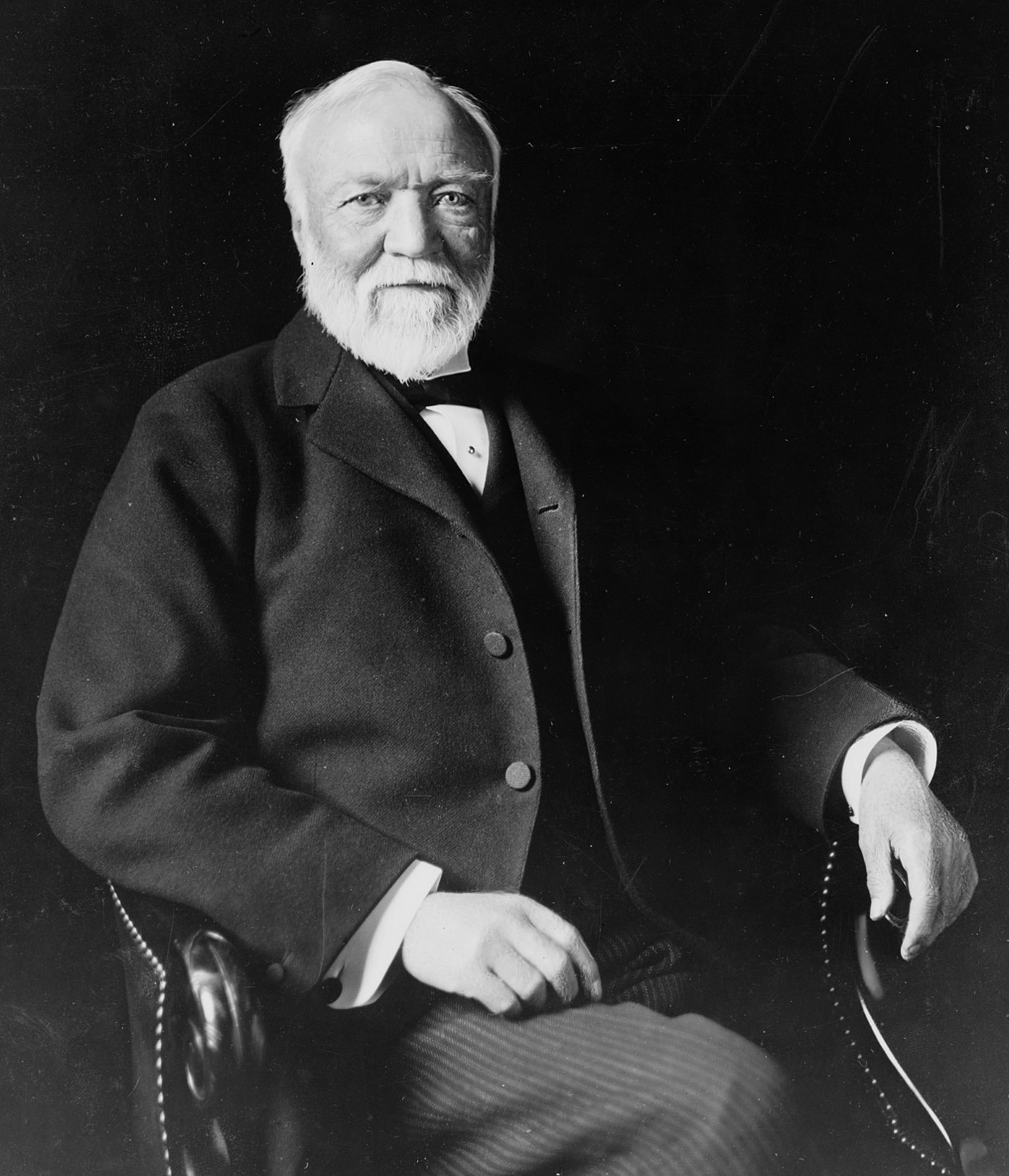
Andrew Carnegie, 1913 (Public domain).
It was 1906 when the Calgary Women’s Literary Club formed to discuss the readings of Shakespeare, world news and current events, and it was out of these gatherings that the need for a public library grew. The women did what many others who wanted a public library did during this time – they asked millionaire Andrew Carnegie to build them a library. Carnegie, who made a fortune in the steel industry, was a strong advocate for learning and had a reputation for library philanthropy. In Canada, the Carnegie Foundation funded over 100 libraries and thousands more across the world, including the United States, England, Ireland, South Africa, Australia and New Zealand. Read more →
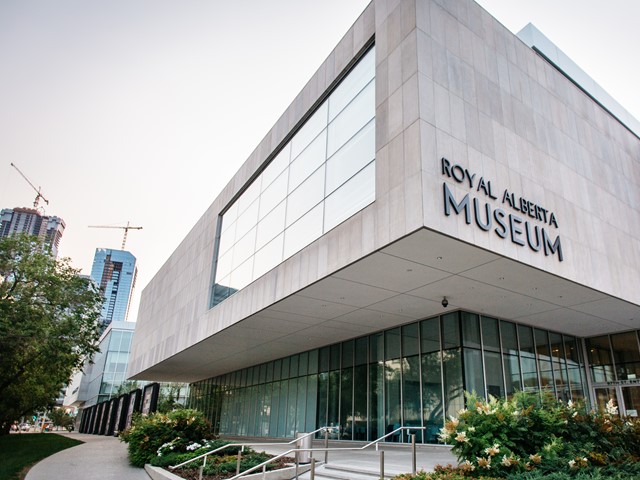
The new Royal Alberta Museum is opening today! Congratulations to everyone who has worked so hard to make this happen. We are very excited to explore the new building and galleries, and enjoy the museum for many years to come.
New Royal Alberta Museum in downtown Edmonton. Credit: Flickr/Government of Alberta.
In honour of the new museum building opening, our post today looks back at the beginning, and original opening, of the Provincial Museum of Alberta (later renamed Royal Alberta Museum) 51 years ago.
The former Royal Alberta Museum building was built as the Provincial Museum and Archives of Alberta in 1967. It was the culmination of a decades long effort to build a provincial museum in Edmonton. Funding came through the Government of Canada’s “Confederation Centennial Memorial Program”, which saw a substantial, jointly funded construction project in Read more →
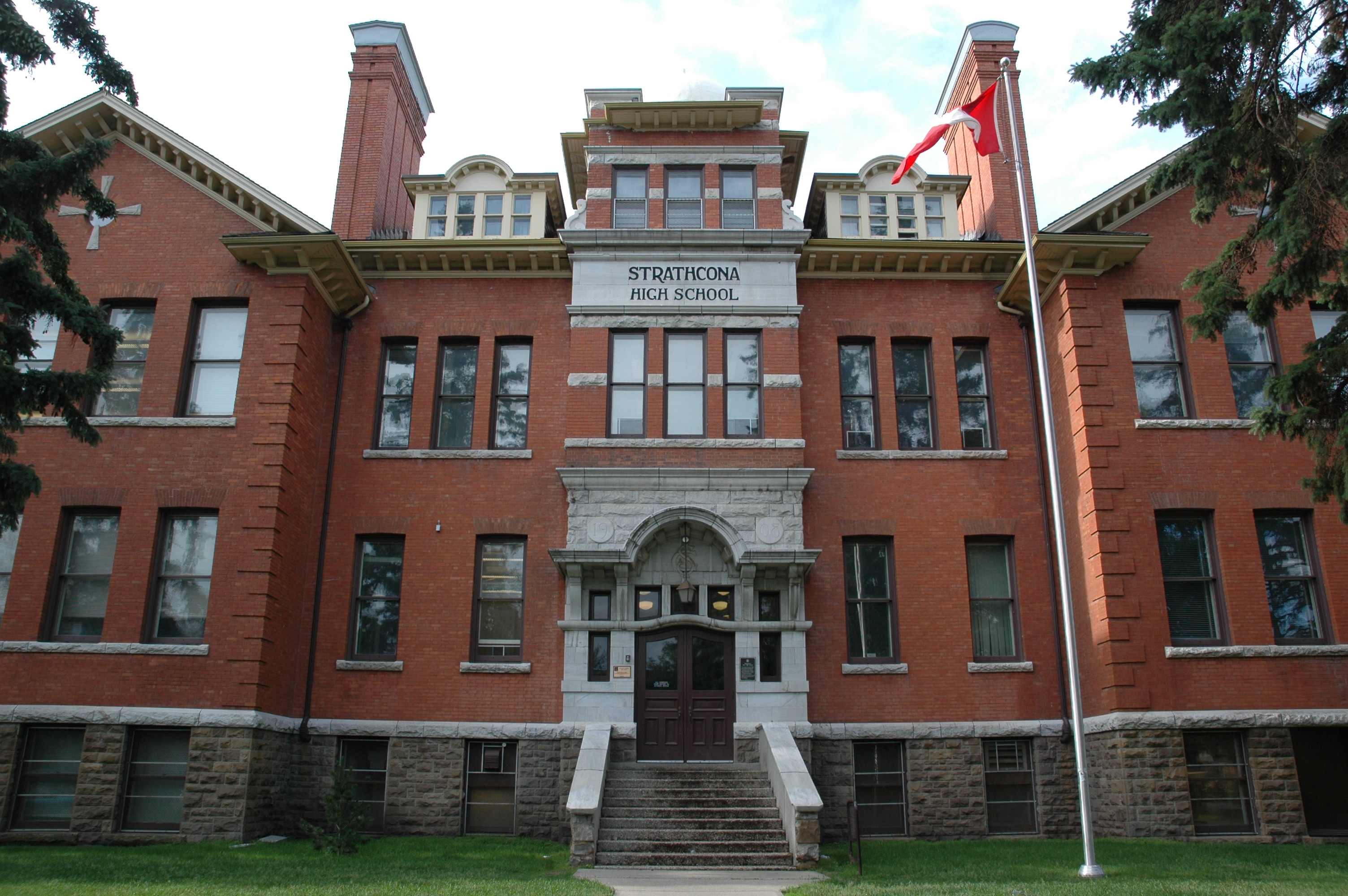
In the spirit of back to school season, here is a previous post highlighting the history of the Strathcona Collegiate Institute/Old Scona Academic High School. It was originally published on RETROactive on October 11, 2011. Enjoy!
Strathcona Collegiate Institute/Old Scona Academic High School, Edmonton
When the Calgary & Edmonton Railway arrived at the south bank of the North Saskatchewan River in 1891, the C & E immediately subdivided a townsite which it named South Edmonton. Being at the end of steel, the community steadily grew throughout the decade until, in 1899, it was incorporated as the Town of Strathcona with a population exceeding 1,000. As with Edmonton to the north, Strathcona grew rapidly in the wake of the Klondike gold rush, and, in 1907, it was incorporated as a city with an estimated population of 3,500. Edmonton, however, was destined to grow at an even greater Read more →
While he didn’t find out why John Lennon lit a former lover’s house on fire as the song strangely suggests, he did attend the 2018 International Course on Wood Conservation Technology (ICWCT). A biennial course that gathers academics, professors and scientists from around the world (including two from Canada) to deliver lectures, ICWCT also combines this with field work and theory centered on the practice of wood conservation.
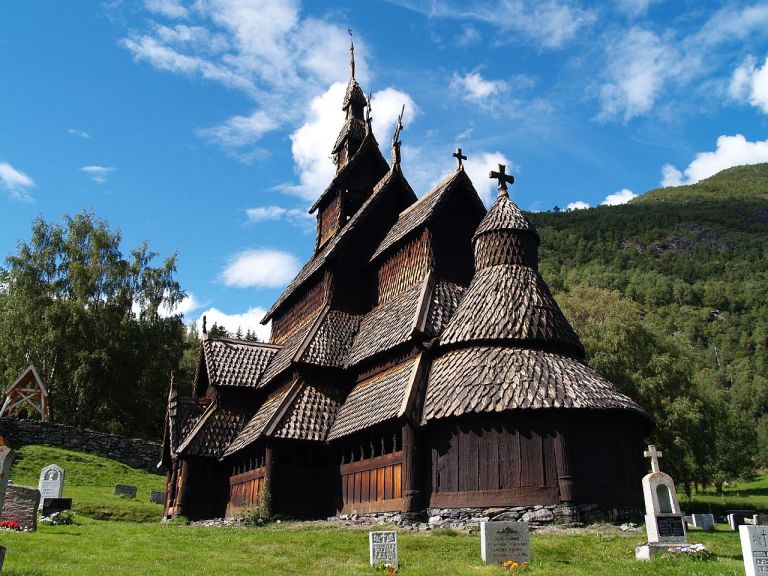
The Borgund Stave Church in Lærdalen, Norway was built just before 1150. From the Middle Ages up until the beginning of the twentieth century the use of pine tar was restricted to the protection of churches, since it was both time-consuming and expensive to produce. This goes a long way towards explaining why outdoor woodwork on the stave churches from the twelfth century which has been protected with pine tar is preserved in an excellent condition. Norwegian church accounts reveal that the local farmers and villagers were obliged to apply fresh tar to the external walls of the stave churches at ten yearly intervals*. Photo by: AzaToth
Heritage Conservation Technologist Evan Oxland went to Norway to learn more about technical and theoretical aspects of wood conservation, as well as what other contemporary international approaches there are out there. He was the only Read more →
Today, RETROactive is pleased to feature a community-created heritage project!
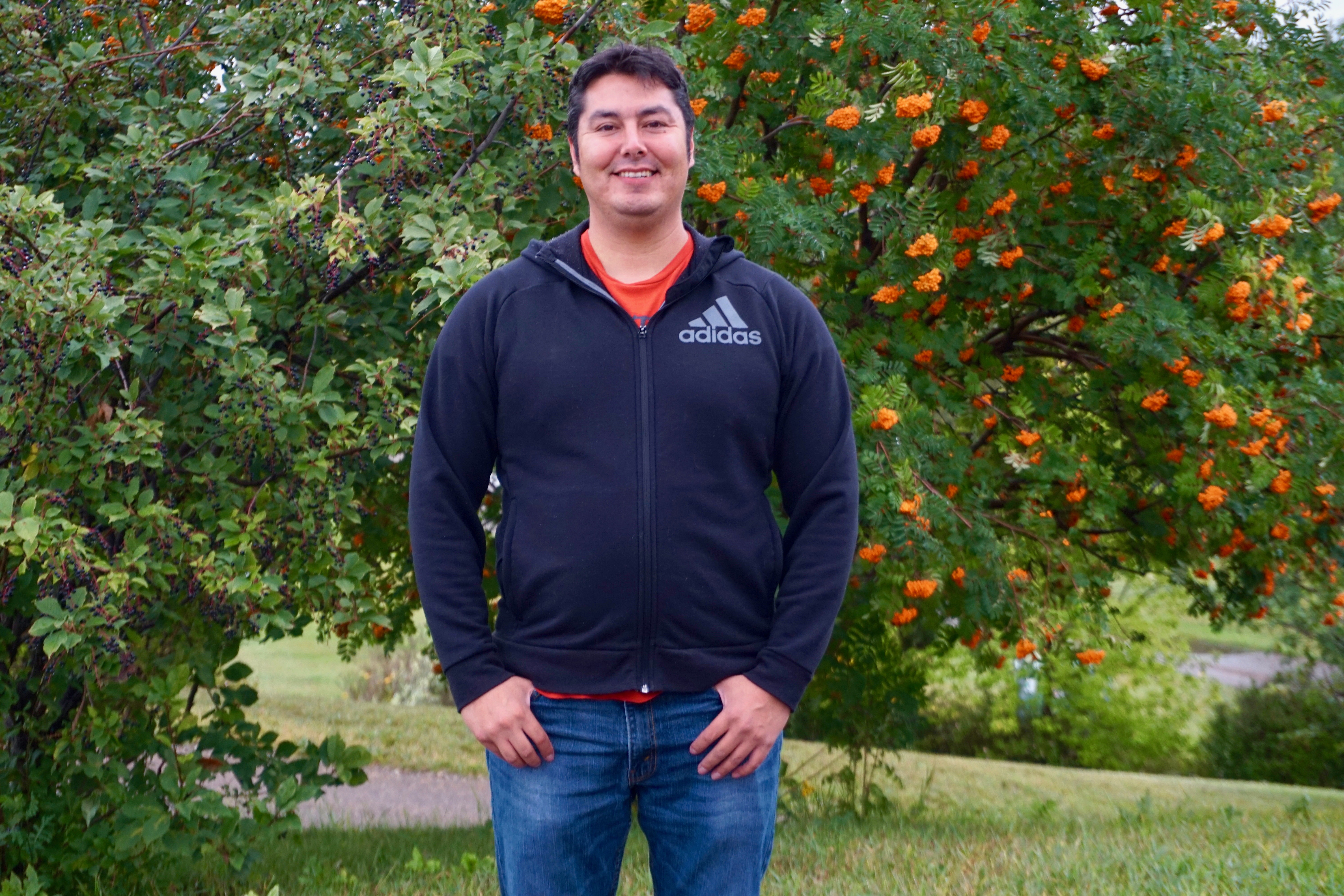
The Paul First Nation History website and Facebook page is the brainchild of Jaelin Rask. A Paul First Nation member who today lives on-reserve, Jaelin was raised primarily in Calgary, geographically and culturally-distanced from his Indigenous heritage. As an adult, Jaelin received a number of historical documents from his late paternal grandfather, David Bird (who served as Chief of Paul First Nation from 1952 to 1955), spurring his interest in genealogy and his father’s family history.
Jaelin Rask (Photo provided by: Jaelin Rask).
“Little by little” Jaelin’s document collection grew, aided by trips to the archives and conversations with community members. Word of his work travelled fast throughout the Nation, and Jaelin found his social media inboxes full of requests Read more →
This post was originally published on RETROactive on July 31, 2014.
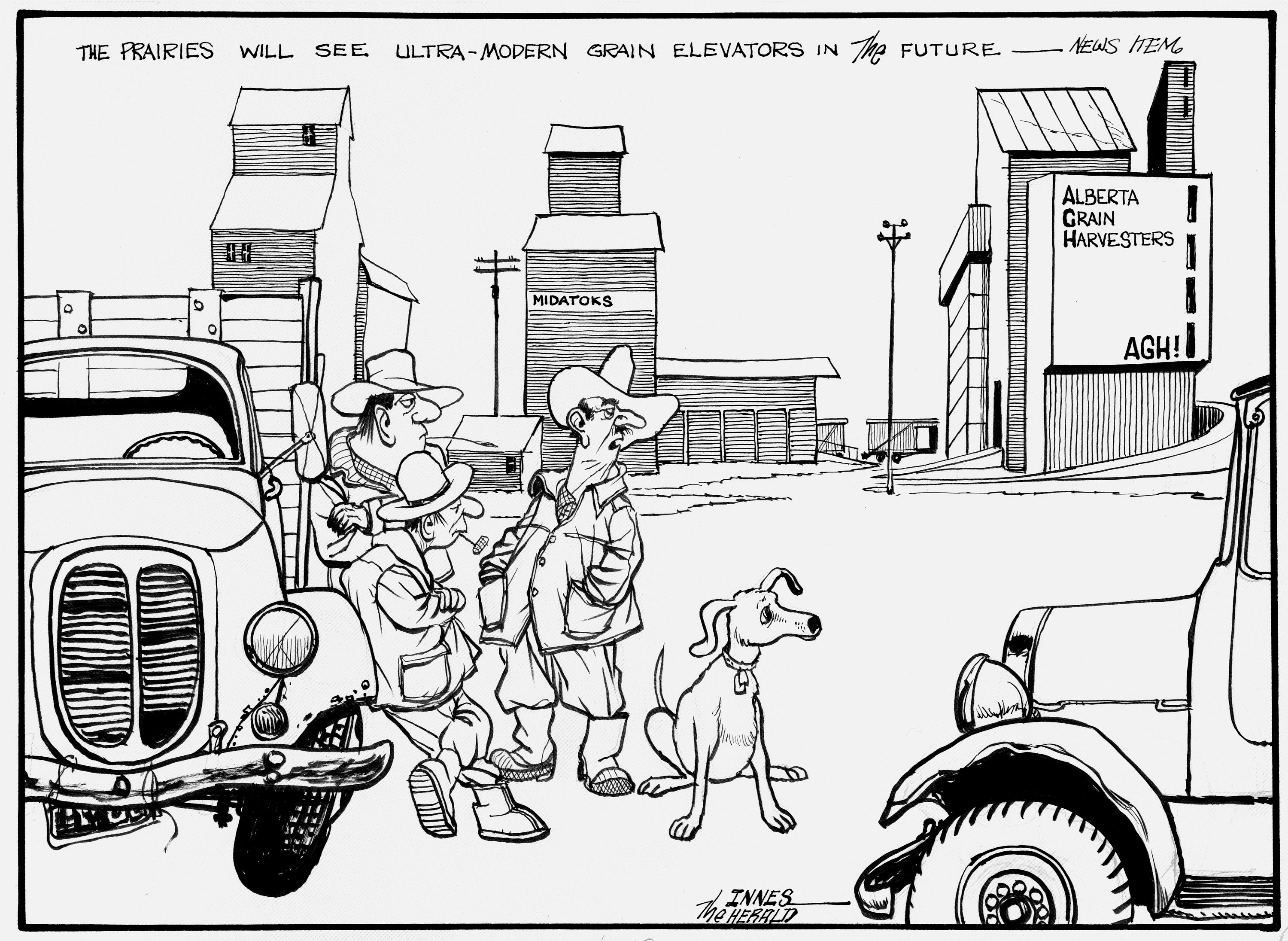
As this cartoon indicates some farmers were skeptical of the Buffalo design. (Courtesy of Glenbow Archives, M-800-344.)
Not long ago, Alberta had country grain elevators named for the bison that roamed the plains before grain was grown. The innovative Buffalo, as they were called, were designed in Alberta, and constructed in both Alberta and Brazil. In the late 1970s, times were good for Alberta’s farmers and their grain Company—the Alberta Wheat Pool. Bumper crops and high grain prices kept the grain elevators humming. As fires destroyed many wood elevators, and the railways were pushing for ever more streamlined grain handling, the Pool decided to use some of its profits to experiment with concrete elevator designs. It began working with Buffalo Engineering of Edmonton, headed by Klaus U. Drieger. This resulted in a design for an elevator that was radically different, and a second company, Buffalo Beton Ltd. of Calgary, constructed them. Read more →
“The antelope possesses an unconquerable inquisitiveness, of which hunters often take advantage…The hunter, getting as near the animal as is practicable, conceals himself by lying down, then fixing a handkerchief or cap upon the end of his ramrod, continues to wave it, remaining concealed. The animal, after a long contest between curiosity and fear, at length approaches near enough to become a sacrifice to the former.” (James 1905, vol. 2, pp. 227)
On two different flights over southeastern Alberta, separated by about thirty years, unusual stone features were observed on the landscape. Upon further inspection by archaeologists, it was determined that these two sites are the remnants of drive lanes and traps that were used for the communal hunting of pronghorn (Antilocapra americana, also commonly referred to as antelope).
While it is commonly known that bison were one of the greatest resources for precontact North American Indigenous groups, it is important to note that before European arrival, it is thought that there were just as many pronghorn as bison in North America. They were an important resource as well, particularly for people living in the Great Basin region of the United States, as pronghorn were one of the largest game animals available in that region. For Plains groups, bison were preferred for meat (and there is abundant archaeological evidence of this in the many bison kill sites across the Plains), however, pronghorn were valued for their hides to make clothing and other items.
Pronghorn or Antilocapra Americana, also commonly referred to as antelope. Photo courtesy of Royal Alberta Museum.
Pronghorn or Antilocapra Americana, also commonly referred to as antelope. Photo courtesy of Royal Alberta Museum.
Communal antelope hunting is documented in many historical accounts both in the Great Basin and on the Plains. These accounts describe wood and brush drive lines that led to fenced enclosures and to pit traps excavated in the ground. Hunters disguised themselves as antelope, wolf or other animals to get close to the herds and then drove the animals into Read more →