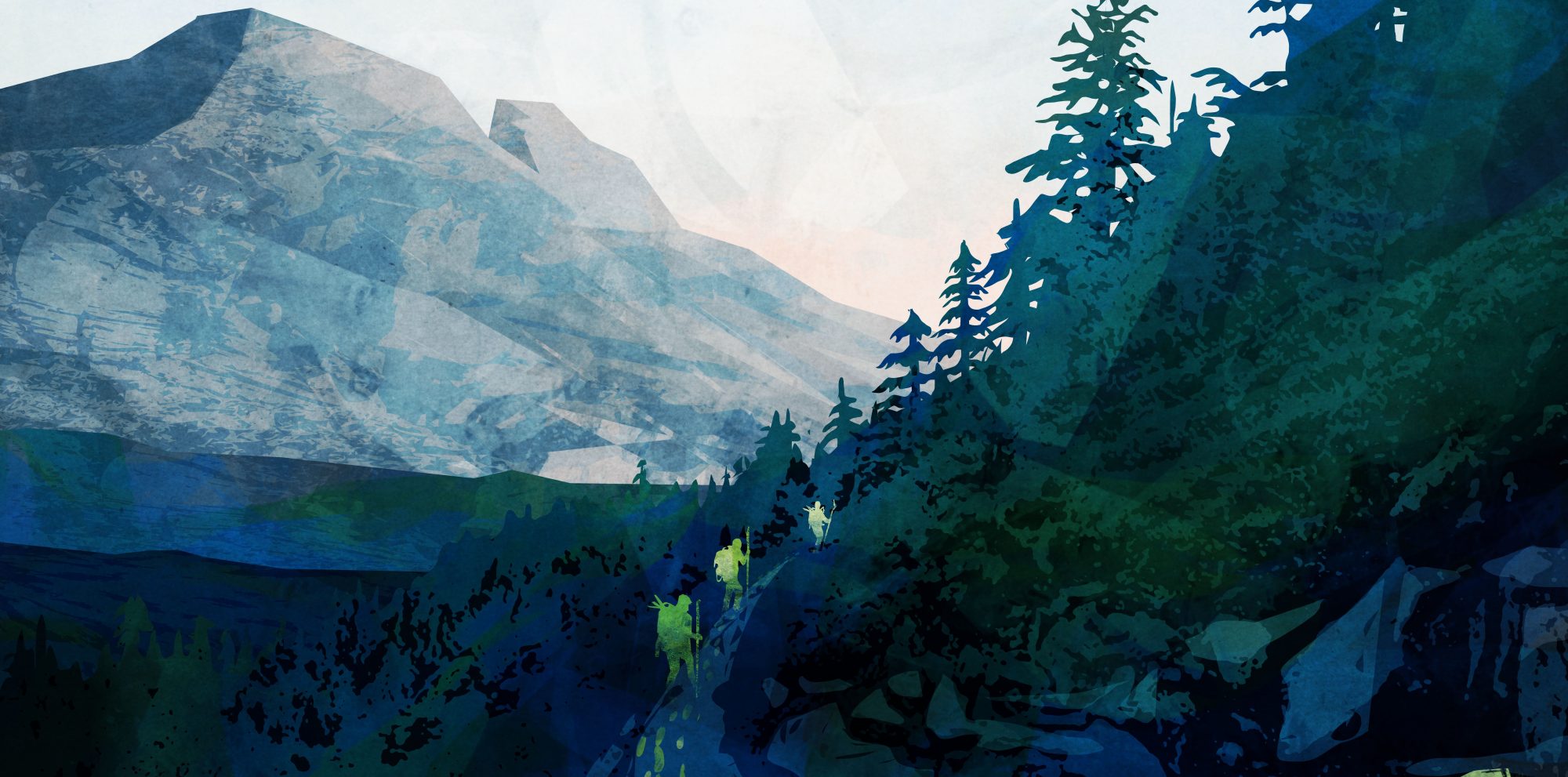
In August of 2015 members of the Archaeological Survey of Alberta undertook fieldwork in Jasper National Park and Mount Robson Provincial Park. This work had a focus on ice patch archaeology – that is, surveying melting alpine ice patches to recover ancient cultural and natural material revealed by retreating ice and snow. The video below showcases this fieldwork and explains its importance. A more detailed blog post will follow in the next few weeks to provide more information about this important initiative that was spearheaded by our Northern Archaeologist, Todd Kristensen. Enjoy!
Video footage, audio and photos by: Courtney Lakevold (Archaeological Information Coordinator), Todd Kristensen (Northern Archaeologist), Mike Donnelly (Archaeologist), and Travis Jones (Ph.D. Student, University of Georgia/Center for Applied Isotope Studies)
Video and summary by: Courtney Lakevold, Archaeological Information Coordinator
A recent Government of Alberta information bulletin announced a new Provincial Historic Resource. Check it out:
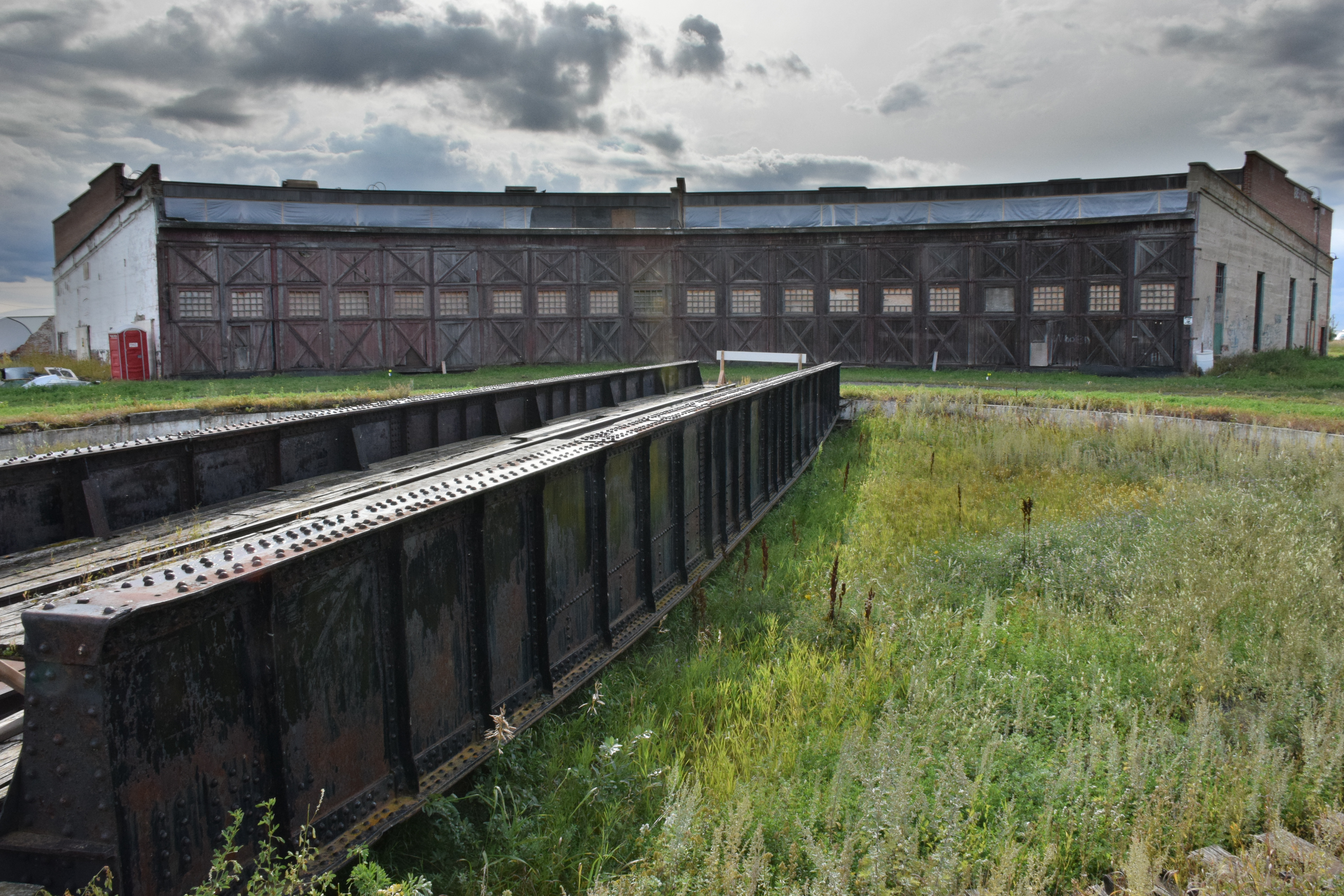
In August, 2015, a rare and important piece of Alberta’s railroading and transportation heritage has been designated as a provincial historic resource.
Exterior of the Canadian Northern Railway Roundhouse, showing the large, double doors, which provide access to the locomotive stalls. The turntable and bridge are in the foreground, September 2014. Alberta Culture and Tourism, Government of Alberta.
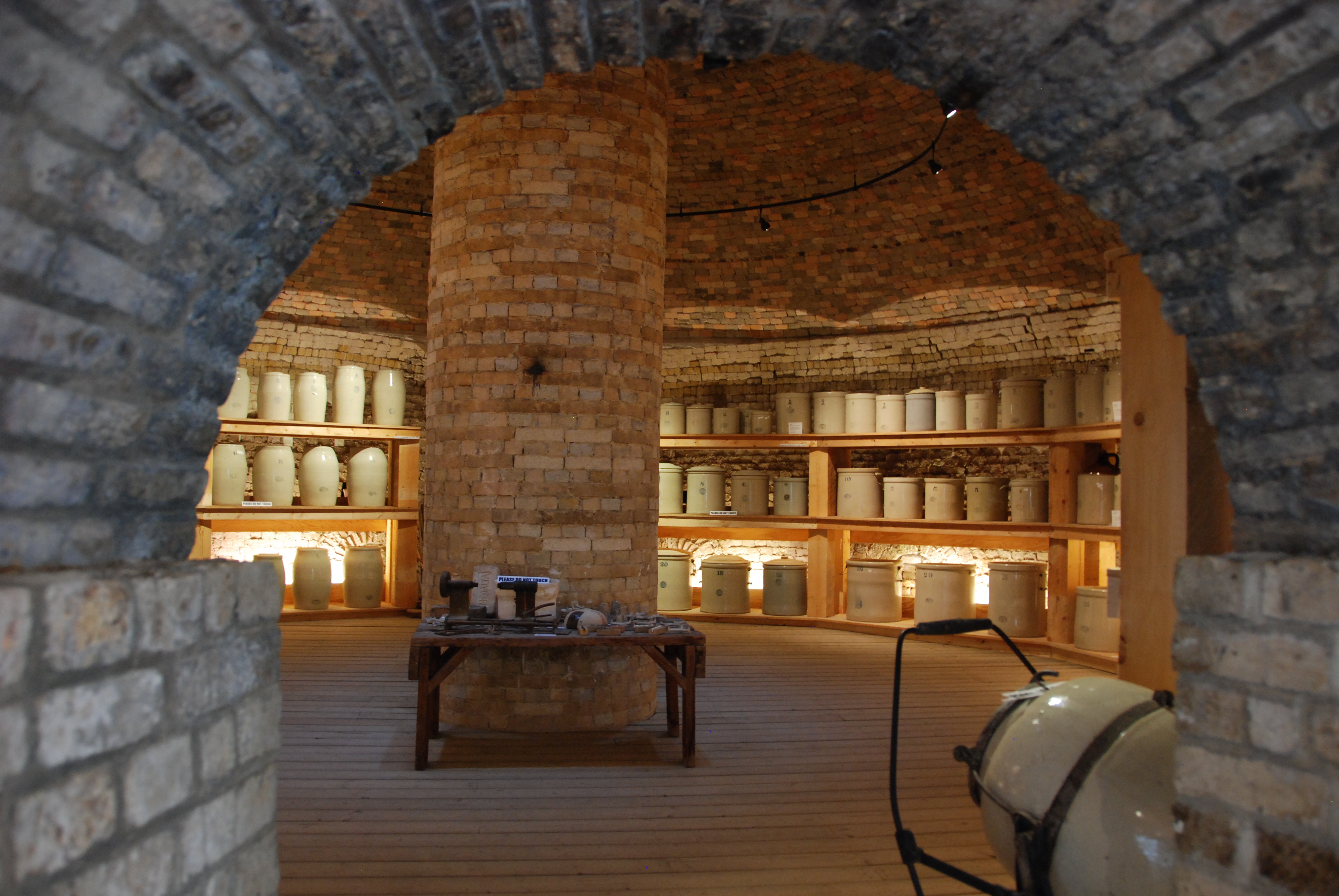
The first steps out onto the dome of the beehive kiln are a bit unnerving, with only a thin shell of tightly-fitted bricks supporting a small group of us above the void below. Domes structurally similar to this have been around since antiquity – many notable examples still survive – but it’s reassuring to know that scaffolding inside the kiln will prevent a painful and possibly career-ending collapse.
Kiln No. 2, one of four historic beehive downdraft kilns at Medalta Potteries, is a circular drum roughly ten metres in diameter with brick exterior walls surmounted by the dome and a tall central stack. Encircling the walls are wide adjustable bands of corroding steel which held the kiln together as it expanded and contracted and attest to the rigours of the firing process. Medalta’s beehive kilns historically fired a wide range of ceramic products and now serve as distinctive classroom and exhibit spaces.
If you’re looking for some family fun this Labour Day weekend, consider visiting one of Alberta’s Provincial Historic Sites, Interpretive Centres or Museums. There is a lot of great programming that offers something for everyone – from strolling through gardens and learning about 1920s fashion, to carriage rides, guided hikes and tours, and getting your hands dirty and bellies full at the Reynolds-Alberta Museum Harvest Festival! Many of our sites, centres and museums are open year round but several others will be closing for the season after Labour Day. Don’t miss your opportunity to visit these sites before they close for the year!
This post was originally published on RETROactive on March 6th, 2012. Farmers across the province will soon be busy with harvest so we thought it appropriate to highlight a previous post associated with Alberta’s agricultural past. Please note that these statistics are from 2012.
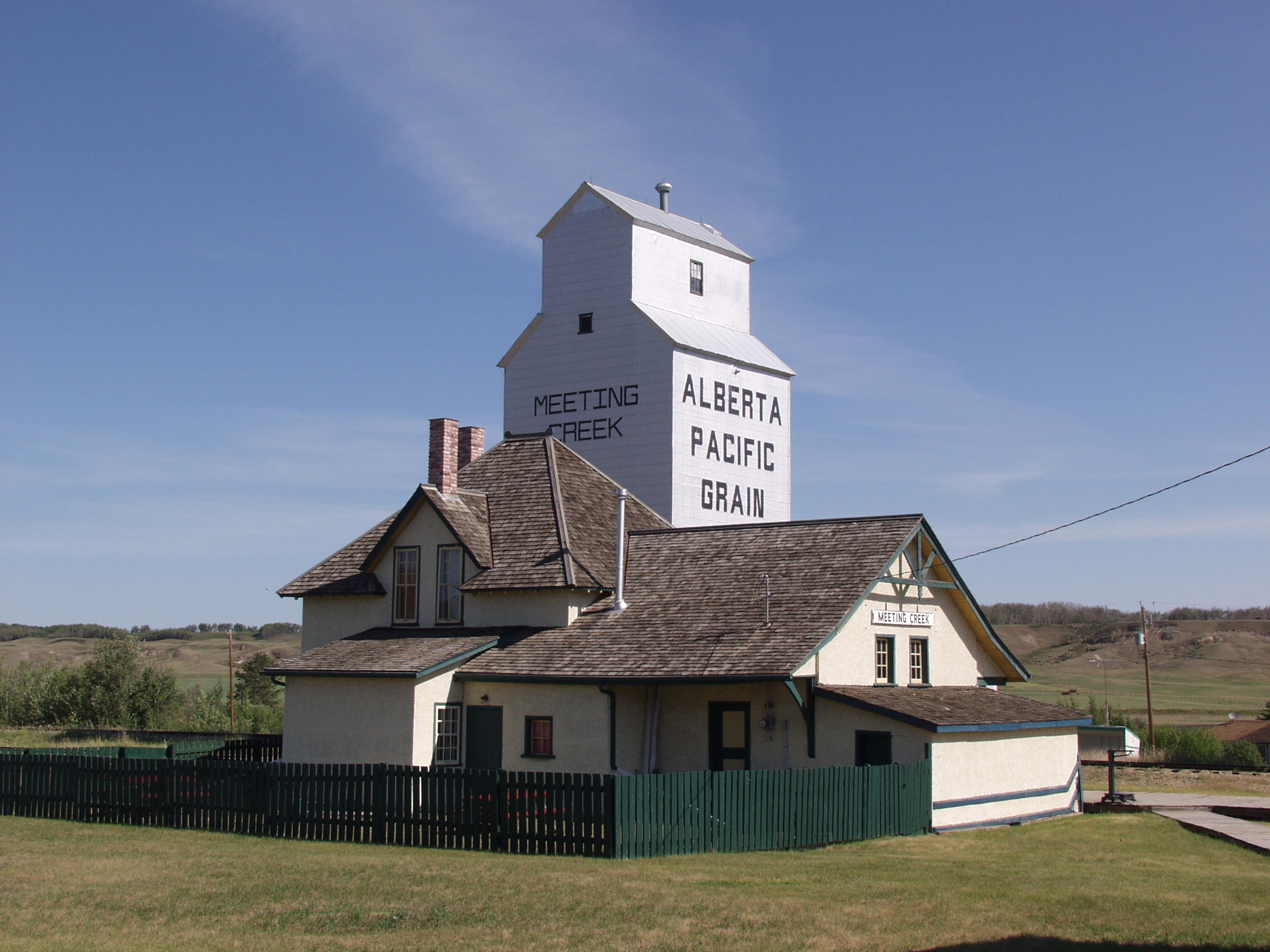
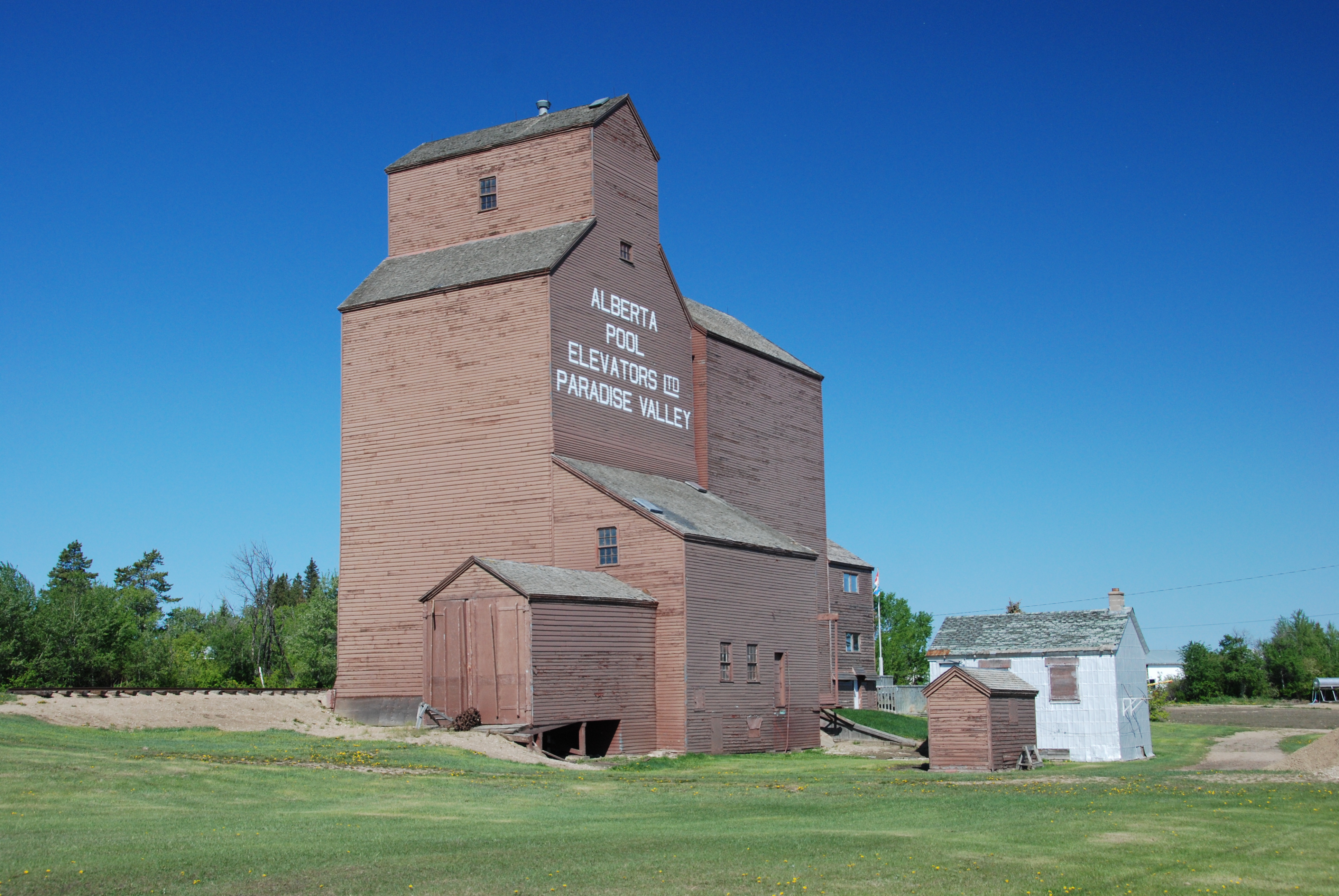
The twentieth century saw the rise and fall – literally – of the wooden country grain elevator in Alberta. As rail lines spread across the province, grain elevators sprouted like mushrooms after a spring rain. The high water mark for wooden country grain elevators was in 1934. New elevators were added in every decade, but this has been exceeded by the rate of demolition or closure ever since. Check out the following “index” of Alberta’s wooden country elevators, called “elevators” for short in this list.
This is the second of two blogs about some of the unique evidence of early boating in Alberta. The first blog explores First Nations boats and the second discusses the earliest Euro-Canadian vessels from the adoption of the birch back canoe to steamboats.
Boating in the Fur Trade
The first European fur traders adopted an eastern Algonkian-style of birch bark canoe. Every year, hundreds of men and women in Alberta gathered supplies and moulded lightweight ‘Express’ canoes at major fur trade boat building centres like Fort Chipewyan, Fort Edmonton, and Rocky Mountain House. While canoes and other physical traces of boat building at these forts have long since decayed, other lines of evidence of early boating are preserved. Trading posts needed Read more →
It takes patience to fold steaming hot birch bark into a canoe and it takes power to hammer the planks of a lumbering sternwheeler. The products of Alberta’s early boat building were vessels that delivered families safe and sound to hunting grounds, glided fishermen over teaming shoals, and carried trade goods in an economic system that forged our province. This is the first of two blogs about some of the unique evidence of early boating in Alberta. The first blog explores First Nations boats and the second discusses early Euro-Canadian vessels from the adoption of the birch back canoe to steamboats.
Dug-outs and Bull Boats
First Nations’ boats on the plains were often made of buffalo hides stretched over willow or pine frames. This ‘bull boat’ was a small, circular craft quickly built from tipi hides and recycled shortly after. It enabled safe river crossings Read more →
In a previous post, we looked at the naming of five mountains in Jasper National Park after First World War Victoria Cross recipients. It took a number of years and some persistence from the Geographic Board of Alberta to achieve this natural war monument for the service of five soldiers to the British Commonwealth in the First World War. In addition to naming the mountains, the negotiations between provincial and federal naming authorities resulted in the naming of the Victoria Cross Ranges in Jasper National Park to serve as a long-standing tribute to all recipients of the Victoria Cross. This naming decision created a naming policy that is still honoured today.
Looking west to the Victoria Cross Ranges (Image courtesy of Mountain Nerd on Summit Search)
Visitors to this year’s Raymond Stampede got to learn more about the fascinating history of the event with the installation of the latest Alberta Historical Resources Foundation heritage marker. The marker details the history of the event – the first of its kind held in Alberta – dating back to 1902, when prominent rancher Raymond Knight decided to organize a skills competition for local cowboys and ranch hands. The success of the Raymond Stampede inspired the organization of similar events across Alberta, with a growing range of events and prizes that attracted more and more competitors. Held in dozens of communities across the province each year, rodeos have long been significant cultural events in Alberta that strongly reflect its great agricultural heritage.
Raymond Stampede’s new heritage marker.
The marker was installed on June 25, 2015 at the site of the Stampede in Raymond Knight Memorial Park. The Town of Raymond applied for the development of the heritage marker through the Alberta Heritage Markers Program. The program was established in 1955 to promote greater awareness of the historic people, places, events, and themes that have defined the character of our province. The program brings Alberta’s dynamic history alive through heritage markers placed at roadside pullouts, within parks, and in other community locales.
Written by: Allan Rowe, Historic Places Research Officer
Obsidian is a natural glassy rock that was produced by volcanoes and used by pre-contact people across North America for making stone tools. Obsidian is the sharpest naturally occurring substance on earth, which made it ideal for making tools such as arrowheads and knives that were designed to slice animal flesh. Many obsidian tools have been found in Alberta despite the fact that there are no natural sources of it in the province. This means that obsidian was traded or carried into Alberta from long distances away. Research on obsidian tools at archaeological sites in Alberta has been conducted on a small scale since the late 1980’s. The current Alberta Obsidian Project (AOP) is the first large-scale attempt to analyse our province’s obsidian; it began in 2014 when a research plan was developed by members of the Archaeological Survey of Alberta, the Royal Alberta Museum, and the Center of Applied Isotope Studies (CAIS) at the University of Georgia. Read more →




 RETROactive