The Battle of Jutland, First World War Commemoration and Alberta Place Names

No single event has had such a dramatic impact on place names in Alberta than the First World War Battle of Jutland. Deep in the heart of Kananaskis Country can be found a series of mountains bearing the names of the ships and naval commanders of this naval battle. At least twenty-six mountains bear names commemorating the Battle of Jutland – sixteen of them are named for Royal Navy vessels that took part in the battle and ten are named for the Admirals, ship captains and seamen that lead and fought at Jutland. Additionally, many features associated with the mountains (glaciers, lakes and creeks) have subsequently been given Jutland names. The great number of Jutland-related geographical names in Alberta is curious. While there is no questioning the significance of the Battle of Jutland – it was the only major sea battle of the First World War, one of the few times in which dreadnought battleships fought directly against each other and its results affected strategy and tactics on both sides and altered the course of the war – it was also a battle in which there was no significant Canadian presence; no Canadian ships were involved and only one Canadian casualty has ever been confirmed. So, how did so many of these mountains along the Alberta-British Columbia boundary end up being named to commemorate this battle?

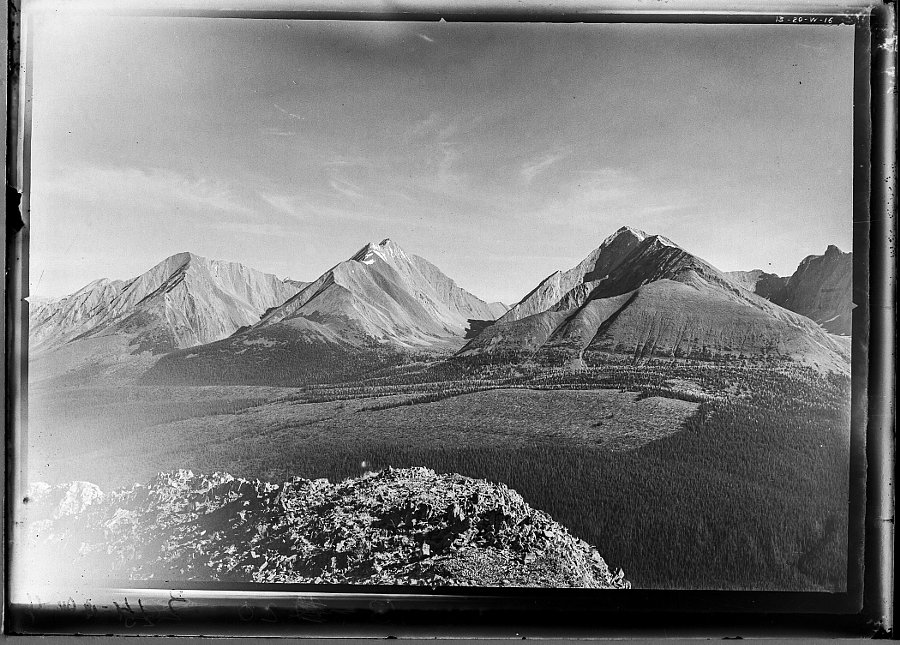
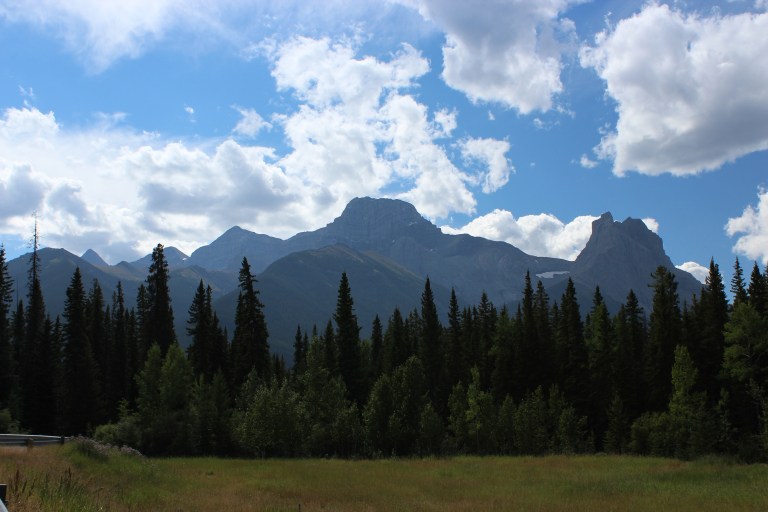
Mount Engadine (left), The Tower (middle) and Mount Galatea (right), taken in 1916 by the Interprovincial Boundary Survey. Mount Engadine and Mount Galatea are named for Royal Navy vessels that fought at the Battle of Jutland, the seaplane carrier HMS Engadine and the light cruiser HMS Galatea.
Mount Engadine (left), The Tower (middle) and Mount Galatea (right), taken in 1916 by the Interprovincial Boundary Survey. Mount Engadine and Mount Galatea are named for Royal Navy vessels that fought at the Battle of Jutland, the seaplane carrier HMS Engadine and the light cruiser HMS Galatea. Image Source: Mountain Legacy Project, IMG_3320. The Mountain Legacy Project is based at the School of Environmental Studies, University of Victoria, Victoria, BC. For more information, go to mountainlegacy.ca, or email mntnlgcy@uvic.ca.

Read more

National Aboriginal Day 2016

Photo Credit: Government of Alberta

The Historic Resources Management Branch is privileged to work with and learn from Indigenous communities in Alberta. On June 21, we join Canadians nation-wide in celebrating National Aboriginal Day. Now in its 20th official year, National Aboriginal Day provides an opportunity for Indigenous and non-Indigenous peoples alike to come together in recognition of the histories, cultures and contributions of First Nations, Metis and Inuit peoples in our province and across the country. Indigenous and Northern Affairs Canada (INAC) has put together a great video to celebrate the 20th Anniversary.

Whether you take in a film at Edmonton’s Amiskwaciy History Series’ Film Festival, check out the festivities at Head Smashed In Buffalo Jump, visit the Friendship Centre in your community or commemorate the day in your own way, take the time to remember: we are all Treaty people.

A listing of 2016 National Aboriginal Day events in Alberta can be found here.

Written By: Laura Golebiowski, Aboriginal Consultation Advisor

Blood Kettles and Buffalo Jumps: Communal Hunting on the Plains of Alberta

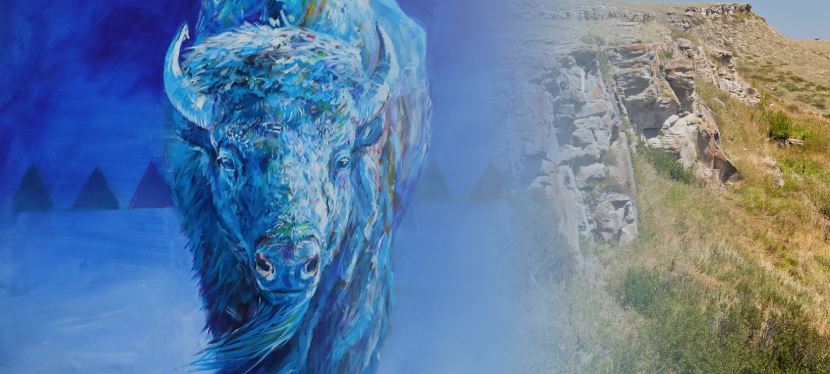
According to Blackfoot tradition, as Old Man traveled north he created the mountains, rivers, grass and trees. When he came to the area of the present day Porcupine Hills in southwest Alberta, he formed images of people from mud and breathed life into them. The people asked Old Man what they would eat, and so, he created images of buffalo from clay and brought them to life. He then took the people to a rocky ledge and called to the buffalo, who ran in a straight line over the cliff: “Those are your food.”

Tens of millions of buffalo once roamed the Great Plains of North America from Alberta’s grasslands down to Texas. To people of the plains, there was no more important food source. A number of ingenious methods were devised for communal (group) hunting – buffalo were lured into ambushes, corralled with fire, chased onto frozen lakes or into deep snow, and driven into elaborate traps called pis’kun by the Blackfoot (translated as ‘deep-blood kettles’). Of the hundreds of mass kill sites, perhaps none is more impressive than the buffalo jump, the most famous of which is Alberta’s Head-Smashed-In. Read more

A New Window for Canadian Historical Images: The New York Public Library Digital Collections

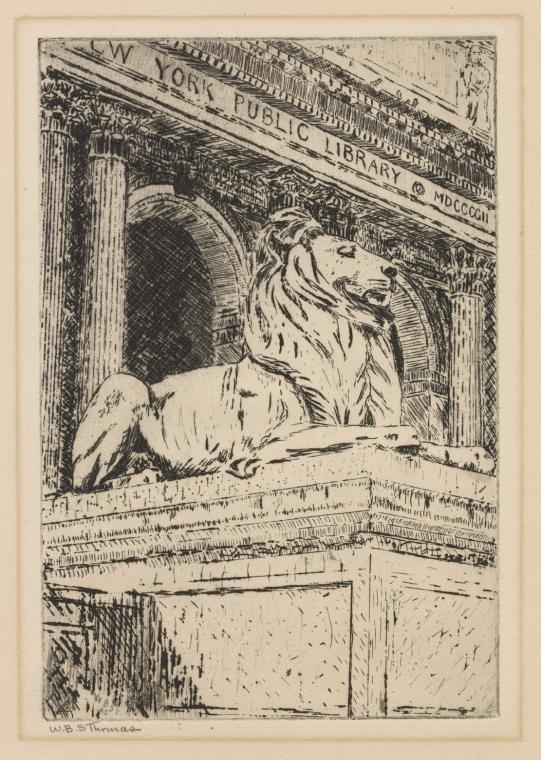
Researchers, bloggers and casual internet searchers will be interested in exploring a new source of historic images available to the public, many with relevance to Alberta and Canada in general. The New York Public Library Digital Collections includes over 674,000 items, featuring prints, photographs, maps, manuscripts and streaming videos. More than 180,000 of the items are in the public domain and available for downloading without charge, by the public, directly from the Digital Collections website in high resolution.

The Miriam and Ira D. Wallach Division of Art, Prints and Photographs: Print Collection, The New York Public Library. "Sculptured lion in front of N.Y.P.L." New York Public Library Digital Collections. Accessed March 10, 2016. http://digitalcollections.nypl.org/items/620a3d58-fe41-dc81-e040-e00a18060f0c
The Miriam and Ira D. Wallach Division of Art, Prints and Photographs: Print Collection, The New York Public Library. “Sculptured lion in front of N.Y.P.L.” New York Public Library Digital Collections. Accessed March 10, 2016. http://digitalcollections.nypl.org/items/620a3d58-fe41-dc81-e040-e00a18060f0c

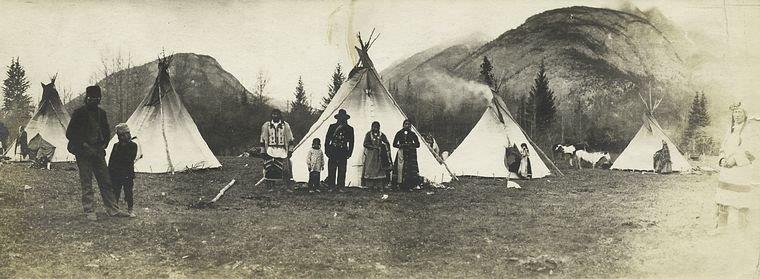
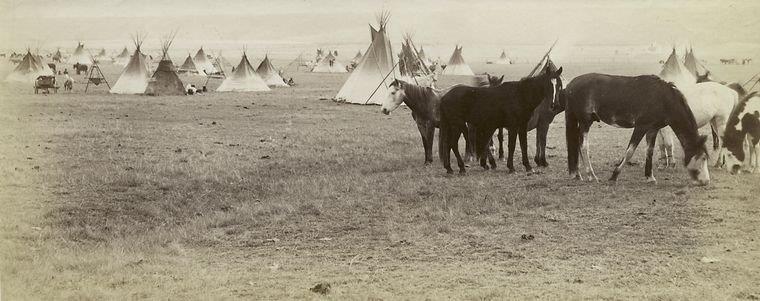
Browsing through the collection, researchers will find numerous images illustrating Alberta’s rich history, including remarkable images from the Blackfoot reserve in southern Alberta.

The Miriam and Ira D. Wallach Division of Art, Prints and Photographs: Photography Collection, The New York Public Library. "Indian camp at the foothills of the Rockies, Alberta." New York Public Library Digital Collections. Accessed March 10, 2016. http://digitalcollections.nypl.org/items/510d47dc-4569-a3d9-e040-e00a18064a99
The Miriam and Ira D. Wallach Division of Art, Prints and Photographs: Photography Collection, The New York Public Library. “Indian camp at the foothills of the Rockies, Alberta.” New York Public Library Digital Collections. Accessed March 10, 2016. http://digitalcollections.nypl.org/items/510d47dc-4569-a3d9-e040-e00a18064a99
The Miriam and Ira D. Wallach Division of Art, Prints and Photographs: Photography Collection, The New York Public Library. "Indian camp, Blackfoot Reserve, Alberta." New York Public Library Digital Collections. Accessed March 10, 2016. http://digitalcollections.nypl.org/items/510d47dc-4568-a3d9-e040-e00a18064a99
The Miriam and Ira D. Wallach Division of Art, Prints and Photographs: Photography Collection, The New York Public Library. “Indian camp, Blackfoot Reserve, Alberta.” New York Public Library Digital Collections. Accessed March 10, 2016. http://digitalcollections.nypl.org/items/510d47dc-4568-a3d9-e040-e00a18064a99

Many of the images posted on the site are also contained within the collections of such institutions as the Glenbow Museum and Archives, the Provincial Archives of Alberta and the Library and Archives of Canada. Due diligence is always a wise course of action when considering using any image, and the New York Public Library collection is no exception. Some image captions such as the one identifying the first train to arrive at Read more

Power and Powder: Early Guns in Alberta

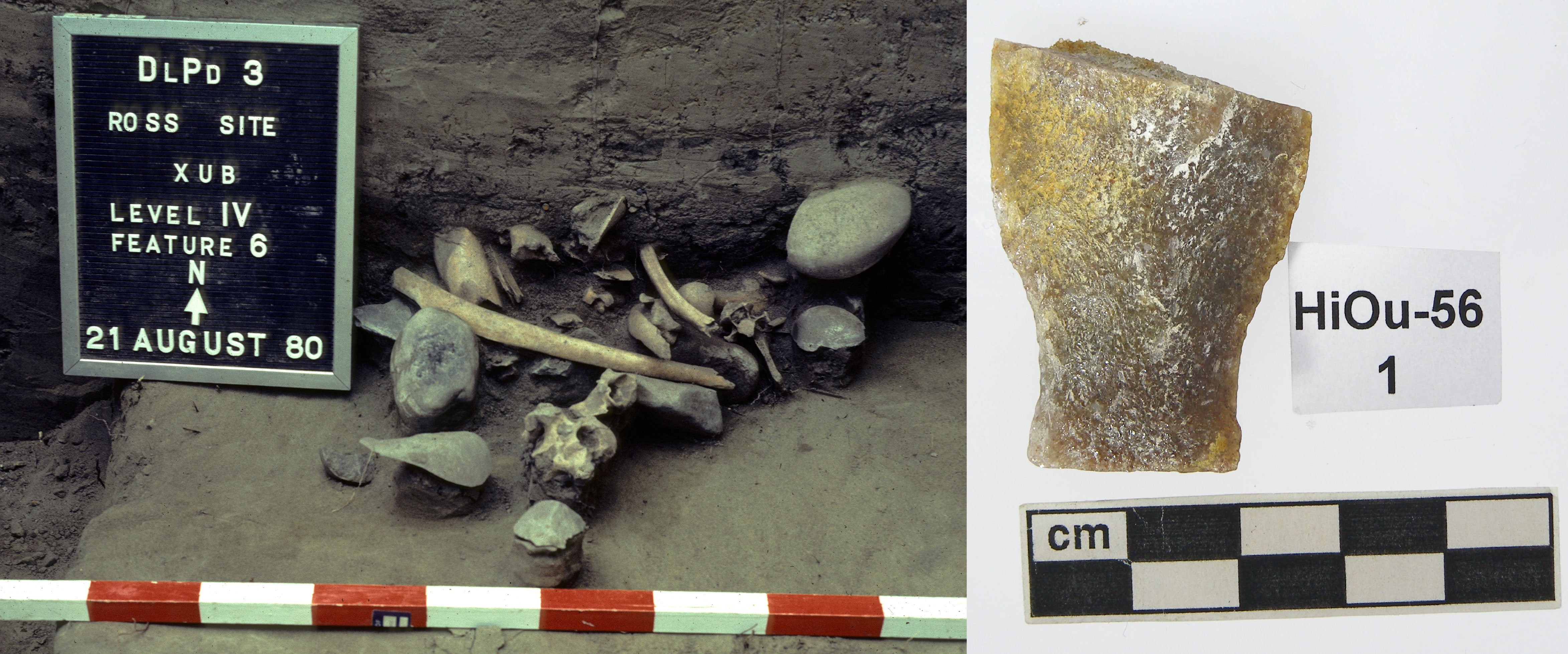
It’s hard to overstate the profound impact of firearms in Alberta’s history. The earliest guns delivered food, protection, and intimidation. Technological improvements from European contact to the 1900s led to significant changes in the ways that guns were used across the province. This blog briefly explores the evolution of firearms in Alberta and the archaeological record of it.

First Guns

Firearms were introduced to Canada in the 1500s but didn’t spread to Alberta until much later. Their first appearance in the province was likely through raiding or trading in the southern U.S. by Plains First Nations. Early gun models, like flared-mouth blunderbusses, were designed for close encounters on battle fields but proved ineffective on the prairies. It wasn’t until the advent of portable flintlock muskets that guns spread like wildfire across the West.

An 1805 Barnett flintlock trade musket that came to be one the most popular Northwest Trade guns. Over 20 000 guns were sold out of Canada’s major fur trade depot at York Factory from 1600 to the late 1700s. Figure by Todd Kristensen and Julie Martindale.

Read more

Celebrating National Volunteer Week: Calhoun Bay Archaeological Sites Tour

April 10 to 16, 2016 is National Volunteer Week in Canada. Well over 12.7 million Canadians have generously donated their time and energy to important causes. Volunteers help our communities grow strong and resilient. Even the smallest effort has the ability to transform, leaving profound and lasting effects in local communities. The work of volunteers affects virtually every aspect of our society and the heritage field is no exception. This week is the perfect time to reflect on the importance of volunteer work involved in the preservation of heritage. Over the years, the Archaeological Survey section of Alberta Culture and Tourism has developed a strong working relationship with the staff of the Parks Division of Alberta Environment and Parks. Both ministries regularly collaborate on joint efforts to preserve Alberta’s natural and cultural heritage for future generations. An important component of our preservation partnership is sharing heritage information with Parks volunteers. The Archaeological Survey participates in these programs to help Parks provide support, increase communication and offer new learning experiences for both staff and volunteers.

Calhoun Bay Provincial Recreation Area Parks Volunteer Conference Field Trip

The Archaeological Survey’s Regional Archaeologists, Caroline Hudecek-Cuffe and Wendy Unfreed participated in Alberta Parks’ Volunteer Conference Field Trip to Calhoun Bay Provincial Recreation Area (PRA) as part of a 3-day conference held in September 2015. Calhoun Bay PRA is located along the eastern shores of Buck Lake surrounded by thick boreal forests. On the bus ride to the site, Caroline and Wendy treated their fellow riders to an introduction to Alberta archaeology and explained how the Read more

Mount Lougheed and Wind Mountain

One of the most recognizable mountains in the Canadian Rockies is Mount Lougheed. Located approximately 15 kilometres southeast of Canmore, this majestic 3,150 metre (10,335 ft.) mountain is named for Sir James Alexander Lougheed. However, Lougheed is not the only name the mountain has had. In fact, it is not even the first mountain in the area to bear the name Lougheed. The story of how the mountain became known as Mount Lougheed is interesting.

IMG_0322

Mount Lougheed from the Trans-Canada Highway, August 2011. The entire massif is known as Mount Lougheed. The large, central peak is likely the feature named “Windy Mountain” by Eugene Bourgeau in 1858. The prominent peak furthest to the right is Windtower Mountain. The peak known today as Wind Mountain is the distinctly pointed peak visible on the horizon at left side of the photograph.
Source: Larry Pearson, Historic Places Stewardship Section, Alberta Culture and Tourism.

In 1858, Eugène Bourgeau (sometimes spelled Bourgeaux), a botanist with the Palliser Expedition, accompanied James Hector up the Bow Valley towards what is now Canmore. Bourgeau named many of the mountains and lakes along the way. Bourgeau was struck by the way the clouds swirled around one particular peak. James Hector, in his account of August 11, 1858, noted that Read more

The Butterfly Effect

Peeling paint and powdering plaster were the first indications something was amiss at the Blairmore Courthouse, a Provincial Historic Resource in the Crowsnest Pass. A leak in the cedar shingle roof, replaced just the previous year, was immediately suspected. Detailing around the dormers in particular, part of the 1922 building’s distinctive Spanish Colonial Revival design by architect R.P. Blakey, is tricky and vulnerable to water penetration.

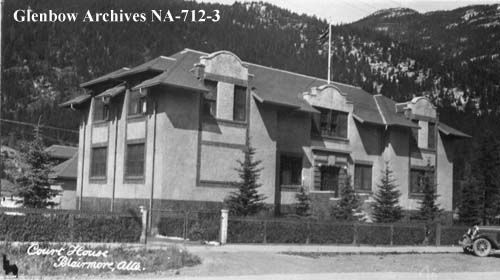
1920s view of Blairmore Courthouse from the southwest (Photo Credit: Glenbow Archives)
1920s view of Blairmore Courthouse from the southwest (Photo Credit: Glenbow Archives NA-712-3)

Nippon School of Technology, which owns the building and runs a technical school and exchange program for Japanese engineering students there, inspected the roof from the attic and found no active leaks. Puzzled, N.I.T. engaged a conservation architect to inspect the building and identify sources of moisture causing the paint and plaster failure. The findings were at once surprising and (in hindsight) credible.   Read more

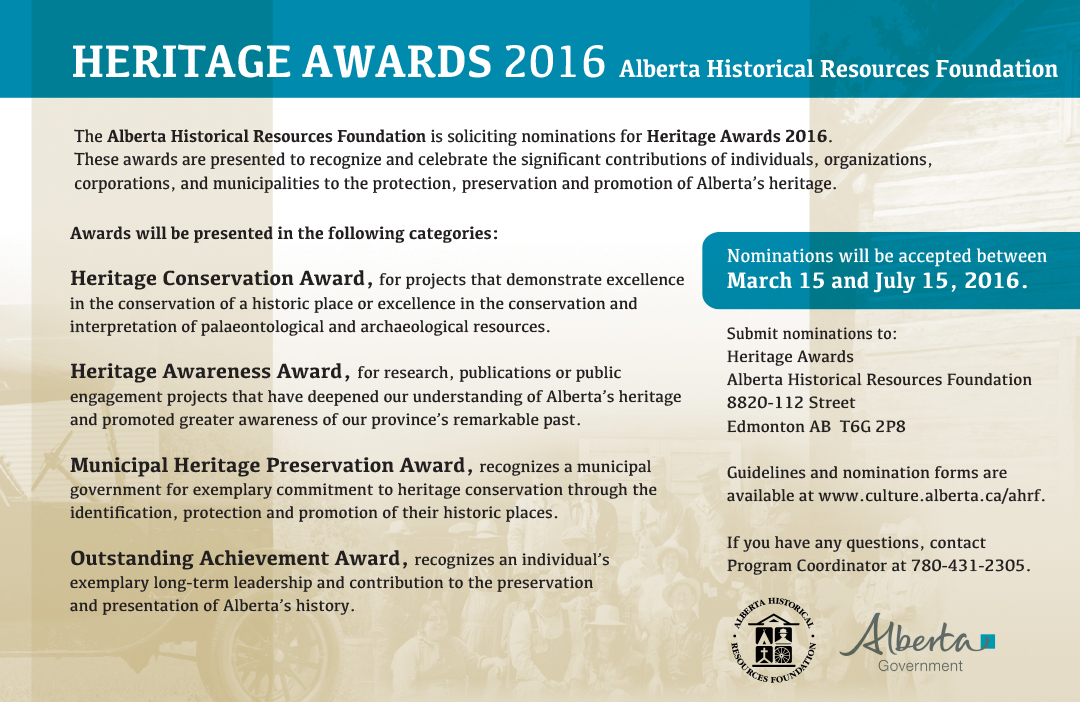
AHRF 2016 Heritage Awards

Calling for Nominations for the Alberta Historical Resources Foundation’s (AHRF) 2016 Heritage Awards

Nominations for the AHRF’s biennial Heritage Awards are now open!  This is an excellent opportunity to recognize and celebrate the outstanding accomplishments of individuals, organizations and municipalities who have demonstrated their commitment to preserving, and promoting appreciation of, Alberta’s heritage.

Awards are presented to projects for the Heritage Conservation and Heritage Awareness Awards; to municipalities for the Municipal Heritage Preservation Award; and to individuals for the Outstanding Achievement Award.

Print

For a copy of the guidelines and nomination form, click here or contact 780-431-2305 or e-mail Carina.Naranjilla@gov.ab.ca.  More information is also available at http://www.culture.alberta.ca/heritage-and-museums/grants-and-recognition/heritage-awards/

Deadline for nominations is July 15.  The awards ceremony will take place on October 14 at the McDougall Centre in Calgary.

Written By: Carina Naranjilla, Grants Program Coordinator, AHRF