Written by: Blair First Rider and Laura Golebiowski, Aboriginal Consultation Advisers
Editor’s note: Oki! June is National Indigenous History Month, an invitation to honour the history, diversity, strength and contemporary achievements of Indigenous peoples. Aboriginal Consultation Advisers Blair First Rider and Laura Golebiowski, both based in Treaty 7 territory, met at the Okotoks Erratic this spring to discuss the significance of the site to the Blackfoot Confederacy.
Blair First Rider at the Okotoks Erratic.
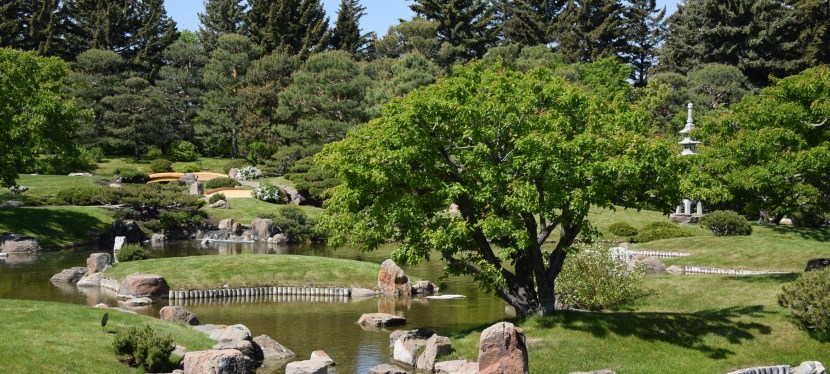
If you’ve ever travelled southwest of Calgary and witnessed a towering mass of quartzite stand out among the prairie landscape, you are continuing a tradition that Indigenous peoples have done since time immemorial. The 16,500-tonne boulder is colloquially known as the “Big Rock,” but in Blackfoot it is Okotoks—the direct translation of the word “rocks.”
The erratic is a wildly impressive and imposing sight. However, there is more here than immediately meets the eye. For the Blackfoot, this is a location where the world began; where supernatural mischief-maker Napi was pursued by the rock as he traveled from south to north, creating the mountains and rivers.
Written by: Michael Gourlie, Government Records Archivist
Editor’s note: The International Council of Archives has designated June 8-14, 2020 as International Archives Week. Its theme, Empowering Knowledge Societies, highlights the ways in which archival institutions contribute to sustainable knowledge, trust and evidence, and the challenge of emerging technologies.
When historians decades from now look back at society during the COVID-19 pandemic, what will they see? Artifacts, documents and various media will certainly tell the story of how we dealt with an historic event. With the pandemic at the forefront of everyone’s thoughts, it seems timely to examine the holdings at the Provincial Archives of Alberta (PAA) that document other public health crises. Alberta has experienced pandemics such as the worldwide 1918-1919 flu pandemic (often referred to as the Spanish grippe or Spanish flu epidemic) as well as a series of more localized poliomyelitis epidemics in Alberta that occurred in 1927 and 1953. While history books in the reference library tell one author’s version of events, what do the original archival records preserved at the PAA tell researchers about other widespread outbreaks of disease in the twentieth century, and can they inform our current circumstances?
1918-1919 pandemic resources at the PAA
Starting in 1905, a branch of the Department of Agriculture managed the Government of Alberta’s public health programs until the province established a separate Department of Public Health in 1919. For reasons that are unclear, few records of the Department of Public Health appear to have survived prior to the 1940s. However, one incredible survivor of that era is a scrapbook created by Public Health that contains newspaper articles tracking the progress of the 1918 influenza pandemic across Canada, with a special focus on developments in Alberta. The articles detail the number of cases, the preventative measures (including the closures of schools and restrictions on public gatherings), announcements from medical officers of health and the death toll.
Excerpt from Public Health Scrapbook, 1918. GR1975.0454
While an overarching and comprehensive information resource, the scrapbook does not provide the entire story of the Government of Alberta’s response to the pandemic or the impact on the citizens of Alberta. So, without other records of the Department of Public Health, where can that story be found in the PAA?
Editor’s note: You can read more of Fraser Shaw’s series on heritage conservation on RETROactive.
Written by: Fraser Shaw, Heritage Conservation Advisor
Gunshots shattered the stillness of 18 Avenue in Coleman on the afternoon of September 21, 1922.
Local bootlegger Emilio Picariello and his accomplice Florence Lassandro sped off in a cloud of dust as Constable Stephen Lawson lay dead outside the Alberta Provincial Police barracks, a cottage-like office and residence where he worked and resided with his family. Hours later, “Emperor Pic”—as he was known locally—and Lassandro were apprehended and charged with Lawson’s murder. Both were later convicted and hanged. Lassandro became the first woman to be executed in Canada since 1899 and the only woman to be hanged in Alberta.
The Alberta Provincial Police Building as it appeared in late 1922 after the murder of Constable Stephen Lawson. Source: Crowsnest Museum.
The Alberta Provincial Police (APP) Building, a Provincial Historic Resource within the Coleman National Historic Site, is significant for its association with the infamous murder of Constable Lawson and, more generally, with its role in the maintenance of law and order in the mining communities of the Crowsnest Pass during Prohibition until the 1930s.
Written by: Ron Kelland, Historic Places Research Officer
Back a few weeks ago, in the early days of COVID-19 pandemic response, I, like many Albertans, was closely watching news coverage. One news story that caught my attention was about the lines of traffic of returning Canadian travelers at the Coutts/Sweet Grass International Border Crossing. The story really jumped out at me because I had just read about novelist Charles Dickens’ involvement with the philanthropic work of Baroness Angela Burdett-Coutts. Being the geographical names guy, I was aware that the village of Coutts and the hamlet of Burdett were named for the Baroness Burdett-Coutts, so I started to think about how was it that these two communities ended up with names honouring and commemorating a Victorian-Age, aristocratic philanthropist and social reformer.
Baroness Burdett-Coutts, artist unknown, oil on panel, ca. 1840. Source: National Portrait Gallery, London, NPG 6181. Used under Creative Commons License (CC BY-NC-ND 3.0)
Angela Burdett-Coutts, the 1st Baroness Burdett-Coutts was born Angela Burdett in 1814, the daughter of radical reformist politician and anti-slavery advocate Sir Francis Burdett and Sophia Burdett (née Coutts). In 1837, upon the death of her step-grandmother, the actress Harriet Mellon, Angela inherited the entire Coutts estate of £1.8 million ($191 million in 2020 Canadian dollars) including a substantial interest in the Coutts Bank, making her the second-wealthiest woman in the United Kingdom after Queen Victoria. In accordance with the conditions of the will, Angela Burdett sought and received royal license to combine her ancestral names to become Angela Burdett-Coutts.
Written by: Todd Kristensen, Archaeological Survey of Alberta
Jasper National Park and Willmore Wilderness Park include some of the most rugged and remote mountains in Alberta; and for over 10,000 years, people have called these places home. A high alpine pass at the north edge of Jasper and south edge of Willmore holds clues of an important resource that ancient people visited year after year, in a place that nowadays only hardy back-packers and horseback visitors can reach.
Glacier Pass contains a quarry of stone that people used to make spear heads, knives, scrapers and other tools. The quarry was discovered by archaeologists B.O.K. Reeves and J. Elliot in the early 1970s. The rocks found there are what geologists call ‘concretions’ that were picked up as rounded cobbles by people long ago. Recent archaeological research tells us that the round rocks were then hammered to get rid of certain pieces and expose the best quality stone for making tools.
Stone cobbles like the ones here at Glacier Pass were picked up and worked into spear heads, knives, scrapers and other pre-contact tools. Source: Todd Kristensen.
A laboratory technique called hyperspectral scanning has confirmed that the composition of artifacts made from Glacier Pass concretions matches the composition of specific bands or portions of the cobbles from Glacier Pass. Glacier Pass concretions formed when bands of silica-rich rock grew around a core over millions of years. Some bands were good for stone tools while other portions of the rock were thrown out because they were too soft and/or unpredictable to flake or ‘flint knap’. Source: Todd Kristensen.
Based on the number of artifacts found by archaeologists, Glacier Pass was likely visited by small groups of people thousands of times over thousands of years. The stone quarry was part of a seasonal round when people moved from month to month to different areas to exploit or target different things. The alpine concretions at Glacier Pass were probably collected after the snow melted in summer or in fall when people hunted big game animals on high slopes like sheep and caribou.
Recent research by an archaeological team from the Archaeological Survey of Alberta, Parks Canada and the University of Alberta has revealed that pre-contact people cracked Glacier Pass concretions to get at specific zones or bands of high quality stone that was ideal for making stone tools. The first two rows in this picture are mostly flakes removed while making tools. The bottom row (artifacts 11-15) are stone tools including knives, a core and a likely spear head that may be over 6,000 years old (14). Source: Todd Kristensen.
Modern visitors to Glacier Pass are unlikely to see tools: most of the artifacts there today are flakes of rock that people broke off while making stone tools. Almost all the finished products were carried away from the area. Visitors are reminded to respect the story of parks and mountain landscapes in Alberta by leaving all artifacts and rocks in place for others to experience. And remember that the land under our feet has a deep history full of geological wonders and human adaptations.
Glacier Pass between Jasper National Park and Willmore Wilderness Park is a beautiful and fragile place. To preserve the story of this landscape, and others in Alberta, visitors are encouraged to leave stones and artifacts in place. Source: Todd Kristensen.
Editor’s note: This post was originally published in 2018. To recognize Black History Month, we here at RETROactive are pleased to share this important documentary with you again.
Winner of the 2018 Alberta Historical Resources Foundation 2018 Heritage Awareness award, We Are the Roots is a documentary that tells the stories of African American immigrants who settled in Alberta and Saskatchewan in the early 1900s.
In the film, you’ll hear stories from 19 descendants of original settlers, as they moved north to escape slavery, persecution and racism in America. Once in Canada, these families would then experience more discrimination, both in Edmonton and in rural communities they settled.
The film was produced and created through a partnership between documentary film production company Bailey and Soda Films along with Edmonton’s Shiloh Centre for Multicultural Roots,
Click the image above to view the full-length documentary.
Well would you look at that, it’s Valentine’s Day! Whether you’re an adherent to the original feast honouring Valentinus, or just like getting flowers from a significant other, it’s the time of year to spend a greeting card-mandated night with your sweetheart.
In celebration of this special day, here are a few Alberta couples, young and old, showing their love for one another.
Fashion show for kids, taken in Edmonton’s McKernan neighbourhood on April 11, 1951. Source: Provincial Archives of Alberta.
Children on rides at the Exhibition in Edmonton. Photo taken July 17, 1947. Source: Provincial Archives of Alberta.
Photo of couple, last name Calihoo, by the Ernest Brown Studios. Date unknown. Source: Provincial Archives of Alberta.
Valentine’s Dance by M.H. Charnetski Sr., taken in 1948. Source: Provincial Archives of Alberta.Photo of couple, last name Ellefnon, by the Ernest Brown Studios. Date uknnown. Source: Provincial Archives of Alberta.
Rev. Gray and Miss Dixon on railroad scooter. Photo taken Aug. 10, 1894. Source: Provincial Archives of Alberta.
Nick Spivak with C. Anton, February 1948. Source: Provincial Archives of Alberta.
Written by: Michael Gourlie, Government Records Archivist, Provincial Archives of Alberta
Hey, remember a few weeks ago when the ENTIRE PROVINCE was under an extreme cold weather warning? Below 30, minus 40 weather for several days. Fun times, good stuff.
It was probably no surprise that folks wanted to hunker down and hibernate until temperatures become more seasonable (like a balmy -15C). But there are better options than hibernating! For example, visiting the Provincial Archives of Alberta’s new exhibit, BRReathtaking Images of a Winter City.
Featuring the work of award-winning Edmonton photographer Nick Ochotta, the exhibit highlights the beauty, fun and drudgery of living in a winter city. As largest, northernmost metropolis in the world, it is better to accept that snow, ice and chilly temperatures are a seasonable and inevitable part of Alberta’s winter wonderland. At least you can be warm inside looking at images of winters past. If they made it through, so can you!
The exhibit is on display until March 31, 2020, by which point the province may have thawed out. Maybe.
Surveying the land, sled in hand. Possibly near present-day Ezio Faraone Park in Grandin. Photo taken in 1953 by Nick Ochotta. Source: Provincial Archives of Alberta.A familiar winter scene by Templeman Bros. on 107 St. Photo taken in 1953 by Nick Ochotta. Source: Provincial Archives of Alberta.I’ll take the classic shovel over a leaf blower any day of the week. The hardworking man in the picture is also named Harry Snow. For real. Photo taken in 1948 by Nick Ochotta. Source: Provincial Archives of Alberta.View from 108 St. just south of Jasper Ave. Photo taken in 1948 by Nick Ochotta. Source: Provincial Archives of Alberta.
Editor’s note: The image above is of the famous Roxy Theatre on 124 St. Opened in 1938, the theatre was destroyed by a fire in 2015. The theatre is currently being rebuilt. The image is courtesy of the Edmonton Historical Board.
Written by: Jared Majeski, Historic Resources Management Branch
Continuing along in our series spotlighting Municipal Historic Resources (MHRs) around the province, we move along to the historic Westmount neighbourhood in west-central Edmonton.
Thought to have been named after a suburb in Montréal, Westmount is known for many Craftsman-inspired single family detached houses along tree-lined boulevards between 123 St. to 127 St. and 107 Ave. to 111 Ave. You get the feeling of being transported back in time when you’re walking or riding your bike down one of these streets. And since the City of Edmonton officially recognized the historic significance of this, the Westmount Architectural Heritage Area (WAHA), the heritage value of this important Edmonton neighbourhood will hopefully be supported for decades to come.
Let’s take a look at a few properties in the area that make this neighbourhood unique.
Marshall Hopkins Residence
The Marshall Hopkins Residence is valued for its association with the early development of the Westmount neigbourhood during Edmonton’s population boom in the pre-war period.
Built in 1912, the Marshall Hopkins Residence on 126 Street is significant as an early example of wood-framed, Foursquare construction. This architectural design was popular at the time for its simple design and efficient floor plans.
The two-storey residence is significant for its association with Marshall W. Hopkins, Chief Land Surveyor for the Alberta Land Titles Office, who was the first occupant of the residence from c. 1913 to 1914. In addition, the Marshall Hopkins Residence is also significant for its association with the Canadian National Railway as it was home to a number of occupants who were employed by the company after the Canadian National Railway arrived in Edmonton in 1905.
The residence was officially designated an MHR in May 2019.
Ellen Elliot Residence
The Elliot Residence is significant as an early example of a front gabled dwelling with Craftsmen design elements influences, and for its associations with an early owner and builder.
The Ellen Elliot Residence on 125 Street is unique in a number of ways, least of all due to the fact that the first resident and owner of the building was a woman. Mrs. Ellen Elliot, widow of Thomas Elliot (who may have been a builder), purchased the property which would have been rare and unusual at that time. She lived in the residence until 1932.
Design elements of the two-storey building include the original wood frame construction, with horizontal wood siding on the lower level and wood shingle siding in gable peaks, and a front gabled-roof addition and porch. Fire insurance maps of the area show the original structure with a veranda in 1913. However, city records indicate that the house was built in 1920. The 1920 date may have come from when the front porch was captured and brought into the house as an extension of the living room and the mudroom.
This property was designated an MHR in June 2019.
Walton L. Smith Residence
The Smith residence is one of many similar Craftsman Influenced houses built in the neighbourhood in the first quarter of the 20th century, and demonstrates the popularity of this style in the early days of west Edmonton and other prestigious neighbourhoods.
The 1914 two-storey Walton L. Smith Residence is a wood frame construction with strong Craftsman design influences. It has horizontal wood siding on the lower level, and wood shingles on the upper levels and façade. The roof is a slightly bellcast, medium pitch gable, with exposed rafters and decorative brackets on the front-facing gable. An offset closed porch with a slightly bellcast gable roof is on the right hand side of the façade.
As interesting as the design of this property is the story of its original building applicant, who ironically, never actually lived in the house at all.
This residence was constructed following application for a building permit at the site on May 14, 1914. Robert W. Hedley, the applicant, was prominent in Edmonton affairs. Born and educated in Ontario at the University of Toronto and Hamilton Normal College, he then taught until moving to Edmonton in 1912. Hedley was Art Supervisor for the Edmonton Public School Board from 1914 until 1929. He designed the art course for Alberta high schools in 1922. Hedley taught art at University of Alberta summer sessions, and was appointed to the Normal School staff in 1929, serving as a lecturer in art and math. Hedley retired in 1937, but remained active in the local art scene, becoming director of the Edmonton Museum of Arts from 1943 to 1951. Hedley organized the western Canadian art circuit, adult and children’s classes and a women’s society to support the Edmonton Museum of Arts. He received an Honourary LLD from the
University of Alberta in 1953, a citation from the College Art Association of America in 1955, and became the first Albertan to receive a Fellowship from the Royal Society of Arts. He was an arts critic for the Edmonton Journal for many years. Hedley died on November 16, 1965, having never lived in the house he originally applied to build in 1914.
This residence was designated an MHR in June 2019.
Griffin Residence
The house is located within the Westmount Architectural Heritage Area. Throughout history the neighbourhood of Westmount has retained a strong sense of architectural character, and is noted for its large collection of single detached homes, that were built between 1911 and 1925.
Built in 1922, Griffin Residence on 125 Street is significant for its Arts and Crafts influences, in particular, Craftsman style elements. This design style first appeared in the last years of the 19th century and remained popular until the 1930s.
The residence features a medium pitched gable roof, with projecting eaves, exposing original wood rafters, soffits, fascia, and brackets. It is clad with wood clapboard siding on the upper portion, and wood shingles on the lower portion of the residence, and in all the peaks of the gables. The enclosed front veranda has a hipped roof with an offset medium pitched gable over the entrance. Both the east and west elevations feature pitched gables, with bay windows. The residence is located on a residential street in the Westmount neighbourhood, one of Edmonton’s most mature neighbourhoods, where the majority of lots still maintain their original structures.
Griffin Residence was designated an MHR in August 2018.
Street Railway Substation No. 600
Street Railway Substation No. 600 is significant as a rare and well preserved example of the Art Deco Style of architecture in Edmonton.
Constructed in 1938, Street Railway Substation No.600 is a one storey brick and concrete building designed in the Art Deco Style, located on a commercial portion of 124 Street in the neighbourhood of Westmount.
This substation is significant for its association with the development of the Westmount neighbourhood. Westmount is one of the oldest residential subdivisions in Edmonton. After 1911, residents of the neighbourhood could commute downtown on the electric streetcar that ran south from 110 Avenue along 124 Street before turning east along Jasper Avenue. As the neighbourhood grew and demand placed on the west end section of the street railway increased, it was necessary to build Street Railway Substation No. 600 to house equipment which reduced the loss of electricity from the lines, allowing the street railway to operate more efficiently.
The substation was designated an MHR in May 2017.
These recently designated Municipal Historic Resources join seven other Westmount neighbourhood resources previously designated by the City of Edmonton:
By designating these properties as Municipal Historic Resources, the City of Edmonton is ensuring the preservation of the heritage character of the Westmount neighbourhood.
Currently at the Royal Tyrrell Museum of Palaeontology is arguably the world’s most fascinating (and best-preserved) armoured dinosaur. The Borealopelta markmitchelli was discovered by a worker in the Suncor Millenium Mine in 2011 and, at 112-100 million years old, is the oldest known dinosaur ever found in Alberta.
To learn about how this one-of-a-kind discovery happened, and how scientists at the Tyrrell worked to preserve it, you can watch Dinosaur Cold Case on CBC’s The Nature of Things right now! If you’re in Canada, click here to unravel this made-in-Alberta mystery.