A big thank you to everyone who helped to make our first Municipal Heritage Forum held outside of Edmonton and Calgary a huge success! We are very grateful for all of you who took the time to attend, contribute presentations or assist with logistics. We hope everyone had an enjoyable time, met some new people and learned about Alberta’s historic places.
Forum attendees in front of Lacombe’s first Municipal Heritage Resource, St. Andrew’s United Church
We look forward to seeing many of you at the 2015 Municipal Heritage Forum that will be held in conjunction with the Heritage Canada The National Trust conference in Calgary from October 22-24. Stay tuned for information on how you can access one of the free registration passes to what is sure to be a fantastic event.
Written by: Rebecca Goodenough, Municipal Heritage Services Officer
Writing-on-Stone Provincial Park is nestled into the winding valleys and coulees along Milk River in Southern Alberta. Painted and carved on its fragile sandstone walls are one of the largest collections of rock art in North America. Appropriately named, Writing-on-Stone is a rocky canvas of ancient and historic art that spans many centuries.
To increase awareness of this unique piece of the past and to encourage the preservation of sensitive historic resources, a collaborative team of the Historic Resources Management Branch, the Royal Alberta Museum, and the University of Alberta initiated the Heritage Art Series project. The goal is to create artwork, like the piece depicted above, that captivates the public in order to encourage the appreciation and protection of Alberta’s past.
Rock Art in Alberta
Alberta’s rock art includes pictographs (paintings), petroglyphs (engravings), carved boulders, and effigies (rocks arranged to form shapes). Art that was applied to rock walls has a variety of functions and there are six major types in Alberta.
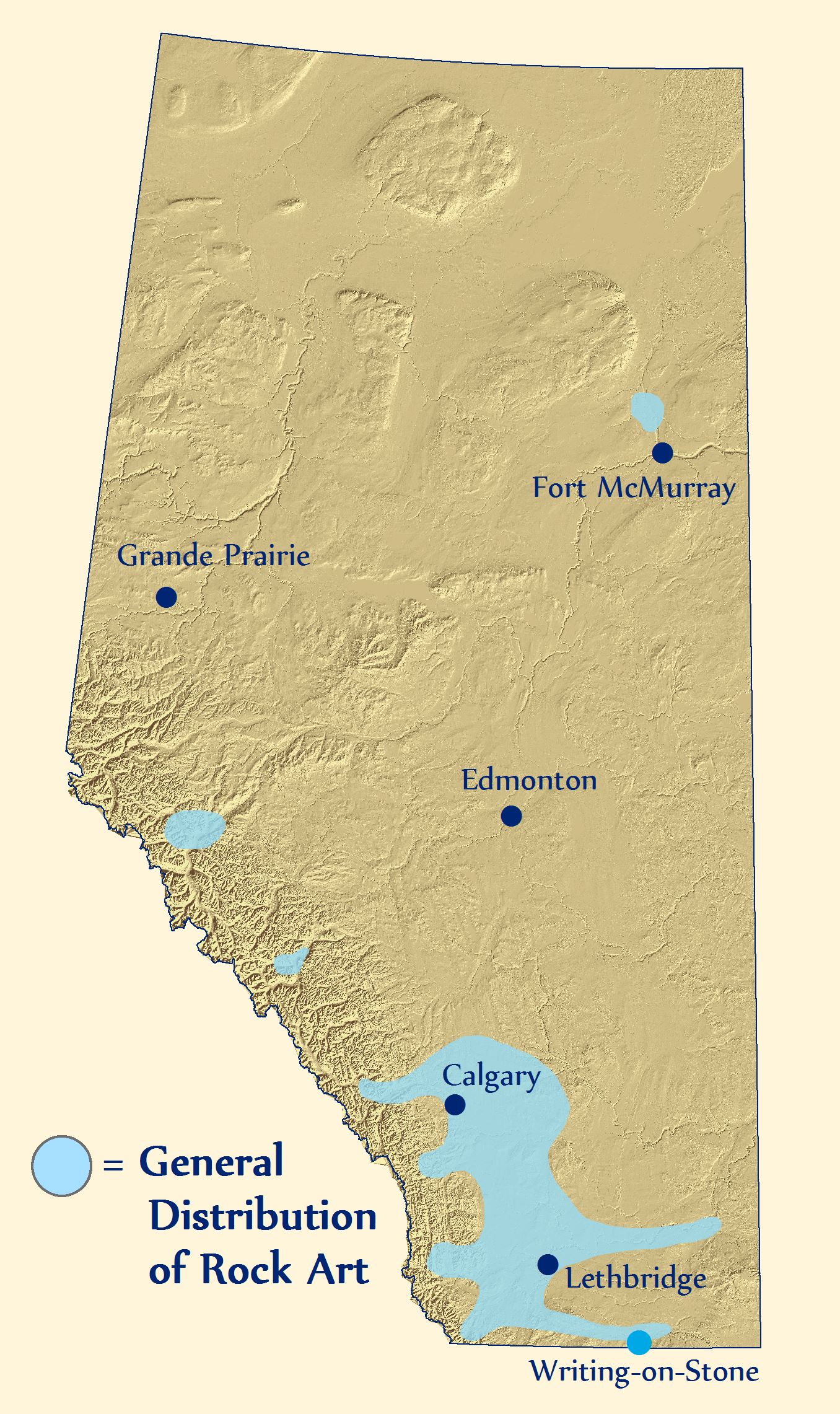
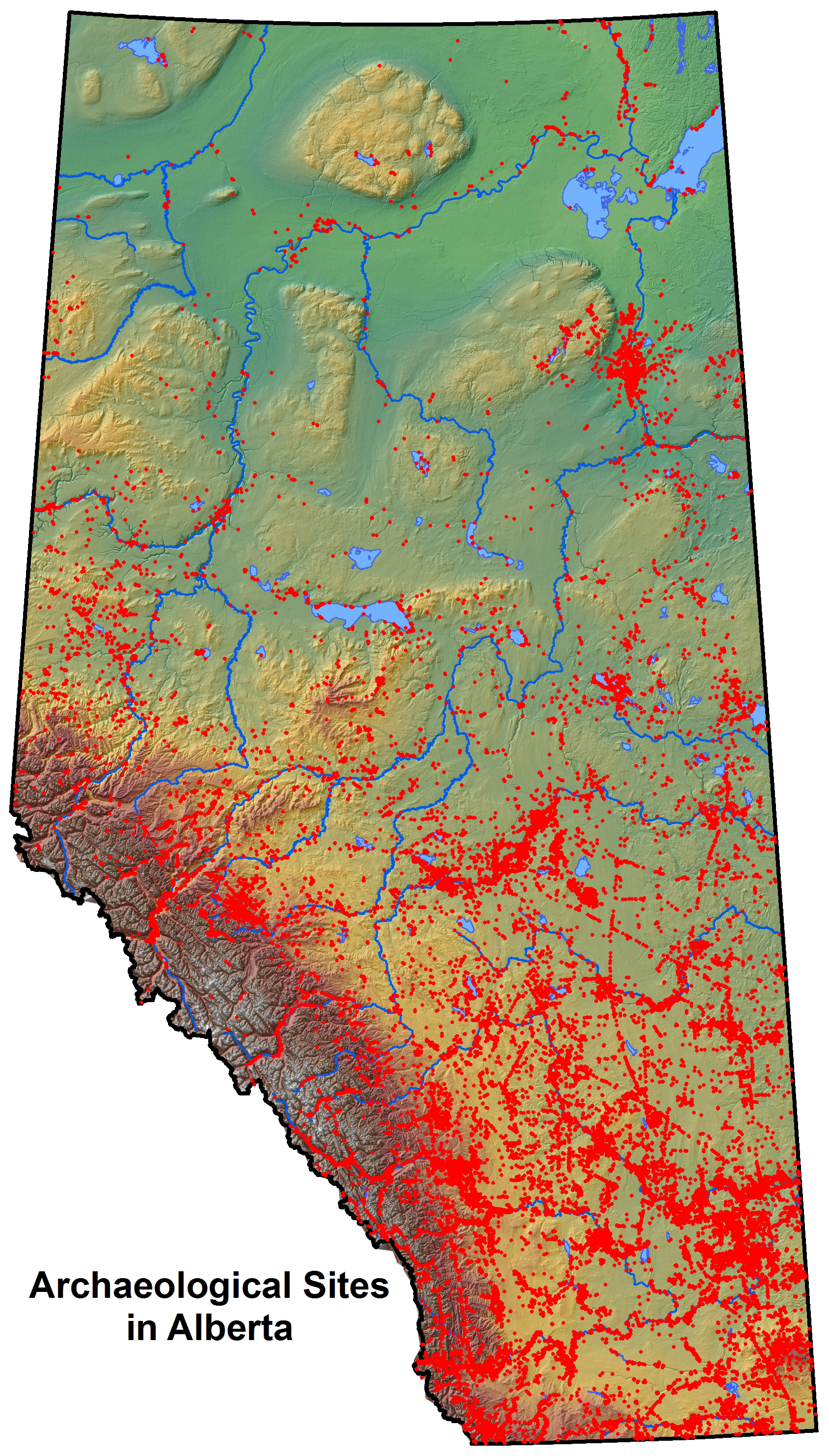
This map depicts the general extent of recorded First Nations rock art in Alberta.
‘En Toto Pecked’ involves figures that were entirely pecked out of the rock wall and this tradition of art appears in Alberta from 2500-1500 years ago. It is thought to have originated in Wyoming.
‘Vertical Series’ may be a type of rock art that acted as a communication system that related events and actors. It may be ideographic (like Egyptian hieroglyphs) with name glyphs like the Mayans of Central America.
‘Columbia Plateau’ refers to vision quest or hunting ritual art thought to be made by people originally from interior B.C. This style of rock art ranges from a few hundred to several thousand years old.
‘Foothills Abstract’ is a rock art style that consists of enigmatic shapes and motifs that may be the work of religious figures. Subjects include handprints, animals (and their tracks), and stylized humans.
‘Plains Biographical’ refers to rock art that documents events, important figures, or tallies of things acquired/exchanged by the Blackfoot and their ancestors.
Lastly, ‘Plains Ceremonial’ refers to spiritually important rock art that is still of great significance to modern Blackfoot Nations. Out of respect for the power of these and other rock art images to modern First Nations, photographs of the various styles of rock art are not included here.
The Milk River Valley Through Time
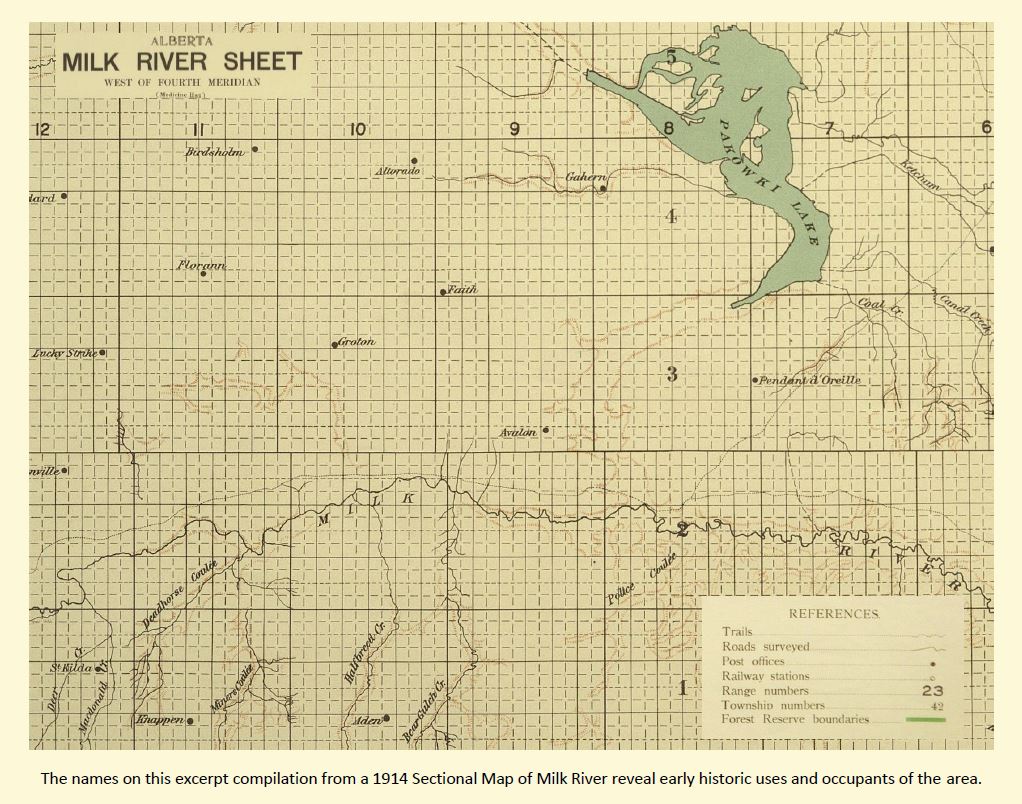
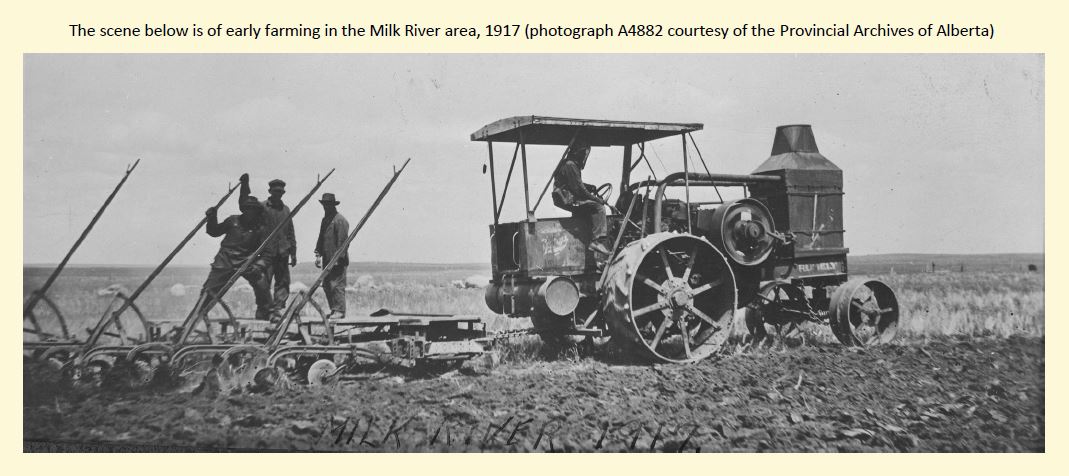
First Nations pursued buffalo herds in the Milk River region and view the valley as a sacred place where stories and dreams were recorded on the rock walls. The earliest Europeans included a mix of traders, coal miners, and Northwest Mounted Police, the early history of which is still recorded in modern place names.
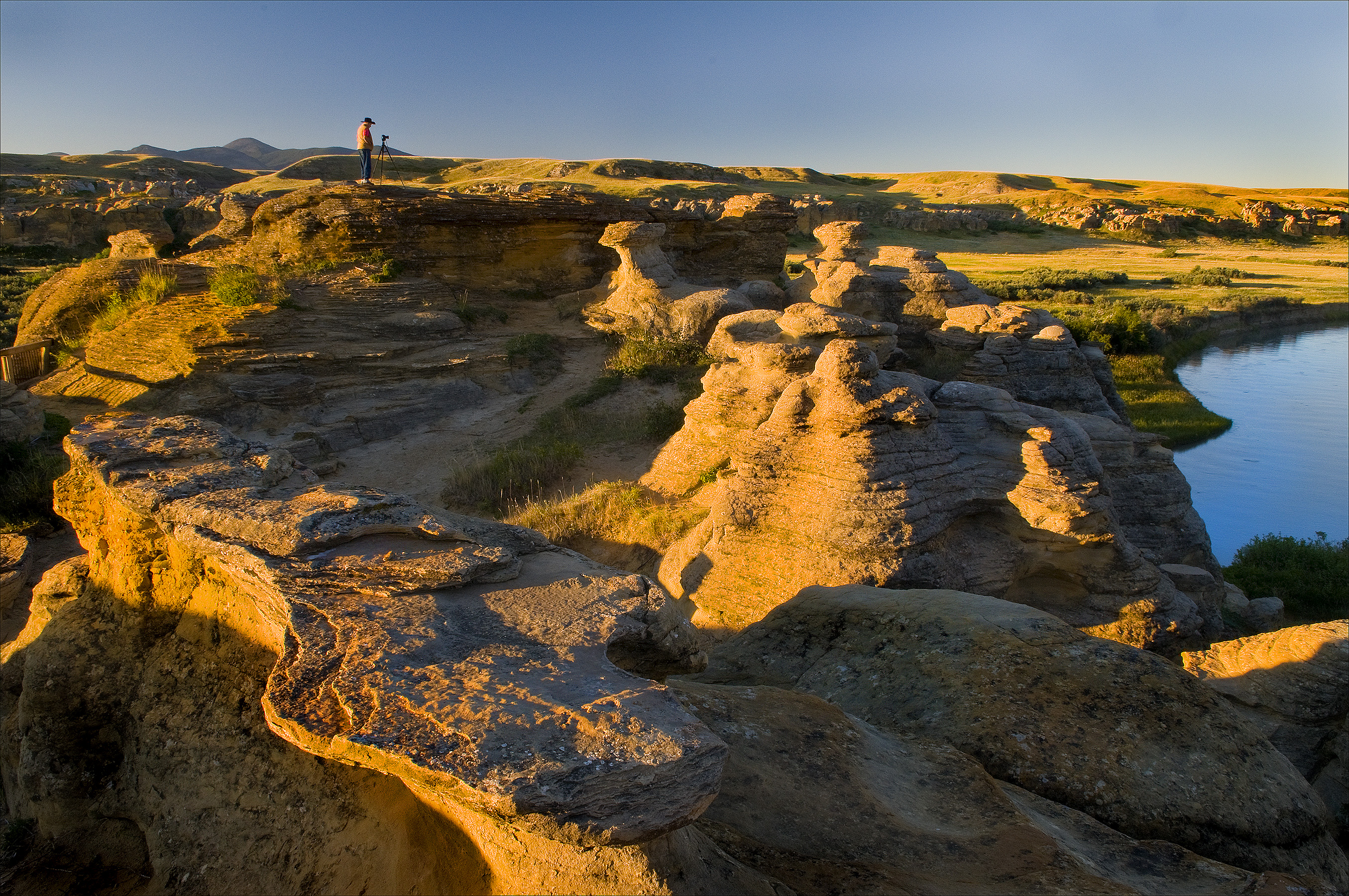
Cattle quickly replaced a vacancy left when buffalo were eliminated in the late 1800s. In addition to ranchers, new irrigation techniques and canals opened up the area to more intensive cultivation. Modern users of the Milk River landscape include farmers, Kainai First Nations, oil and gas operators, ranchers, and people in the tourism industry associated with Writing-on-Stone Provincial Park and National Historic Site (the photograph below is of the morning light on the park’s sandstone hoodoos, courtesy of Robert Berdan). Just as the uses of the Milk River region have changed in the past, they will continue to evolve in the future.
The above painting by Anne McCartney is a textured narrative of landscape change in the Milk River Valley. The background is from an aerial photograph showing irrigated fields creeping to the valley’s edge. At lower right is a looming sandstone cliff that has witnessed a steady flow of First Nations, traders, miners, explorers, and farmers passing through the valley. In the upper left is a rock art panel depicting a battle scene from the deep past. Recent vandalism of that very panel highlights the need to protect and appreciate the landscape of Writing-on-Stone.
Protecting Rock Art Landscapes
The evocative and significant collection of art at Writing-on-Stone is under constant threat. Sadly, vandalism and graffiti have defaced some of the park’s art but through education and restricted access, much of the vandalism has now been curtailed. Instilling visitors with a healthy respect for the spiritual importance of the area to the modern Blackfoot will help ensure that the landscape is protected. Natural erosion, however, is unstoppable.
Much rock art has disappeared over the centuries from weathering of soft sandstone. New technologies are helping to better document the art and may lead to long term methods that slow rates of erosion. The park has been a key site in North America for experimentation with techniques to protect rock art.
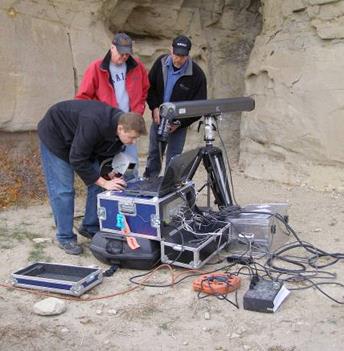
Archaeologists use laser scanners to accurately record rock art panels.
Portable laser scanners have been used to record high-quality images and to produce near-perfect replicas. Artificial drip-lines and plastic caps are diverting water from some exposed panels and a consolidant has been applied in experimental non-rock art locations to test the ability to strengthen rock and prolong the life of rock art images. Note that none of the preservation measures will be applied directly to ancient images without thorough review and cooperation with the Blackfoot people. Rock art left in its natural setting will eventually be lost, but there is much that can be done to enable a prolonged period of appreciation and enjoyment from viewing the hopes and dreams of early artists.
Written by: Todd Kristensen, Northern Archaeologist, and Jack Brink, Royal Alberta Museum
Archaeology Day began in 2011 as an initiative to recognize the work that archaeologists do and to celebrate archaeological discoveries. This event helps to bring public awareness to the work of professional archaeologists.
The day is commemorated yearly on the third Saturday of October and was initially known as National Archaeology Day, which began in the United States. Archaeology Day has grown into an international movement and has become increasingly popular since its inception. Groups from all over the world participate by holding archaeological activities in their own areas. Tours, site digs and lectures give people the chance to experience the thrill of archaeology. Even Jeopardy! is getting on board – on October 17th there will be a special category in honour of the event.
Alberta will join in on the celebrations and the Strathcona Archaeological Society, as well as the Association of Professional Engineers and Geoscientists of Alberta will be hosting a Rock and Fossil Clinic at the Telus World of Science in Edmonton on October 18. The public is encouraged to bring in artefacts and bones to be identified by professional archaeologists, geologists and palaeontologists who will be on hand for this event. Visit here for more details.
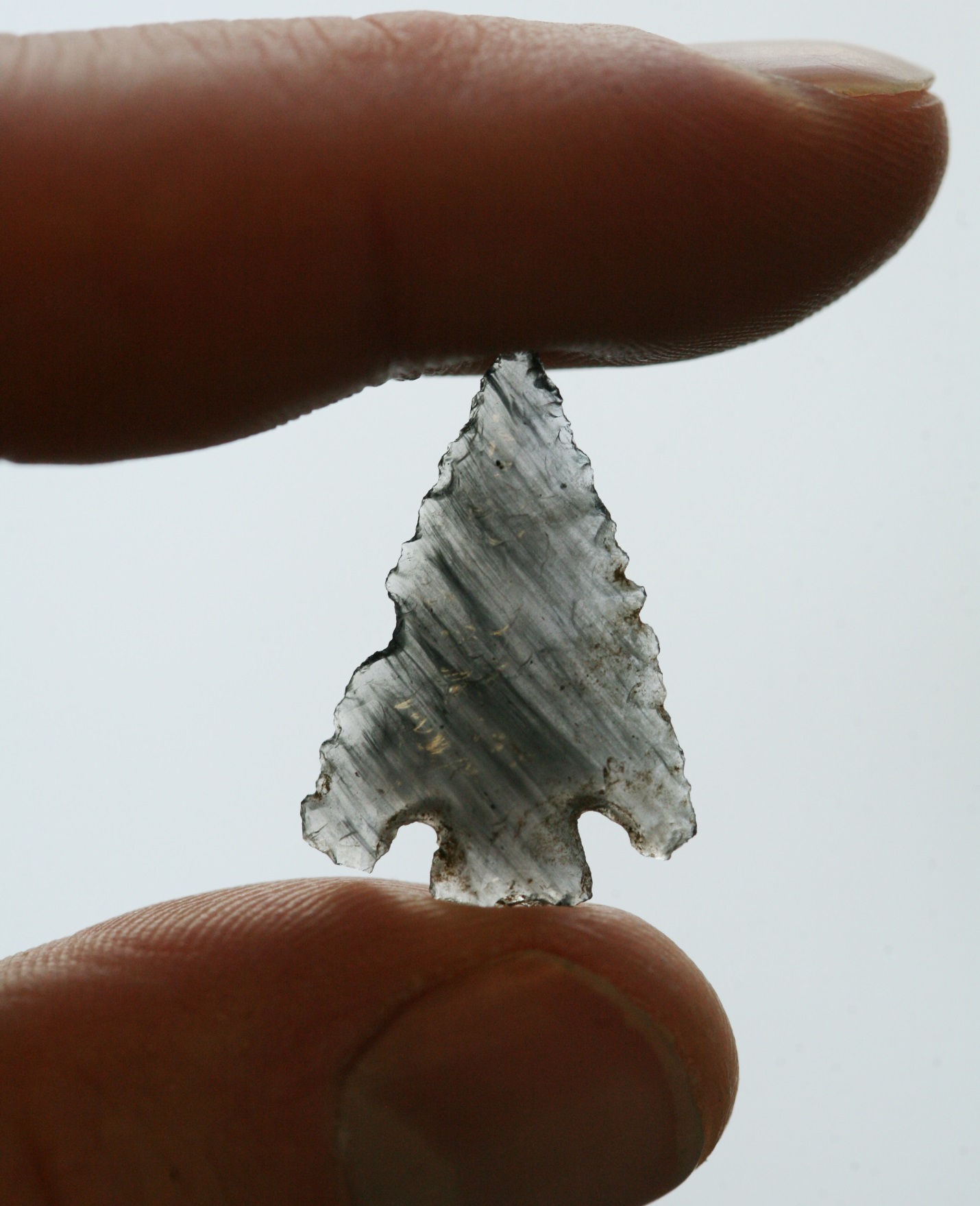
An Obsidian Arrowhead discovered near Worsley, Alberta.
For more information on International Archaeology Day, have a look at the Archaeological Institute of America’s website or blog.
Written by: Erin Hoar, Historic Resources Management Branch Officer.
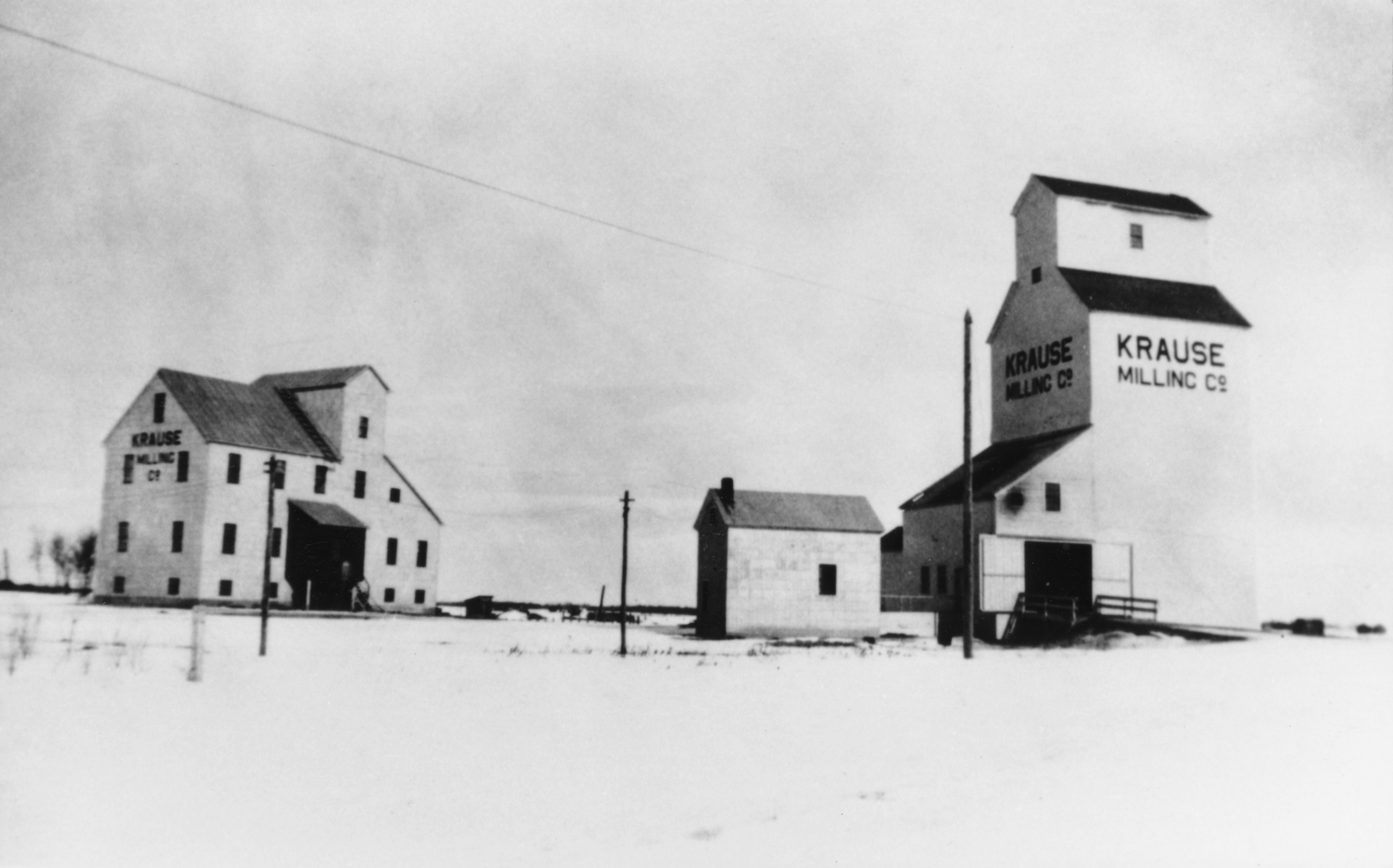
Radway is home to the 1929 Krause Milling Company Grain Elevator. Beside the elevator are the foundations of a once thriving flour mill: together with the elevator it was part of a grist mill operation located on a spur line from the main C.N. line. The mill exemplified the independent local flour milling industry that accounted for nearly one third of Alberta-milled flour in 1937. It was first licensed to produce 125 barrels (11,136 kg) of No. 1 flour per day.
The Krause Milling Company Elevator and Flour Mill, at Radway. (Photo courtesy of the Radway and Area Historical Archives Association Archives.)
Withold Krause, a second generation Alberta grain buyer and miller, who owned several other elevators and a flour mill in Leduc, built the elevator to his own design, and then began construction of the mill, which opened in 1931.The mill was a sturdily-built rectangular three-storey frame building clad with tin sheeting painted white. A basement addition on the northeast corner housed the diesel engine that ran the machinery and the steam boiler that heated the mill. The main line shaft to drive the roller mills ran beneath the first floor.
Withold Krause designed the flow line (machinery layout) inside the mill to give a flow of about 25 bushels of wheat an hour. The first floor, with solid 3 by 10 plank Douglas fir flooring, housed the tempering bin, the roller mills, and also the bagging chutes where the refinedflour ultimately finished its journey. Bags of flour were stacked for sale or collection on the east side of the first floor. The entrance to the mill and the loading platform were on the south side facing the elevator. On the second floor were the scourer and the centrifugal cloth sifters. The third floor housed a holding bin for wheat, the cylinder where the wheat was washed, and the final sifter.
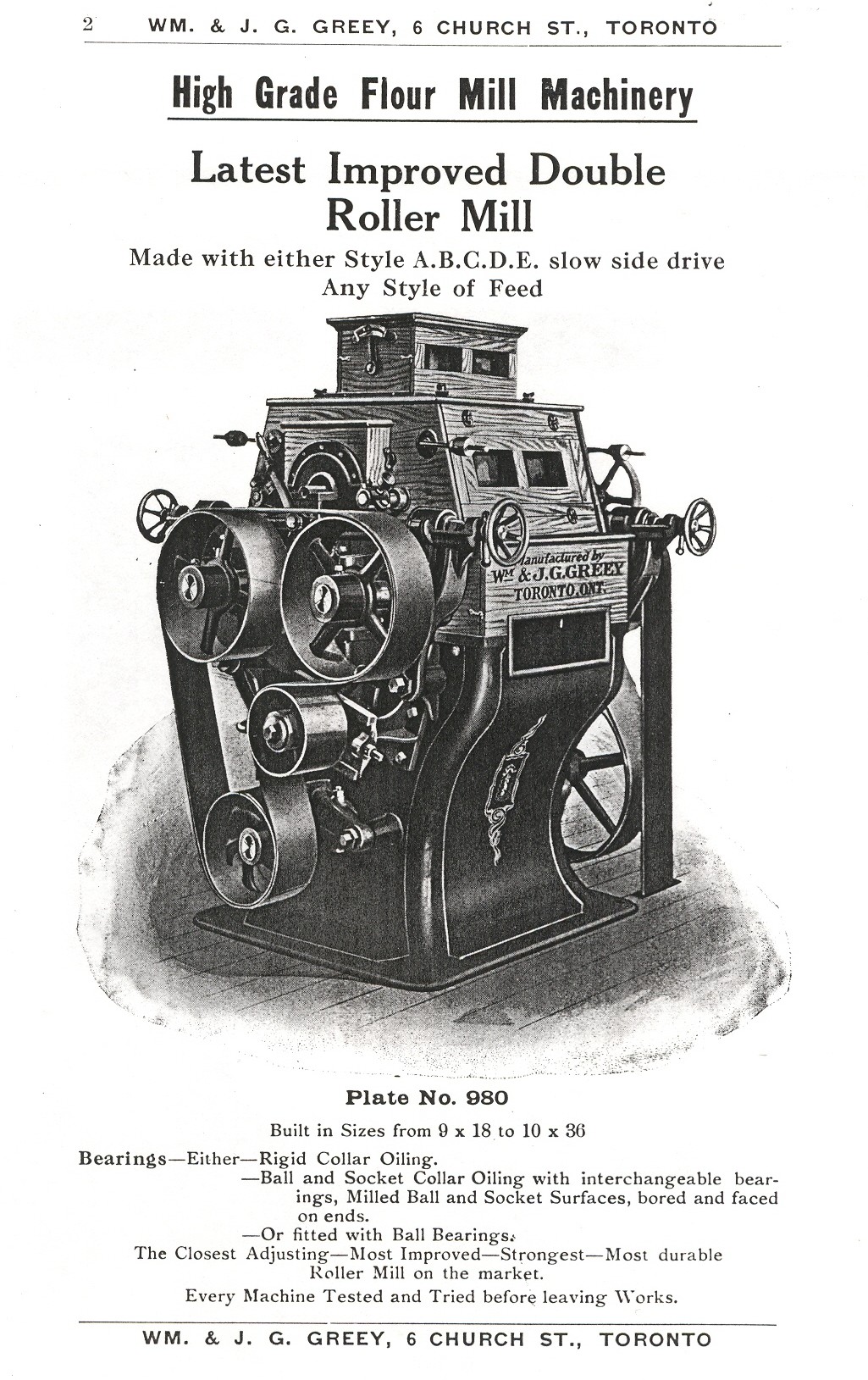
Roller mills of the type used in the Radway Mill. (Image courtesy of the Radway and Area Historical Archives Association Archives.)
Milling involved a number of steps before flour was produced. Wheat cleaned in the elevator was hauled to the mill to be scoured, washed, tempered and sent to the roller mills. The wheat was run through five roller mills referred to as breaks: each ground the wheat more finely. Each roller mill was connected with a sifter for bolting (refining) the stock (the wheat after the first break). A system of numerous small elevators (cups attached to webbing fabric moving inside wooden chutes), moved the stock between machines and from floor to floor. The flour produced was given a final sifting and bagged. Krause ordered plan white bags without the company’s logo during the height of the depression as so many people wanted to reuse the fabric for clothing.
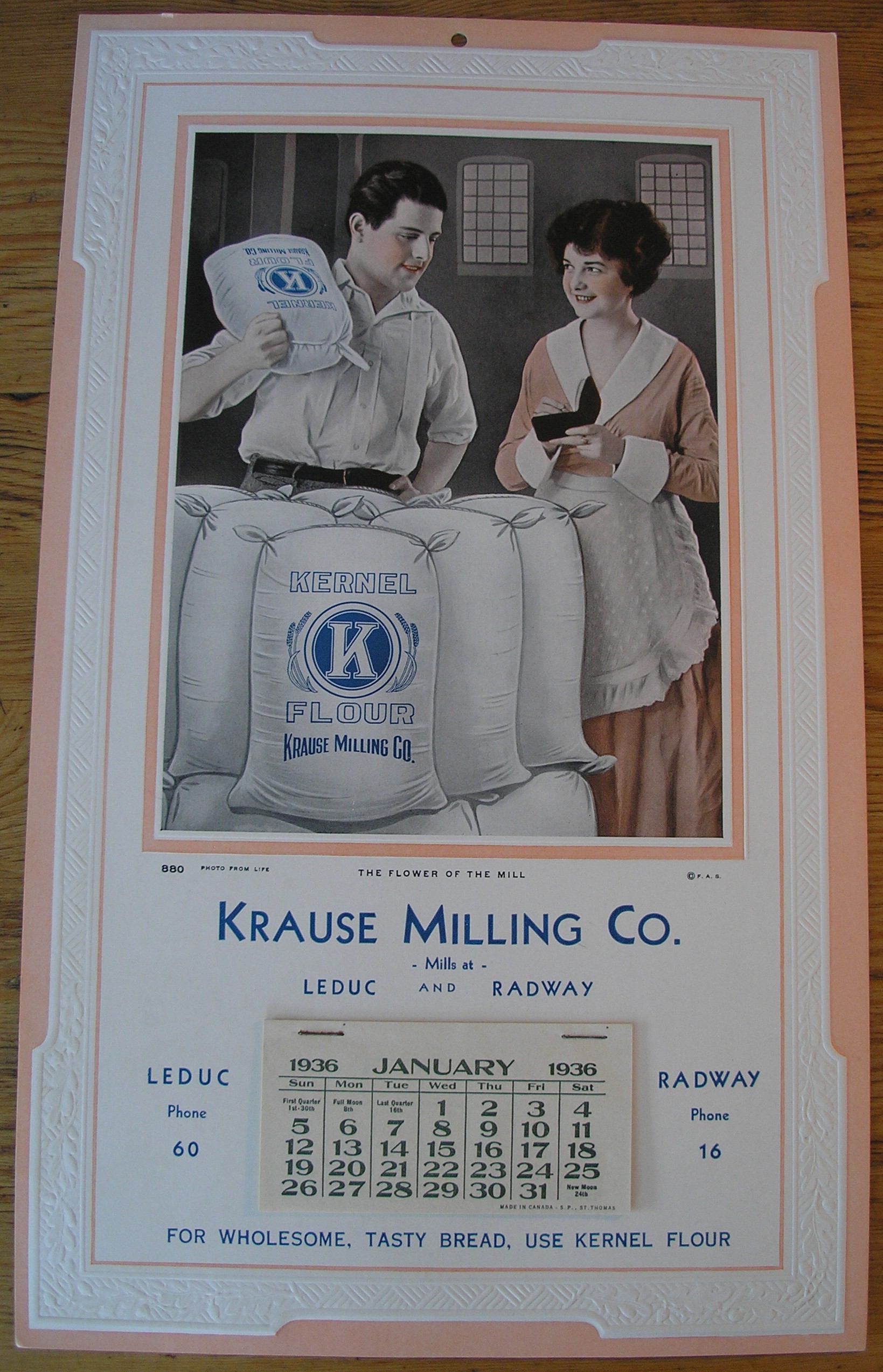
In the 1930s Krause operated mainly as a grist mill; he took in farmers’ grain at his elevator and they took home its value in flour and by-products such as shorts and bran, picked up at the mill door. Swapping wheat for flour appealed to farmers in a cash-strapped economy. At Radway the farmer did not actually get his own wheat ground. His load of wheat, weighed and graded at the elevator, was given a value in terms of Number 2 Northern Wheat (milling grade) and he was entitled to the flour products from this amount of wheat less a gristing charge of 25 cents per bushel. In his best years, 1932-1933, Krause cleaned about 50,000 bushels of wheat in his elevator and milled it into number one “Kernel” flour and “Creamo,” cream of wheat cereal.
Withold Krause promoted Kernel brand as just as good as the purest of white flours produced by the large milling companies. (Image courtesy of the Radway and Area Historical Archives Association Archives.)
Krause operated the mill during the day time, which was just as well for the village as the mill was powered by a thundering Fairbanks-Morse two-cylinder, two-cycle, 120 horsepower diesel engine. As the engine burst into life, Krause’s son, Vernon recalls “the whole town would shake.”
During World War II, as flour mills in Europe shut down and flour was urgently needed for the war effort, Krause and other millers had limited access to wheat. The Canadian Wheat Board allowed small millers a subsidy on flour sold domestically to compensate, so Krause concentrated on milling for sale, selling in Edmonton and from the mill door.
After the war Krause sold the mill. From 1949 Fred Weder operated the elevator and flour mill business under the banner of the International Grain Company and Radway Flour Mills, respectively. There was a big change in how the mill was operated. Weder ran the mill 24 hours a day, six days a week, producing 140 pound (64 kg) jute bags of low quality unbleached flour for export to countries in the Far East starving due to the ravages of World War II.. Weder shifted the huge diesel engine aside and installed an electric motor. The mill started up at the flick of a switch, and ran quietly ensuring Radway residents got some sleep!
Three two-man teams—a miller and a helper/bagger—operated the mill in eight hour shifts around the clock. More workers were needed to haul clean wheat from the elevator to the mill and load the bags into railcars. The mill crew, mostly local young men, lived in a bunk house nearby. They pushed out at least three box cars of flour a week, over triple the production of the Krause years.
This new level of production took its toll on the flour mill. By 1953 the milling rollers had been pushed to their limit and all the equipment was in need of overall. Fred Weder closed the operation and put the mill up for sale. There were no buyers, and eventually it was dismantled for salvage. Today, the Krause elevator, the only remaining country elevator in Alberta that is associated with the flour milling industry, stands alone next to the foundations of the mill that it once supplied.
“Putting dots on paper maps”—that’s how Eric Damkjar, Head of Archaeology at the Archaeological Survey Section of the Historic Resources Management Branch, describes his section’s old methods of recording archaeological site locations. In his words, “We have on record approximately 40,000 archaeological sites … We used to manage that information with hand-drawn dots on paper maps, and that’s a very arduous system.” But about ten years ago the branch obtained funding to create a geographic information system (or GIS) for the information—basically a computerised map”. Damkjar, a former consulting archaeologist who says he’s always had a technical bent, “jumped at the chance” to work on this new initiative.
Embracing technology, particularly GIS mapping, has dramatically changed the way that the Archaeological Survey Section regulates development. Indicating the proposed footprint of the development on a computerised map is much easier and more accurate than the old system of pulling out the relevant paper map and laboriously drawing in the footprint by hand. Also, the electronic footprint provides instant access to a variety of related electronic records that formerly had to be retrieved by hand and reviewed on paper.
The potential of electronic mapping and electronic databases of information go far beyond improving the section’s abilities to regulate development. Paper maps indicating the location of 40,000 historic resources—along with archaeological reports numbering in the thousands—were, as one might expect, extremely difficult to access. When reports only existed in paper form, an individual who wanted to do research had to physically go into the basement and pull a report off the shelf. “Our unit,” says Damkjar, “was basically trying to unlock the vault of archaeological information that was sitting there, tied up in paper, and to make it more accessible [not only for] our … regulatory actions, but also for research.” One goal for 2014 is to create a web portal consisting of a mapping viewer that the public can use to access and view information about archaeological sites.
Damkjar is also eager to make the information that has resulted from the regulation of development more readily available. Every year millions of dollars are spent by industry on archaeological studies, because the Historic Resources Management Branch frequently requires industry to do excavations of sites slated for potential development. Since 1973, there have been approximately 7,000 archaeology projects undertaken in the province. “There’s a valid point in wondering what is the point of excavating these sites if you’re not going to learn anything from it”—in other words, if that information is not going to be made more accessible to the public and to scholars, says Damkjar.
Synthesizing work that has been done by digitizing reports and building databases and electronic maps will help Albertans improve their understanding of the “big picture” of the province’s historic resources. “We can now study the distribution of ancient land use across the province,” says Damkjar. “We can look at where in Alberta different sites are distributed—that used to be very daunting when it was in paper.” The ultimate goal, in Damkjar’s view, is to translate, digest, and synthetize the existing information that the province holds on all its historic resources and in so doing, create a “higher level of understanding” of Alberta archaeology as a whole. Significant progress has been made by staff at the section, who have published books and articles aimed at both amateur and professional archaeologists.
The vision Damkjar has is to “create an environment where we can have dynamic links between archaeological site location information [in GIS] … artifact information, and photographs that are submitted in reports and so on, and create a kind of unified electronic environment where researchers, regulatory people like ourselves, and consultants can work from their desktops and look at the full spectrum of information.” Damkjar notes that “there’s still a lot of work to be done on that front”—but that goal is vastly more achievable now thanks to the evolving technology.
In August of 1914, Canada entered the First World War, an arduous experience for Albertans who served on the battlefront and for those who remained in Canada. Thousands of men enlisted and quickly left Alberta for the front, leaving a gap in both the workforce and civil society. During the war, women took on many of these roles, opening a realm of new possibilities. Women helped raise funds for the Canadian Red Cross Society and entered the workforce, while others enlisted in the medical core as nurses. This post will give an overview of Canadian women in the First World War by looking at the shift in traditional labour roles, Canadian nurses and the voluntary initiatives that women organized. It is important to recognize the sacrifices that were made by these women and to show how they contributed to the war effort, on the home front as well as overseas.
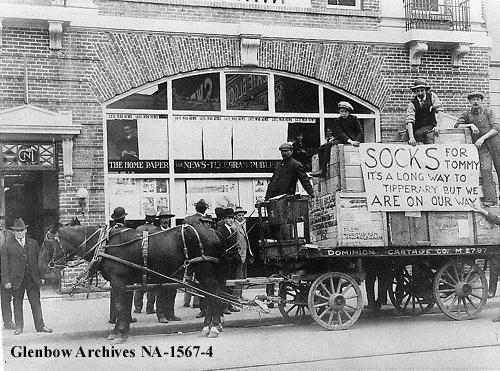
Wagon loaded with socks for soldiers in Calgary, Alberta, ca.1916. (Glenbow Archives, NA-1567-4)
For most Canadian women, participation in the First World War was limited to serving on the home front. With almost 50,000 of Alberta’s men deployed overseas, this created openings in the service and farming industries back home. The demand for more workers increased and jobs that were traditionally reserved for men were opened to women for the first time. The need for additional labour differed by region across the country. Central Canada, for instance, experienced a greater need for employees to work in munitions factories, while in Alberta, labourers were needed to assist with farm work. Other positions that women filled were administrative clerks, factory workers and as delivery vehicle drivers. Female participation in the clerical and banking fields increased significantly and there were women who remained in this line of work even after the war ended. Women were exposed to more job opportunities than ever before, whereas prior to the First World War, they were largely limited to domestic duties.
Between 1914 and 1918, there was an overwhelming need for labour and this compelled employers to hire women. Many employers, and even some women, viewed the female worker as a temporary substitute needed to meet a wartime emergency. Not surprisingly, women faced opposition at times for their participation in the workforce, particularly during the initial outbreak of the war in the street railway service and banking fields. In several cities across Canada, male workers with the railway system were outraged that women were allowed to be hired as conductors on their cars. While some areas disapproved of women taking on non-traditional labour roles, other employers recognized that women were a much needed source of labour. The Canadian government hired 1,325 women in civilian jobs, such as clerks and typists, with the military. Another 1,200 women were employed by the Royal Air Force in Canada to work in mainly technical positions, and by 1918, they had hired 750 female mechanics. This indicates that the prejudice against working women had to be overruled in order to alleviate the shortage of manpower. The war produced a necessity for human labour and this opened up a wider array of opportunities for women. The roles that women stepped into during the war years had a significant impact on the province by challenging traditional gender roles and began legitimizing the idea of women in the labour force.
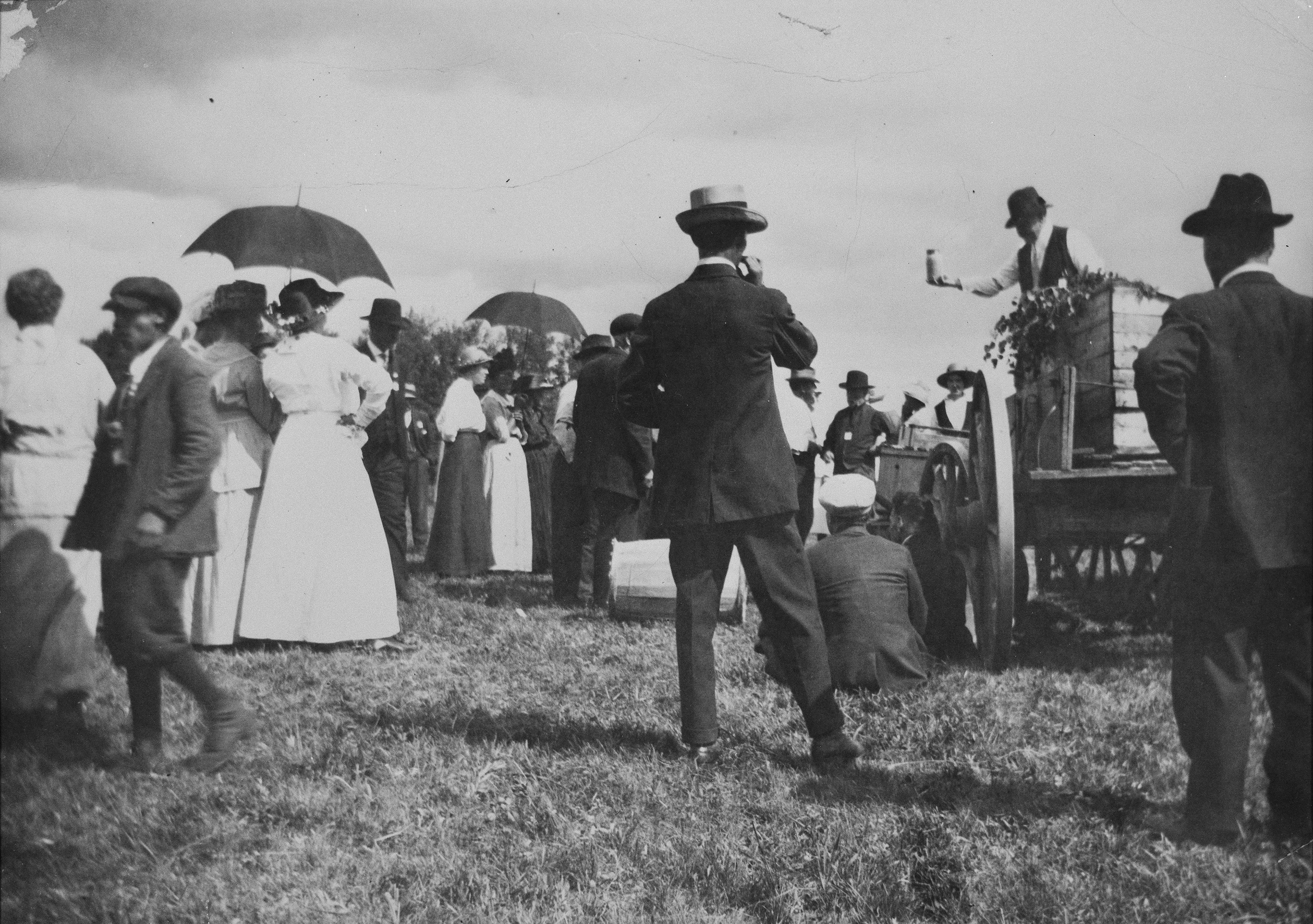
Crowd gathered for Patriotic Day and Red Cross sale at Two Hills, auction at Fred Schoff Store to raise funds for WW I, 1917. (Provincial Archives of Alberta, A10676)
Many women initially entered the labour market to demonstrate their patriotism, but this move had a number of positive effects. There was an increase in financial opportunities for women and wage disparity between men and women began to lessen. In addition, the war opened up a whole host of social opportunities. Women were participating more in the public sphere, both in the workforce and social circles, and this provided the foundation for a fervent energy that helped to ignite the women’s movement across Canada. Women desired greater participation in politics and the idea that women should vote and run for office quickly became mainstream. On April 19, 1916, this right was granted to Alberta women. Obtaining the vote was an achievement which contributed to an increased political consciousness amongst women in Alberta. This momentum continued and by the following year, Louise McKinney and Roberta MacAdams, had become the first women to be elected to the Alberta legislature. The dramatic increase of women in the labour field and social community was a significant force that paved the way for women’s rights in Canada.
Future member of the Alberta Legislature, Lieutenant Roberta MacAdams, was a dietician stationed in England during the First World War, 1917. (Provincial Archives of Alberta, A13185)
There were a number of Canadian women who contributed their services abroad, primarily in the medical service field. The Canadian Army Medical Corps required a number of trained nurses to help provide medical care to Canadian soldiers. Trained nurses joined the Nursing Sisters of Canada and there was no shortage of volunteers. 3,141 nurses served in the medical core, with 2,504 of those serving overseas. There were women from Alberta who enlisted as military nurses and at the initial outbreak of the war in 1914, 10 nurses from Edmonton went abroad and assisted the troops serving on the front. Canadian nurses worked tirelessly to provide medical services to those who were wounded in battle and cared for recovering soldiers. They were commonly known as “bluebirds” due to their uniform colours. Later on, the nurses were referred to as the “Sisters” or “Angels of Mercy” by the soldiers. These monikers are indicative of the caring service that the nurses provided and were often praised for. Throughout the First World War, Canadian nurses were commended for their heroism and became well known for their compassion when treating the afflicted.
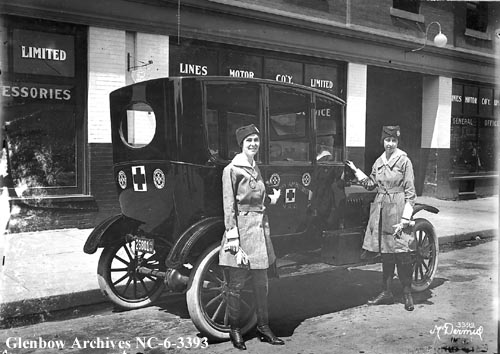
Women without nursing experience could enlist through the Voluntary Aid Detachment which was operated by the Canadian branch of the St. John Ambulance. V.A.D. nurses received basic first aid training and worked in hospitals as medical assistants and carried out general duties such as cooking and cleaning. The role of the V.A.D. allowed women who were not trained as nurses to be directly involved in the war efforts and approximately 2,000 Canadian women served as unpaid nurses during the First World War. Around 500 were sent to Europe and the majority remained at convalescent hospitals in Canada. Nine Edmonton women were trained as V.A.D.s and deployed overseas.
St. John Ambulance Voluntary Aid Detachment vehicle, Edmonton, Alberta, 1918. (Glenbow Archives, NC-6-3393)
The First World War brought changes to the military medical services. Medical units were originally established in hospitals and then Casualty Clearing Stations were created near the frontlines to give faster treatment to the soldiers injured in battle. While this provided better service for the wounded, it put Canada’s nurses closer to combat. They faced the danger of enemy artillery attacks, air raids and also endured vermin, fleas and disease, just as the men in the trenches. Canadian nurse, Katherine Wilson-Simmie, details her account in The Memoirs of Nursing Sister Kate Wilson, Canadian Army Medical Corps, 1915-1917. While stationed near the front lines, Wilson-Simmie witnessed an unforgettable day when the first gassed soldiers were admitted for medical assistance. She describes the event as “an entirely new kind of warfare – horrible, and contemptible. It was a terrible experience for the men and for those trying to help them.” Women not only observed the abysmal conditions of war, they were eyewitness to the immediate impact that battle had on human life.
As the nurses returned from overseas, they could take pride in the contribution that they had made for their country, but they had also witnessed firsthand the devastating toll of war. Approximately 50 Canadian nurses lost their lives in the First World War. The Canadian Nursing Sisters are commemorated at The Nurses’ Memorial on Parliament Hill, Ottawa.
Women supported numerous initiatives across Canada and overseas during the First World War, but the Canadian Red Cross Society (CRCS) was the primary humanitarian organization in the country. Women were eager to serve the Red Cross which gave them the opportunity to participate in the war from the home front. The society provided aid and comfort to soldiers and their families who were affected by the war and women supported these relief efforts in a number of ways. They fundraised, distributed gifts, prepared care packages and medical supply kits as well as knitted extra clothing to send to soldiers.
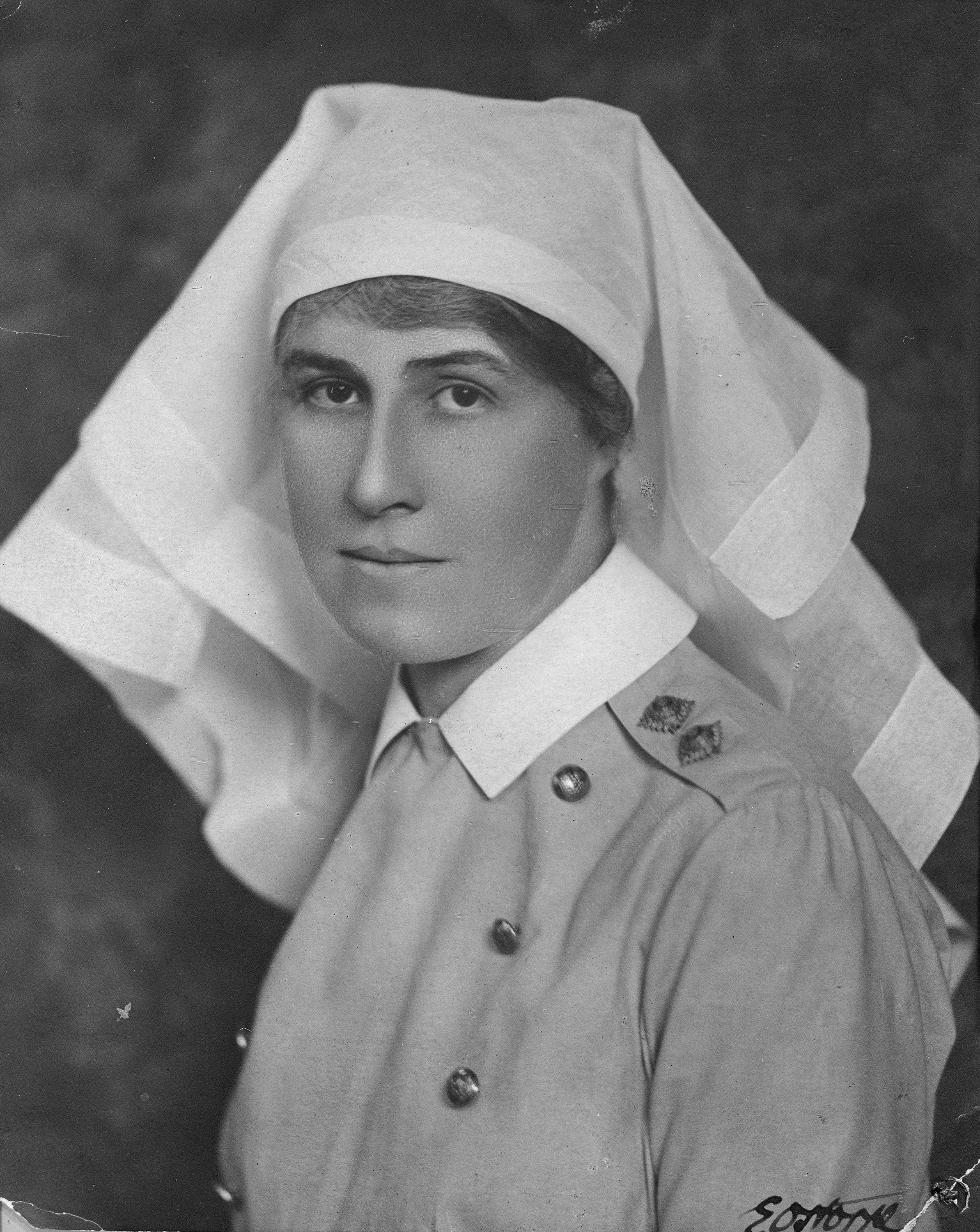
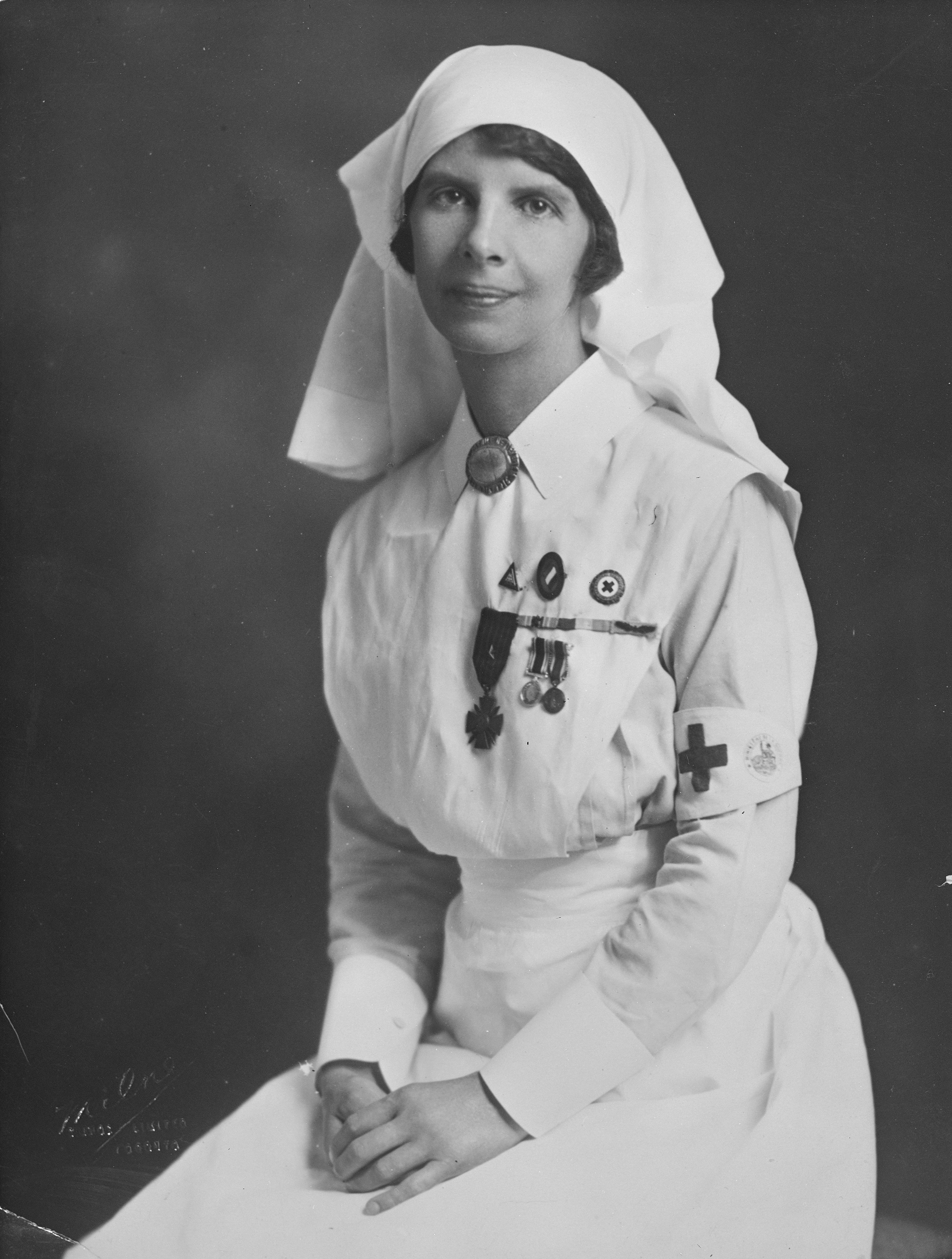
When the war was declared, women endorsed the work of the Red Cross Society without hesitation and a number of auxiliaries emerged across the country during this time. This support allowed the Canadian Red Cross to provide relief assistance and volunteers visited recovering soldiers in British hospitals, attempted to trace missing people and helped Canadians correspond with their families and friends abroad. The society also worked with Red Cross affiliates overseas to fulfill requests for medical assistance when possible. A volunteer, and later Alberta resident, Madeleine Jaffray, was one of ten Canadian nurses who were recruited through the Red Cross to serve in the French Flag Nursing Corp. In Belgium, just miles from the frontlines, Jaffrey’s unit was frequently targeted by bombs. During one attack, her foot became severely wounded and was later amputated. She was awarded a French military medal, the Croix de Guerre, for her service and was the first Canadian woman to receive this honour.
Formal portrait of Madeleine Jaffray in nurses’ uniform, ca. 1919. (Provincial Archives of Alberta, A14050)
With the help of donors and dedicated volunteers, the Canadian Red Cross Society established a headquarters in London, so they could better coordinate with the people on the front line in France. The organization also helped to create and maintain hospitals for soldiers who were wounded in battle. The Red Cross played a significant role by providing comfort and support services to Canadians. This was made possible through the voluntary services that were initiated by women on the home front. The Red Cross was a valuable organization in a time of need and gave women a variety of ways to help their loved ones who had gone overseas to war.
Alberta women contributed to the Canadian efforts to win the First World War in many ways. Initial participation in the war efforts was largely out of patriotic respect, but a number of outcomes emerged as a result. Notably, there was an increased female presence in civil society and the Alberta suffragist movement emerged. The efforts displayed by women during the Great War are remembered for the impact that they have had on women’s history in Canada.
This was the second part of a series commemorating the First World War. This series will look at a range of topics that will show Alberta’s involvement in this historic event.
To learn more about women in Alberta’s history, refer to the Alberta Women’s Memory Project, an initiative that was created to preserve and promote the history of women in Alberta.
Written by: Erin Hoar, Historic Resources Management Branch Officer
Sources
Byfield, Ted, ed. Alberta in the 20th Century: The Great War and its Consequences 1914-1920. Vol. 4. Edmonton, Canada: CanMedia Inc., 1995.
Dundas, Barbara. A History of Women in the Canadian Military. Montreal: Art Global and Department of National Defense, 2000.
Glassford, Sarah, and Amy Shaw, eds. A Sisterhood of Suffering and Service: Women and Girls of Canada and Newfoundland During the First World War. Vancouver: UBC Press, 2012.
Love, David W. A Nation in Making: The Organization and Administration of the Canadian Military During the First World War. Vol. 2. Ottawa: Service Publications, 2012.
Payne, Michael, Donald Wetherell, and Catherine Cavanaugh, eds. Alberta Formed Alberta Transformed. Vol. 2. Edmonton, Canada: University of Alberta Press, 2006.
There are just over two weeks left until the Municipal Heritage Forum gets underway in Lacombe. After upping our numbers (twice!) we have approximately 20 spots left for those of you who haven’t yet registered. Online registration closes Tuesday October 7th at 11PM.
This year we have another great mix of speakers to get you thinking about heritage conservation in Alberta. In addition to our keynote speakers Kayla Jonas Galvin and Larry Laliberte who will be showcasing our theme of “Conservation Through Technology and Innovation”, we will have nine Municipal Show & Tell presentations and ten break-out sessions. Speakers will be talking about all things heritage including: mapping projects, alteration approvals, heritage awards programs, social media and sustainability (among others), as well as case studies from several Alberta communities who are being creative in their approach to heritage awareness and conservation initiatives. In addition to the presentations, the Lacombe and District Historical Society will be hosting us on a walking tour of historic downtown Lacombe. This year we have the additional fortunate to have the Forum coincide with the biennial AHRF Awards ceremony.
Click here to access a copy of the Forum program, including descriptions of the presentations.
There are always new people to meet and great conversations to be had. We look forward to seeing you there!
The Board of the Alberta Historical Resources Foundation met in Pincher Creek, September 12th-13th, 2014. Since this meeting was not one where the Board was actively adjudicating many grant applications, the focus was more on policies and other planning to help conserve and celebrate Alberta’s heritage.
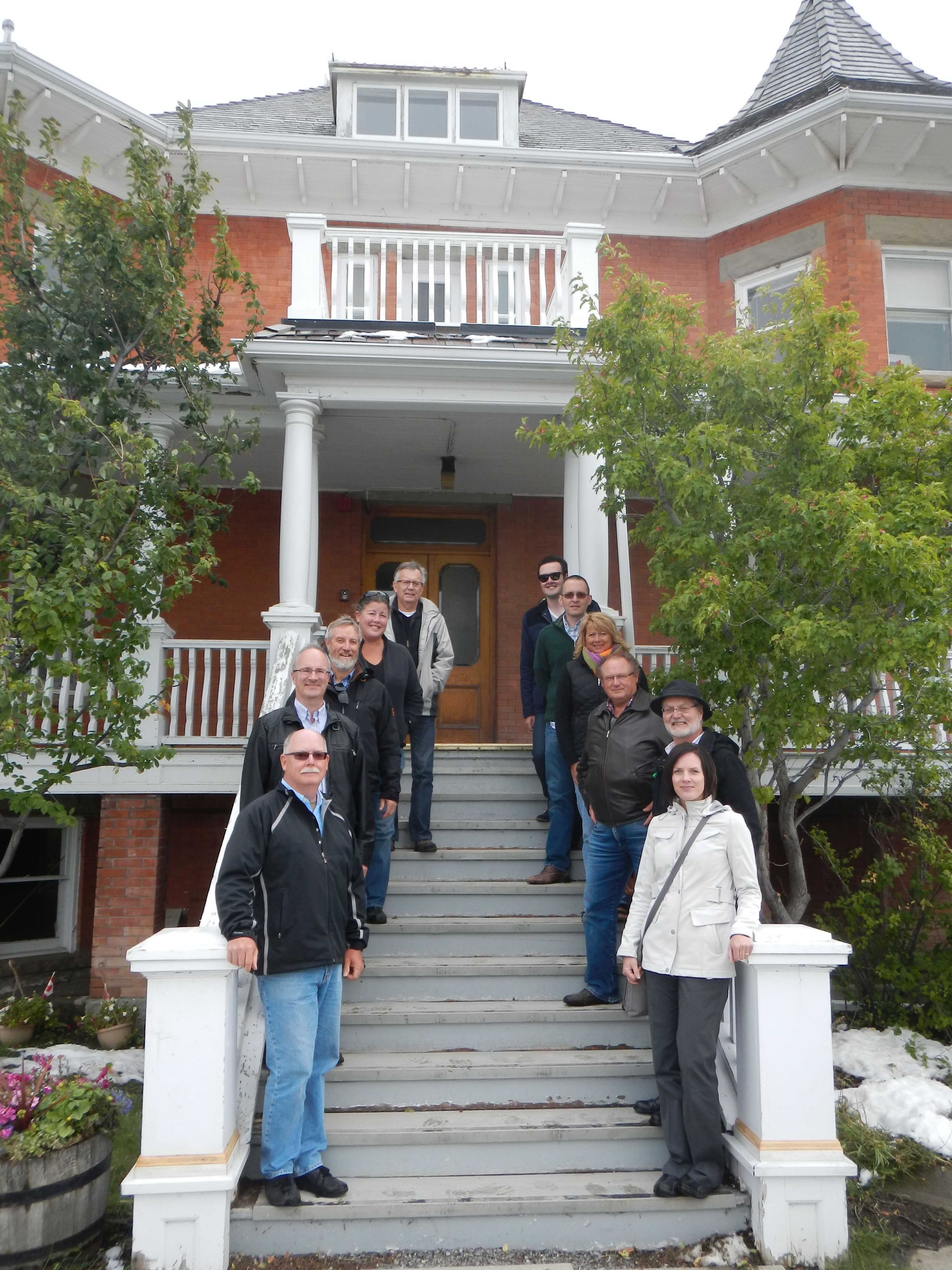
The Board of the Alberta Historical Resources Foundation, on the steps of Lebel Mansion, the Town of Pincher Creek’s first designated Municipal HIstoric Resource.
As is their custom, Board members took the opportunity to explore some of the local historic places in the community where they met. The Town of Pincher Creek’s Director of Community Services, Diane Burt Stuckey, and Curator of the Kootenai Brown Pioneer Village Museum, Farley Wuth, led an informative tour of locally significant historic places, as well as two community museums.
Some of the historic places featured on the driving tour included an historic buffalo jump site on the west side of town, and also the Lebel Mansion, newly designated by the Town as as Municipal Historic Resource. Originally built as a grand residence by the merchant Timothee Lebel, the building later served as hospital, and now as the home for the Allied Arts Council. It is a great example of another historic place serving the cultural community in Alberta.
After a visit to Heritage Acres Farm Museum, where the Board was able to see first-hand the extensive collection of agricultural equipment, Board Chair Fred Bradley facilitated a meaningful conversation with local heritage-sectors leaders and municipal officials, including Town of Pincher Creek Mayor Don Anderberg, and M.D. of Pincher Creek Reeve Brian Hammond. The Foundation was able to hear and discuss issues that are important to local communities working hard to conserve their heritage.
After a busy day of seeing the sites and learning more about the history of Pincher Creek, the Board settled in for its day-long meeting, involving a broad range of issues affecting the heritage community across Alberta. Future posts will showcase some of the decision made in Pincher Creek, so stay tuned to RETROactive!
The next meeting of the Alberta Historical Resources Foundation will take place in Edmonton, November 28th-29th.
Though I can’t imagine what could be more riveting than reading about administrative procedure, I’ve been told that some people might not feel the same way. So since not all our blog posts can be nail biters I will have to ask folks to bear with me on this one. This post might be a bit dry but it does include important information about the Municipal Heritage Partnership Program (MHPP) for interested applicants.
Those of you who have applied for Municipal Heritage Partnership Program (MHPP) funding for a survey, inventory or management plan in the past will likely have visited the MHPP website to obtain information about the grant categories, funding parameters and suggested application information. I am pleased to report that we now have all the information necessary to put together your MHPP grant application available as a Guideline document. This handy reference outlines the three grant categories and details the policy and procedures around the funding process, including eligibility requirements, application deadlines, in-kind contributions and timelines as well as an application checklist. You can access a copy by clicking here.
I encourage those of you looking to apply under one of the MHPP grant categories to use the Guidelines as a point of reference. Here is a summary of the highlights:
Applicants must be municipal governments
There are no application deadlines – applications will be presented at the next applicable quarterly meeting of the Alberta Historical Resources Foundation for consideration
The decision on the grant application will be made by the Alberta Historical Resource Foundation
Funds are allocated through a grant agreement between the municipality and the Alberta Historical Resources Foundation
Payment is issued over the course of the project as outlined in the grant agreement and is payable upon receipt of an invoice from the municipality
The municipality must contribute a minimum of 50 percent of the project costs, of which half may be in-kind contributions
In-kind contributions include volunteer time, staff time, donated professional services and materials, office space, use of telephone/fax/computer/internet services, donated materials and supplies
Final reporting requirements will be outlined in the grant agreement
Please contact Matthew, Michael or myself with any questions you may have about the MHPP grant application process. For those of you who actually read this far, well done! If it weren’t for Internet copyright issues I would reward you with a picture of an adorable puppy.
Written by: Rebecca Goodenough, Municipal Heritage Services Officer
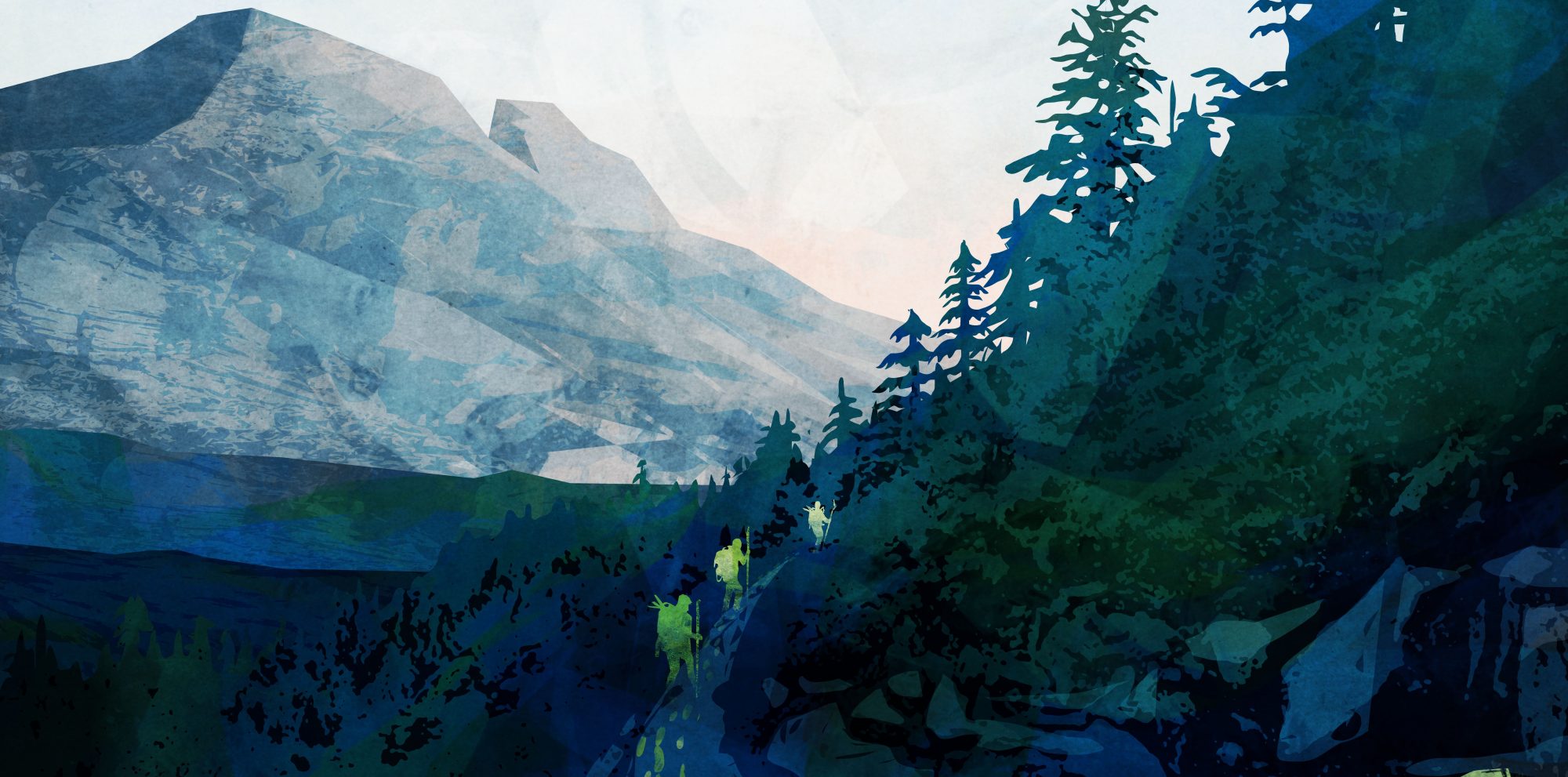
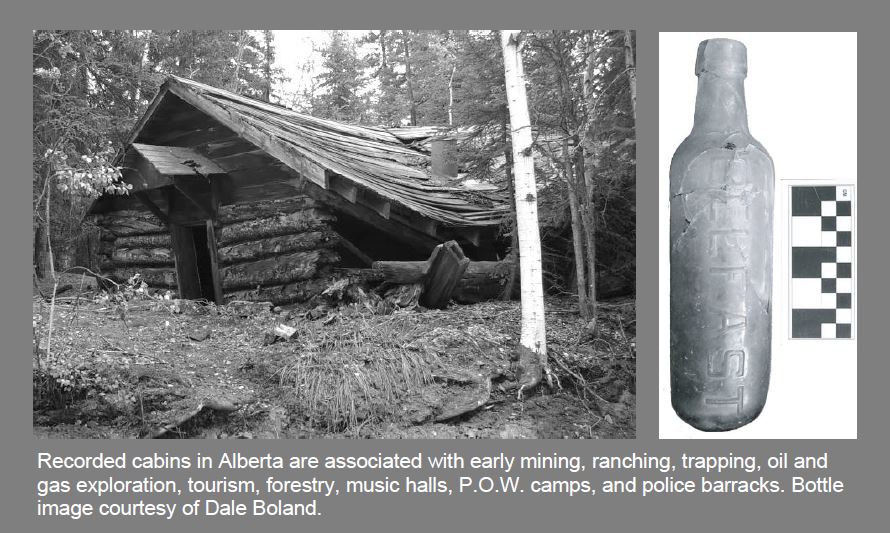
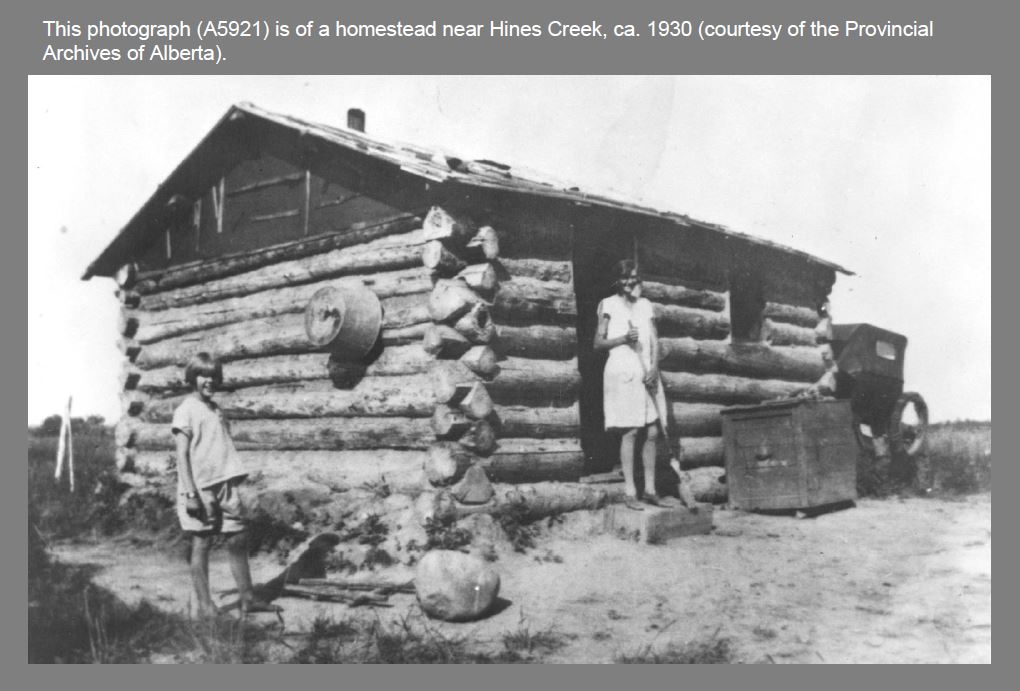
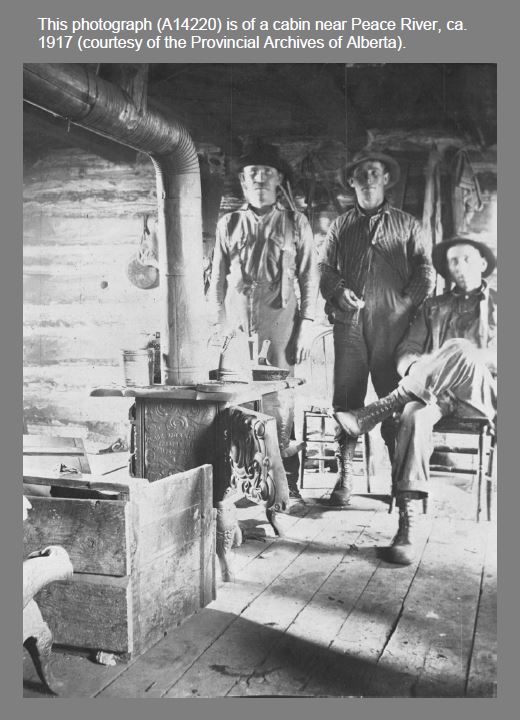
Cabins performed a variety of functions in Alberta’s past from homesteading to hunting and post offices to ranger cabins. Many events and daily challenges that defined our province unfolded on the wooden floors of early cabins. Just like the characters they housed, each cabin’s architecture and associated artifacts are unique.
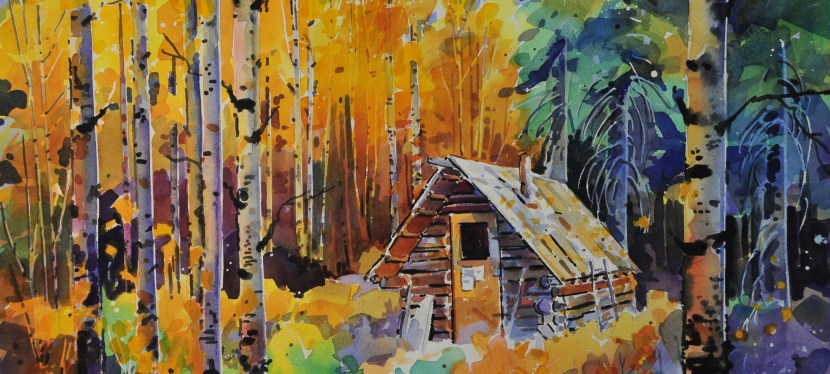
To encourage an appreciation of cabins and the surviving record of them, as well as other historic resources in the province, a collaborative team from the Historic Resources Management Branch, the University of Alberta, and the Royal Alberta Museum initiated the Heritage Art Series. The goal is to create artworks that depict scenes from Alberta’s past that captivate public audiences. We hope that these artworks, like the cabin painting above, stimulate an interest in learning about our province’s heritage, which will in turn instill a greater respect for the past.
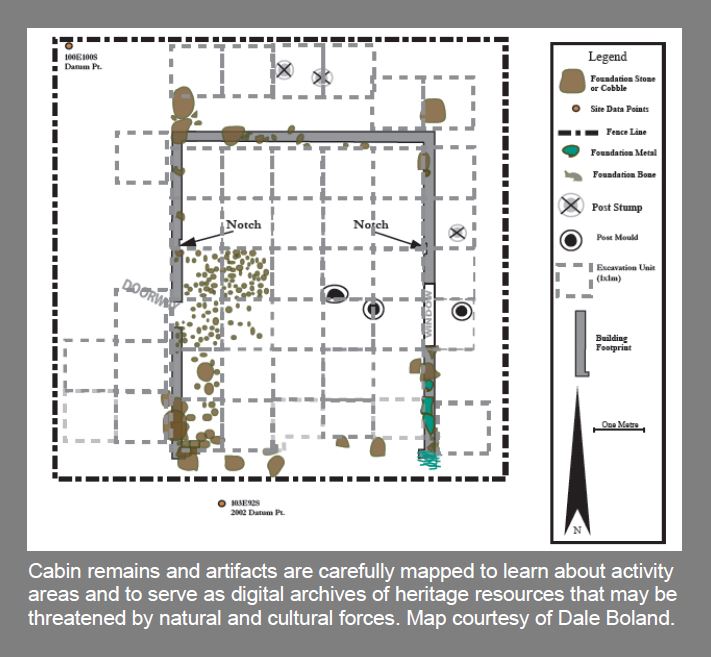
Cabins were typically made of raw timbers with a variety of corner joints, roofs, sawn floorboards, and chimneys. Associated features include outhouses, garbage pits, ice houses (for storing food), cellars, and drying racks. What can the archaeological record tell us about cabins and their occupants? Maps of cabins and associated structures reveal how people utilized landscapes and interacted with each other within cabins. Our modern homes are often relatively large with multiple rooms and levels, which is drastically different from the single-room cabins that many Albertans spent their lives in. An historical perspective informs us that changes in domestic architecture have had a real impact on the way Alberta’s families interact with each other and with their neighbours.
Cabins are often associated with historic trails that influenced how regions were settled and how goods were transported across the country. Cabin modifications over time tell stories of trial-and-error adaptations to new landscapes while artifacts can indicate the types of activities conducted around cabins, cultural affinities, number of occupants, and the season of occupation. Outhouses and garbage pits can reveal past diets, wealth, access to luxury goods, hygiene, medical conditions, and entertainment.
Aside from cabins’ phsycial make-up and artifact assemblages, they are significant heritage resources because they were often the first permanent structures to appear on many of Alberta’s landscapes. They represent a new adaptation and a new way of life for the people who first built them. There are over 550 recorded archaeological sites in Alberta with cabin components. Over 115 of these sites also have a pre-contact First Nations component, which suggests that many of the good spots for cabins have always been good places to make a living on the land.
The painting at the top of this article by Gregg Johnson is of a trapper’s cabin in the autumn foothills. It captures the solitude of the trapper’s life. Autumn was a busy time as trapper’s geared up for winter. Supplies were brought in, trap lines were re-established, and wood was cut for the long winter ahead. Like many of Alberta’s industries, modern trapping has an interesting past and an informative historic record. Archaeology offers a unique opportunity to learn about the past lives of people who may not be represented in historical accounts. In this sense, the study of historic resources gives a voice to people who have not been given the chance to speak for hundreds of years.
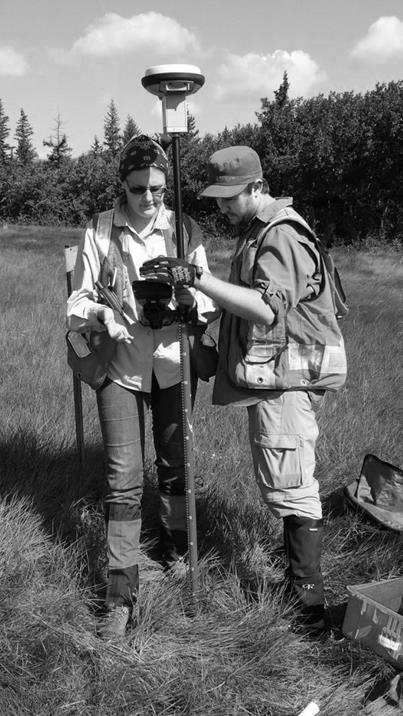
An example of a current research project about cabins that will illuminate the past record of a poorly understood group of people is that by Dr. Kisha Supernant at Buffalo Lake. Dr. Supernant and her research team from the University of Alberta are studying the adaptations of Metis and First Nations people who occupied Buffalo Lake in the 1800s in order to acquire meat that supplied neighbouring trade posts like Fort Edmonton. Her excavations and mapping program will uncover an important way of life that helped shape our province.
Dr. Supernant and a graduate student use GPS equipment to map archaeological features.
The next blog of the Heritage Art Series will be about the changing landscape and rock art of Writing-on-Stone Provincial Park.
Written by: Todd Kristensen, Northern Archaeologist, and Dr. Kisha Supernant, University of Alberta